
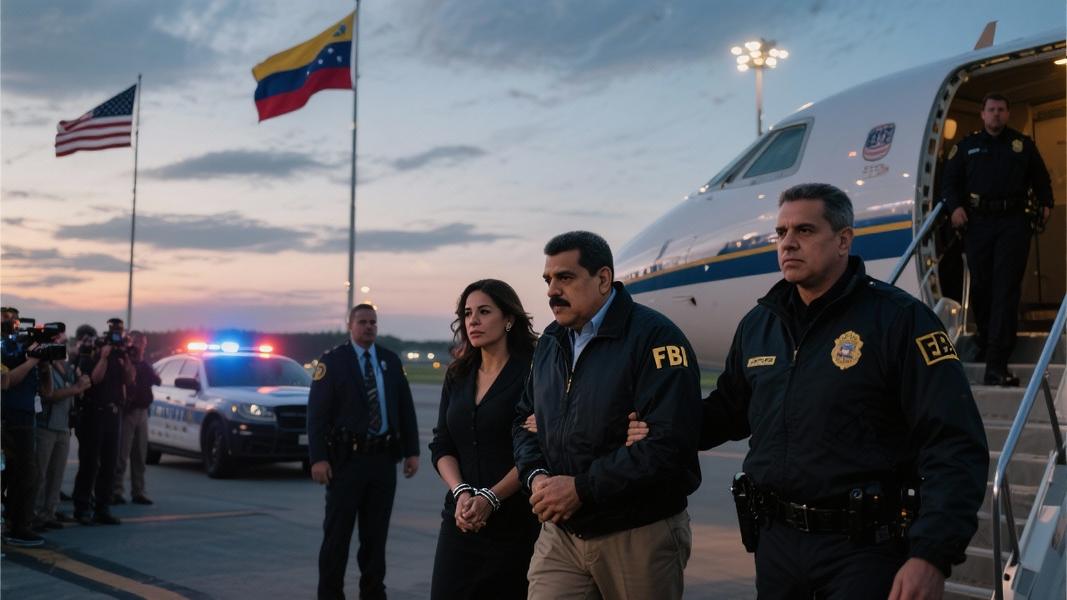
In a dramatic escalation of tensions in the Latin American region, the United States has conducted a large-scale military operation in Venezuela, resulting in the capture of President Nicolás Maduro and his wife Cilia Flores. The surprise strikes, which targeted key military installations including Fuerte Tiuna, took place on January 3, 2026, according to multiple sources.
President Donald Trump confirmed the operation in a statement from the White House, where he announced the “successful capture” of the Venezuelan leader. The military action represents one of the most direct interventions by the United States into the politics of a sovereign nation in recent decades.
“We are going to run the country until such time as we can do a safe, proper and judicious transition,” said a U.S. official familiar with the operation. The statement suggests a period of American control over Venezuelan affairs that could last for months — perhaps longer.
The international reaction has been swift and severe. China issued a particularly forceful condemnation, describing the action as a “blatant use of force against a sovereign state.” In a statement from its Foreign Ministry, Beijing declared it was “deeply shocked” by the American strikes.
Regional Shockwaves
“Such hegemonic acts of the U.S. seriously violate international law and Venezuela’s sovereignty, and threaten peace and security in Latin America and the Caribbean region,” the Chinese statement continued, signaling what could become a diplomatic crisis extending far beyond Venezuela’s borders.
What does this mean for U.S.-China relations? The forceful language from Beijing suggests potential repercussions well beyond diplomatic protests, coming at a time when the two powers are already engaged in tense competition across multiple fronts.
The military operation appears to have been meticulously planned, targeting strategic locations with precision. Fuerte Tiuna, one of Venezuela’s largest military bases located in Caracas, was among the primary targets of the American strikes.
Human rights organizations have already begun calling for transparency regarding the treatment of Maduro and his wife, who are now presumably in U.S. custody. The legal basis for their detention remains unclear, though U.S. officials have previously accused the Maduro regime of narcoterrorism and human rights abuses.
The American intervention comes after years of economic sanctions and diplomatic pressure failed to dislodge Maduro from power. Venezuela has been mired in a complex humanitarian and political crisis for over a decade, with millions of citizens fleeing the country amid hyperinflation, food shortages, and political repression.
Still, the direct military approach represents a striking shift in U.S. policy toward the region — one that harks back to Cold War-era interventions that many Latin American countries view with deep historical suspicion.
As the dust settles on this extraordinary development, the question remains whether this action will bring stability to Venezuela or further inflame regional tensions in what could become one of the defining international crises of 2026.
