
US-China Trade Truce Extended for 90 Days as Negotiations Continue
President Trump signed an executive order Monday extending the U.S.-China tariff truce by 90 days, preventing what could have been a costly escalation in the ongoing trade war between the world’s two largest economies.
The extension, which begins August 12, maintains the current 10% tariff rate rather than allowing duties to spike to a potential 30% — a move that gives negotiators critical breathing room following what officials described as promising talks in Stockholm last month.
Continuing the Pause
The White House confirmed the extension through a joint statement with Beijing, noting that both sides would “suspend 24 percentage points” of additional tariffs while maintaining a 10% rate on affected goods. The decision follows Executive Order 14257 of April 2025 and China’s corresponding Announcement No. 4 of 2025.
Treasury Secretary Scott Bessent, who led the U.S. delegation at the Stockholm talks alongside U.S. Trade Representative Jamieson Greer, characterized the late July meetings with Chinese Vice Premier He Lifeng as “very far-reaching, robust, and very satisfactory,” according to a China-Briefing report.
What’s behind the extension? Primarily, both sides need more time to hammer out a comprehensive trade deal that addresses long-standing concerns about market access, intellectual property rights, and — notably — cooperation on fentanyl trafficking.
Agricultural Exports at Stake
Sean Stein, president of the U.S.-China Business Council, emphasized that the extension isn’t just a diplomatic formality but a necessity for American farmers and energy producers.
“Securing an agreement on fentanyl that leads to a reduction in U.S. tariffs and a rollback of China’s retaliatory measures is acutely needed to restart U.S. agriculture and energy exports,” Stein told ABC News.
The fentanyl issue has emerged as a surprising linchpin in trade discussions, with the Biden administration previously making progress on cooperation before relations soured again. Trump’s negotiators have apparently picked up this thread, seeing it as a potential win-win that could justify tariff reductions while addressing a domestic crisis.
Technical Discussions Ongoing
Despite the extension, sources familiar with the talks caution that significant hurdles remain. After the Stockholm meetings, USTR Greer indicated that while no deal was finalized, technical discussions were “going in a positive direction.”
“We’re going to head back to Washington, D.C., and talk to the president about whether that’s something he wants to do,” Greer said regarding the extension — a decision Trump ultimately approved.
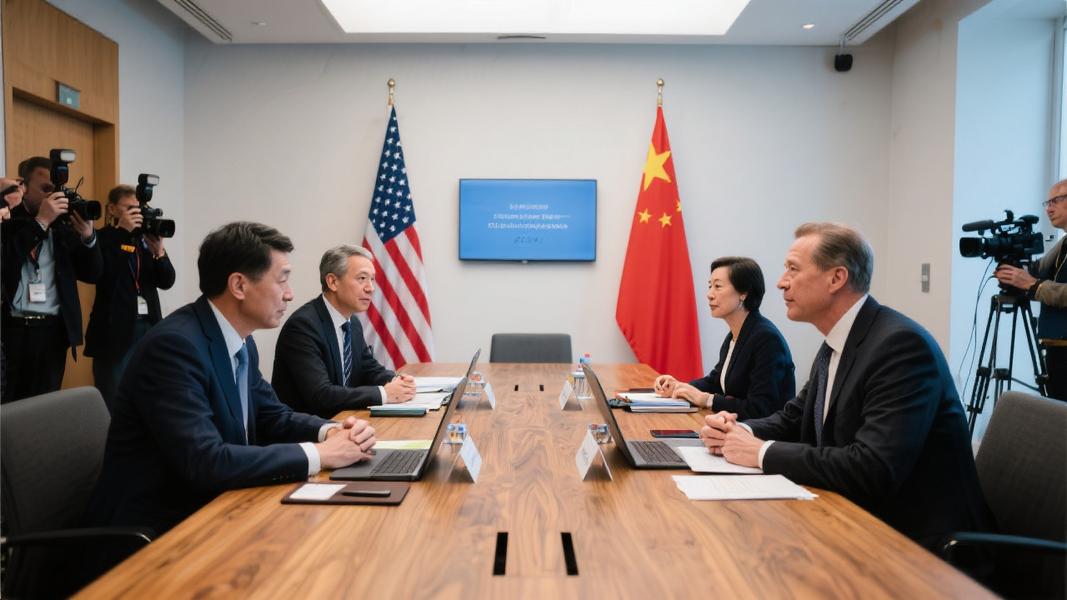
The talks in Stockholm featured key figures from both sides, with Vice Premier He representing China while Secretary Bessent and USTR Greer led the American delegation, according to the White House statement.
What’s Next?
The 90-day window pushes any potential tariff escalation to mid-November — well after peak shipping season for holiday goods and conveniently past the most heated period of the presidential campaign.
Both sides have committed to continuing negotiations during this period, with particular focus on non-tariff barriers that China has promised to “suspend or remove” as part of the Geneva Joint Statement referenced in Monday’s announcement.
For American businesses caught in the crossfire of the years-long trade tensions, the extension provides welcome relief — but the underlying uncertainty remains. With 90 days on the clock, negotiators face mounting pressure to deliver more than just another postponement.
