
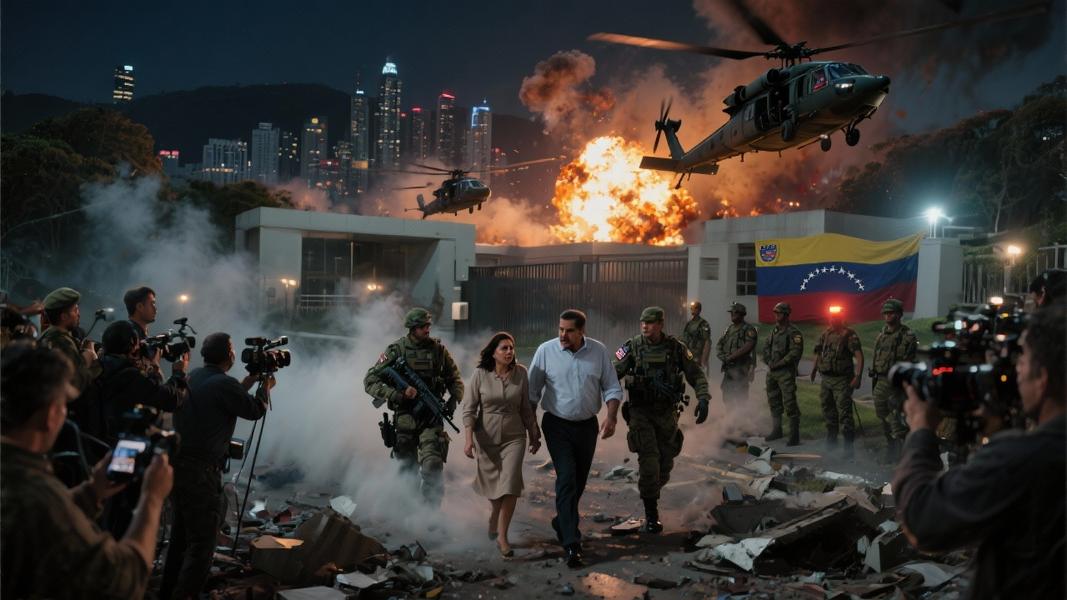
U.S. forces have captured Venezuelan President Nicolás Maduro and his wife following a series of airstrikes across northern Venezuela, marking a dramatic escalation in American military intervention in the region.
In the pre-dawn hours of January 3, 2026, explosions rocked Caracas as U.S. military assets conducted coordinated strikes on multiple locations across the country’s northern regions as part of what the Pentagon has dubbed “Operation Southern Spear.” Plumes of smoke and at least one significant fireball were visible rising above Venezuela’s capital city.
President Donald Trump confirmed the operation’s apparent success in a statement, declaring that “Maduro has been, along with his wife, captured and flown out of the Country,” according to a White House video released hours after the strikes began.
Military Buildup Preceded Attack
The operation didn’t materialize overnight. Pentagon sources indicate it involved substantial U.S. law enforcement resources and followed a significant military buildup that included positioning approximately 15,000 personnel in the region and deploying the USS Gerald Ford aircraft carrier to waters near Venezuela.
What’s remarkable about this intervention is its stated target — not traditional military installations, but what U.S. officials characterize as criminal networks with direct ties to Maduro’s government. The administration has long alleged that Maduro’s inner circle operates extensive drug trafficking and money laundering operations.
“This was a law enforcement action with military support,” said one Defense Department official speaking on background. “The goal was surgical precision against criminal enterprises, not regime change.” Yet the capture of Venezuela’s sitting president suggests more expansive objectives.
Regional Implications
How will Venezuela’s neighbors respond? The strikes represent the most significant U.S. military action in South America in decades, potentially reshaping regional politics and raising questions about sovereignty throughout Latin America.
Opposition figures in Venezuela had been gaining momentum in recent months, though few predicted such dramatic American intervention. Many had expected increased sanctions or diplomatic pressure rather than direct military action.
The operation’s aftermath remains unclear. While Maduro and his wife are reportedly in U.S. custody, questions remain about who controls Venezuela’s government apparatus, military forces, and vast oil reserves — still among the largest in the world despite years of production challenges.
As dawn broke over a stunned Caracas, residents faced an uncertain new reality: a country without its controversial longtime leader, and an unprecedented American military footprint on South American soil.
