
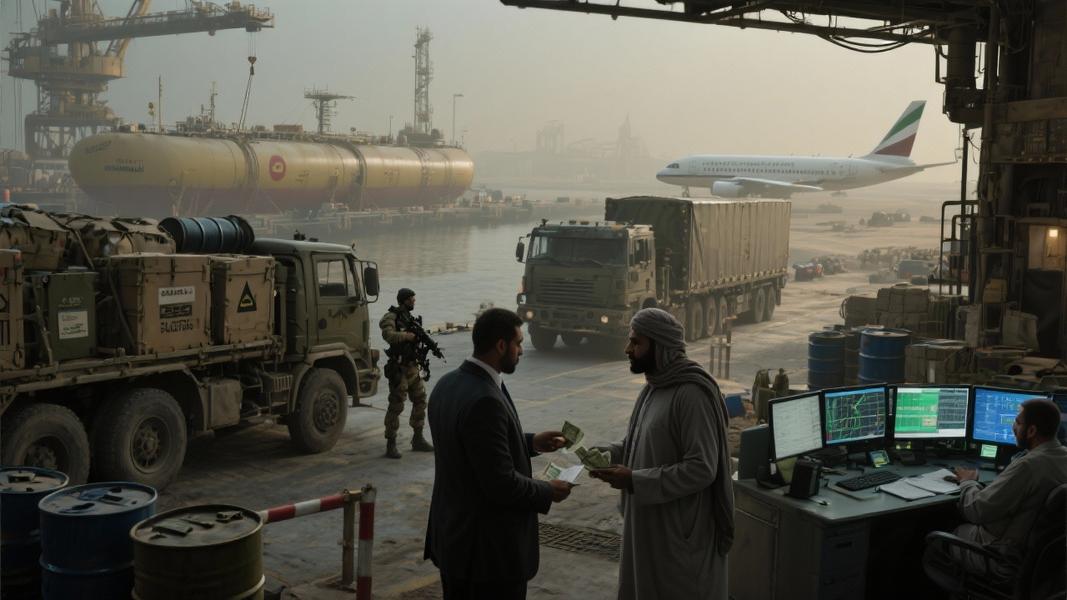
The U.S. Treasury Department announced a sweeping new round of sanctions targeting 21 individuals and entities plus one vessel that fund and support Houthi rebel operations in Yemen, marking a significant escalation in efforts to choke off the group’s financial networks.
“The Houthis threaten the United States by committing acts of terror and attacking commercial vessels transiting the Red Sea,” Treasury Secretary Scott Bessent said in a statement. “Treasury is taking action to cut off nearly two dozen individuals and entities involved in transferring oil, procuring weapons, and providing financial services for this Iran-backed terrorist organization.”
Following the Money
The sanctions, implemented through the Office of Foreign Assets Control (OFAC), target a complex web of front companies operating across Yemen, Oman, and the United Arab Emirates. Intelligence suggests the Houthis generate more than $2 billion annually through illicit oil sales, with substantial support coming from Iran in the form of both sold and free monthly oil shipments facilitated by UAE-based companies, according to Treasury officials.
Why now? The move builds on previous sanctions and follows the formal designation of Ansarallah (the Houthis’ official name) as a Specially Designated Global Terrorist group in February 2024 and as a Foreign Terrorist Organization in March 2025, as documented by the Treasury.
The Biden administration has been gradually ratcheting up pressure on the Iran-aligned group since they began targeting commercial shipping in the Red Sea last year, disrupting one of the world’s busiest maritime corridors. Today’s action represents a more comprehensive approach to dismantling the financial infrastructure that keeps Houthi operations afloat.
Broader Pattern of Enforcement
This isn’t the first time the Treasury has moved against Houthi financing networks. In an earlier and even larger action, OFAC designated 32 individuals and entities and identified four vessels involved in Houthi fundraising, smuggling, and procurement operations spanning Yemen, China, the UAE, and the Marshall Islands, Treasury records show.
“The sanctions are designed to disrupt revenue streams from oil, weapons procurement, and smuggling operations,” said a senior Treasury official who requested anonymity to discuss sensitive matters. The official emphasized that cutting off these revenue sources could significantly hamper the group’s ability to launch attacks on international shipping.
The sanctions were issued pursuant to Executive Order 13224, which targets terrorist groups and their supporters. Individuals and companies affected by the sanctions will have their U.S. assets frozen and be prohibited from conducting business with American entities.
Regional Implications
The Houthi movement, which controls significant portions of Yemen including the capital Sanaa, has positioned itself as a supporter of Palestinians in the Gaza conflict. Their attacks on shipping in the Red Sea have forced many vessels to reroute around Africa’s Cape of Good Hope, adding weeks to journey times and billions to global shipping costs.
Financial experts remain divided on how effective these sanctions will ultimately prove. The Houthis have demonstrated remarkable resilience in the face of previous economic pressure, developing sophisticated smuggling networks and alternative funding mechanisms over years of civil conflict.
Still, the targeting of specific front companies in neighboring countries represents a more surgical approach than previous efforts.
“By going after the money, the U.S. is hitting where it hurts,” said Jonathan Schanzer, senior vice president at the Foundation for Defense of Democracies, in an interview. “But the Houthis have proven adept at finding workarounds when their financial networks are targeted.”
As maritime tensions in the Red Sea continue with no immediate resolution in sight, the Treasury’s actions signal that the economic dimension of the conflict will remain a key battleground in the months ahead.
