
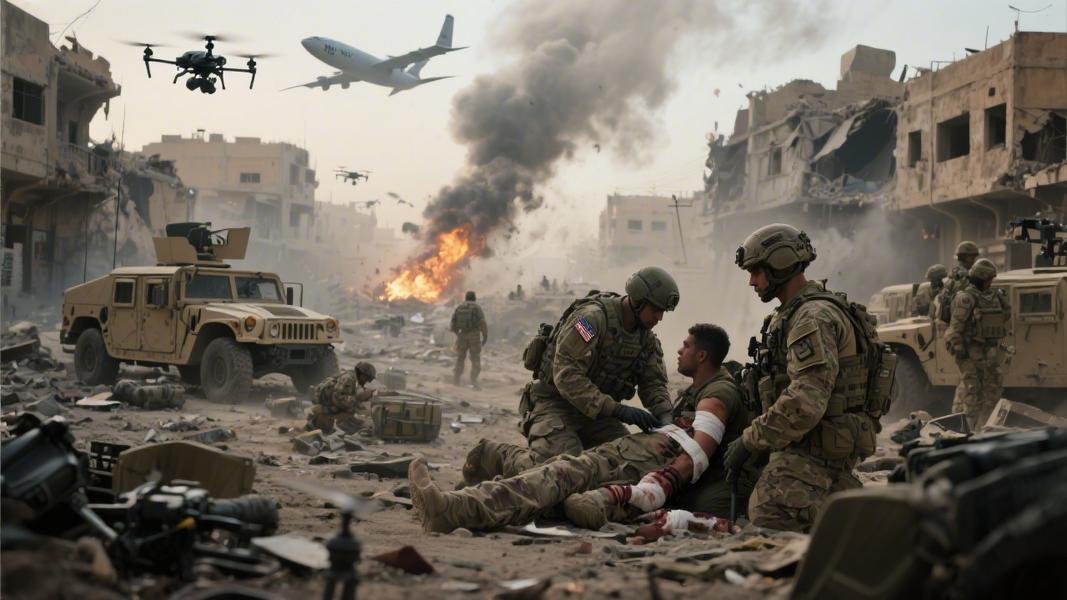
The numbers keep climbing. As U.S. forces press deeper into what officials are calling the most intensive air campaign against Iran in history, American casualties are mounting — and both sides are telling very different stories about just how bad it’s gotten.
At least seven U.S. service members have been killed and roughly 140 injured since fighting began, according to military figures — with eight of those wounded described as severely hurt. The majority of injuries have been classified as minor, and 108 troops have already returned to active duty. Still, the losses are real, and they’re accumulating fast as the conflict enters what commanders are warning will be its most brutal phase yet.
A War Escalating by the Hour
The Pentagon confirmed that three American service members were killed and five seriously wounded in a single operational period, with several others sustaining concussions and minor shrapnel injuries. Officials were blunt about what’s at stake. “The lives of courageous American heroes may be lost, and we may have casualties,” one statement read — a frank acknowledgment that this isn’t going to be a clean, distant air war. The fallen were called “great people,” and the tone, if nothing else, was sober.
“You know, we expect that to happen, unfortunately,” came one response when asked about the deaths. “Could happen continuous — it could happen again.” Not exactly reassuring. But it’s the kind of candor that tends to emerge when a conflict stops looking like a controlled strike campaign and starts looking like a war.
What Iran Is Claiming — and What Washington Is Saying
How wide is the gap between the two narratives? Enormous. Iranian officials have alleged that hundreds of American troops were killed or wounded in a single day of retaliatory strikes — a figure the U.S. military has flatly not corroborated. Tehran’s claims carry the unmistakable fingerprints of wartime propaganda, and independent verification inside Iran remains nearly impossible. That said, even the U.S. numbers — quietly revised upward more than once — suggest the situation on the ground is more volatile than early briefings implied.
Meanwhile, American officials have pushed back hard on any suggestion that the campaign is faltering. “We have done a tremendous job,” one senior official stated, pointing to what he described as a 90 percent reduction in Iran’s retaliatory ballistic missile strikes — and doing so just six days into the conflict. “The United States military has done a tremendous job at achieving that objective thus far.” The framing was unmistakably triumphant. Whether it holds is another question entirely.
The Hardest Day Is Still Ahead
Inside military planning circles, there’s a phrase that’s been circulating — and it’s not a comforting one. Officials have warned that today will be “the most intense” day of strikes inside Iran. That kind of language, delivered in the middle of an already-escalating campaign, signals that whatever’s coming next is being treated as a threshold moment — operationally and politically.
The death toll, as of March 4, 2026, continues to rise. Analysts tracking the conflict say the coming days will likely determine whether this remains a targeted campaign or slides into something far harder to define — and far harder to end.
Wars have a way of outlasting the language used to describe them at the start. “Retaliatory.” “Targeted.” “Controlled.” Six days in, with seven Americans dead and the hardest strikes still ahead, those words are already starting to feel thin.
