
Ten days in, and the Middle East is burning in ways that haven’t been seen in a generation. What began on February 28, 2026, as a coordinated U.S.-Israeli military campaign against Iran has escalated into something far broader, far bloodier, and far harder to contain than either government publicly anticipated.
The conflict — now entering its second week — has left thousands dead across multiple countries, triggered a global oil shock, reshaped Iran’s political leadership, and produced at least one scene so devastating it has stopped diplomats mid-sentence. The question isn’t whether this war has consequences. It’s whether anyone in power fully grasped what they were starting.
The Toll So Far
The numbers are staggering, and they keep climbing. Iran has absorbed the heaviest losses by far, with more than 1,230 killed and upwards of 6,000 wounded since strikes began. Over 3,600 civilian sites — schools, hospitals, infrastructure — have sustained damage, a figure that has drawn sharp condemnation from human rights organizations. Lebanon has recorded more than 300 deaths. Israel, shielded by its layered air defense systems, has lost around a dozen lives, according to running casualty counts.
Broader estimates paint an even grimmer picture. Total deaths across all parties may already range between 2,132 and more than 5,048, with the upper bound still being assessed as battlefield reporting catches up to reality, documented in early conflict tallies. Those numbers will almost certainly rise.
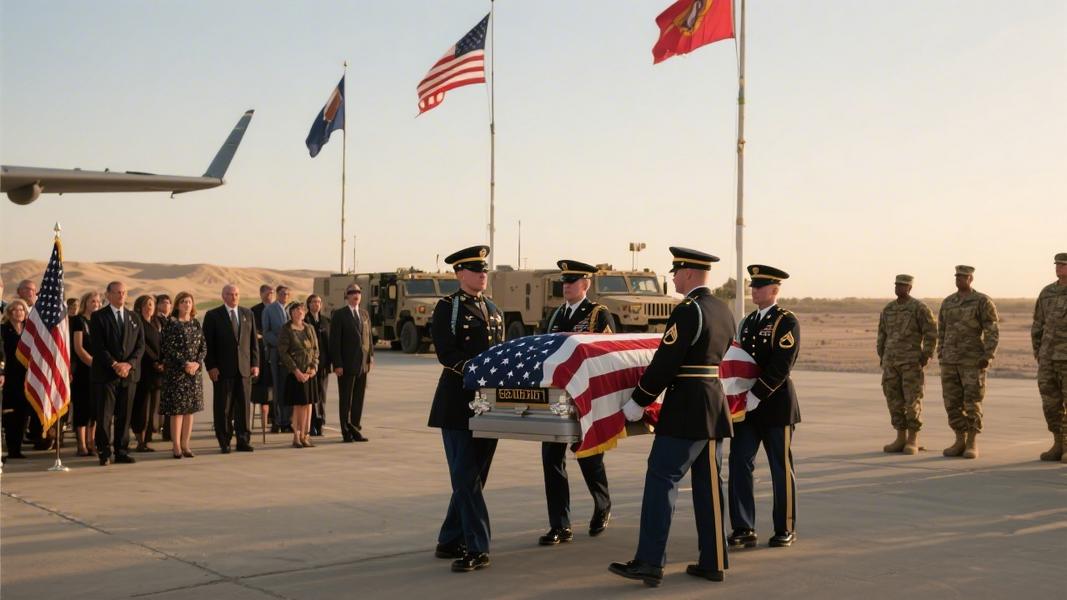
For the United States, the losses are smaller in scale but no less real. Seven — possibly eight — American military personnel have been killed, with at least 20 others wounded. Among the dead: Sgt. Benjamin N. Pennington, 26, of Glendale, Kentucky, who died on March 1 from wounds sustained in an enemy attack at Prince Sultan Air Base in Saudi Arabia. He was one of the first Americans to come home in a flag-draped transfer case from this war. He won’t be the last.
Washington’s Stated Objective
The White House and State Department have been consistent — at least publicly — about what they say they’re after. Secretary of State Marco Rubio framed the mission in stark terms, saying the U.S. is systematically targeting Iran’s ballistic missile capabilities. “We are well on our way to achieving that objective,” Rubio stated, adding that it is being carried out “with overwhelming force, with overwhelming precision.”
Precision, though, is a word that gets complicated fast. An explosion at Shajareh Tayyebeh Elementary School in Iran — attributed by multiple outlets to a U.S. airstrike — killed more than 165 people, the majority of them children. It’s the kind of image that tends to outlast any press briefing. Officials have not publicly acknowledged responsibility for the strike, and an investigation remains, at best, murky.
One unnamed military official, quoted separately, was blunter than the administration’s polished language might suggest: “We’re not just hitting what they have. We’re destroying their ability to rebuild.” That quote, surfaced in early March, has since circulated widely in international press as a summary of American intent — whether Washington likes it or not.
Iran’s Leadership in Flux
Still, the geopolitical picture is shifting faster than the bombs are falling. The death of Ayatollah Ali Khamenei — Iran’s supreme leader for more than three decades — has created a power vacuum that’s already being filled. His son, Mojtaba Khamenei, has been named as the country’s new supreme leader, a transition that was confirmed amid the chaos of ongoing strikes. Whether Mojtaba will chart a different course, dig in harder, or simply try to survive the next 72 hours remains to be seen. His ascension is either a sign of regime resilience or a desperate act of continuity — probably both.
Israel’s Role and Netanyahu’s Promise
Israel has been a full partner in this campaign from the start, and Prime Minister Benjamin Netanyahu isn’t hiding his ambitions. He’s promised what he called “many surprises” in the days ahead — a phrase that, coming from Netanyahu, carries weight. Israel has already conducted extensive strikes in Lebanon, accounting for a significant portion of that country’s death toll, and Israeli officials have made clear they view this moment as an opportunity to fundamentally alter the regional threat environment.
That said, it’s not that simple. Lebanon’s civilian population is paying a price that has nothing to do with strategic objectives, and pressure on Israel from European allies — already frayed after Gaza — is intensifying by the day.
The Economic Shock
Here’s a number that hits closer to home for most people not living near a missile trajectory: oil has surged past $100 per barrel. Disruptions to Persian Gulf production — one of the world’s most critical energy chokepoints — have rattled commodity markets globally. Analysts warn that if the conflict extends another two weeks at current intensity, prices could climb further still. Consumers from Chicago to Berlin are already feeling it at the pump, and the economic ripple effects are only beginning to emerge.
What Comes Next
Nobody — not in Washington, not in Tel Aviv, certainly not in Tehran — seems entirely sure how this ends. The U.S. says it’s winning. Iran’s new leadership says it will fight. And somewhere in the rubble of a school in Iran, 165 sets of parents are burying children who had nothing to do with any of it.
Netanyahu’s promised “surprises” are still coming. The body counts haven’t stopped. And ten days into a war that no one officially called a war until it already was one, the world is watching a region remake itself in real time — violently, irreversibly, and with no clear off-ramp in sight.
Wars, a veteran correspondent once observed, are easy to start and nearly impossible to finish on your own terms. So far, nothing about this one suggests it’ll be the exception.
