
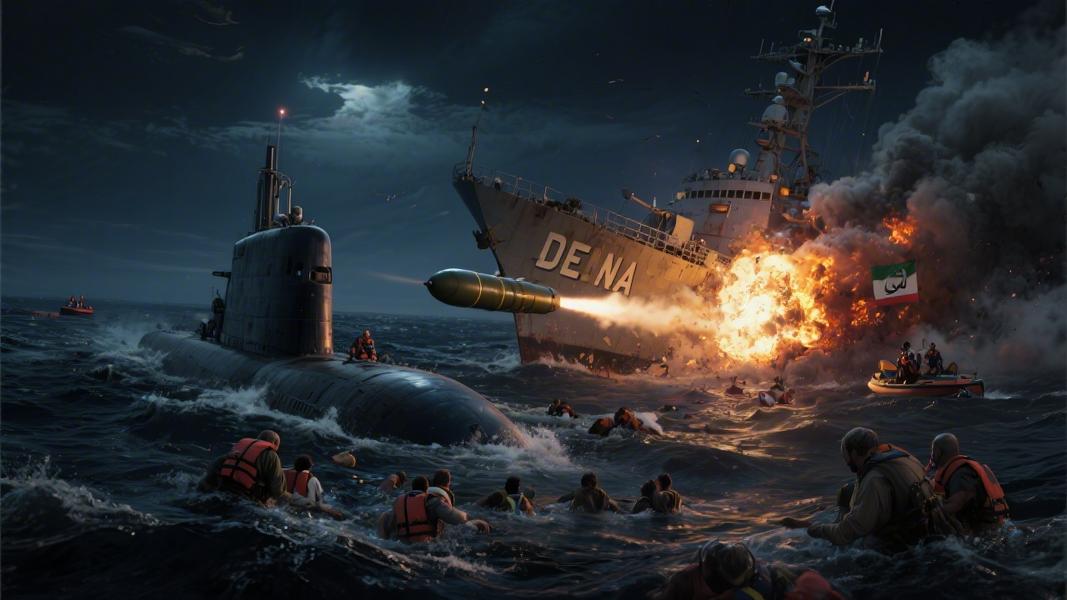
The United States is at war with Iran — and the Pentagon isn’t pretending otherwise anymore.
In a series of blunt, unambiguous statements this week, Secretary of Defense Pete Hegseth confirmed that American forces are actively striking Iranian targets under a military initiative called Operation Epic Fury, describing the campaign as deliberate, devastating, and open-ended enough to cost more American lives. The disclosures mark one of the most candid public acknowledgments of large-scale U.S. offensive operations since the early days of the Iraq War.
Surgical, Overwhelming — and Unapologetic
Hegseth didn’t mince words. Speaking publicly about the strikes, he declared, “We’re hitting them surgically, overwhelmingly, and unapologetically. With every passing day, our capabilities get stronger and Iran’s get weaker.” It’s the kind of line that sounds written for a podium — but the operational reality behind it is anything but theatrical.
Still, the secretary was careful to draw a boundary. The operations, he insisted, are not designed to drag the United States into another generational conflict. No endless war, he said. Whether that promise holds is a different question entirely — one that military historians might answer with a knowing grimace.
Casualties Expected. More Are Coming.
Here’s where it gets harder to hear. Four U.S. service members have already been killed. And according to Hegseth and General Dan Caine, chairman of the Joint Chiefs of Staff, that number is expected to rise. The two officials acknowledged at a Pentagon briefing that Epic Fury will take time — and that the military is bracing for further losses. “We expect to take additional losses,” Hegseth said, “and as always, we will work to minimize U.S. losses.”
That’s a sentence that lands differently when you sit with it for a moment. Not “we don’t expect further casualties.” Not “our forces are well-protected.” Just: more are coming, and we’ll try to keep the number down. Blunt. Somber. Honest, in a way Washington rarely is.
Iran’s Nuclear Ambitions at the Center of It All
Why now? Why this? Hegseth offered the clearest articulation yet of the administration’s justification, framing Iran’s weapons programs not merely as a regional threat but as the scaffolding for something far more dangerous. In a formal transcript released by the Department of Defense, he argued that “Iran was building powerful missiles and drones to create a conventional shield for their nuclear blackmail ambitions.”
The framing is deliberate. By calling it nuclear blackmail — not just nuclear development — the administration is making a case that Iran wasn’t merely pursuing deterrence. It was, in this telling, building leverage. The kind of leverage that could paralyze U.S. decision-making in a future crisis. Deeply buried facilities, long-range delivery systems, a conventional arsenal designed to make any strike too costly to attempt. That’s the threat architecture Hegseth says American bombs are now dismantling.
But it’s not that simple. Military analysts have long warned that strikes on hardened, underground nuclear infrastructure carry enormous uncertainty — both about their effectiveness and about the retaliation they invite. The Pentagon’s confidence that “capabilities get stronger” with each passing day may be warranted. Or it may be the kind of thing you say at a podium when the alternative is admitting you’re not entirely sure.
What Comes Next
That’s the question nobody in Washington seems eager to answer with specifics. The administration has framed Epic Fury as targeted and time-limited, while simultaneously acknowledging it will take time and cost lives. Those two things exist in a kind of uncomfortable tension that the coming weeks will either resolve — or deepen.
For now, the strikes continue. The statements keep coming. And four American families are already living with the cost of a war that, until very recently, most of the public didn’t know had a name.
The Pentagon says it won’t become endless. Wars rarely announce when they’ve changed their minds.
