
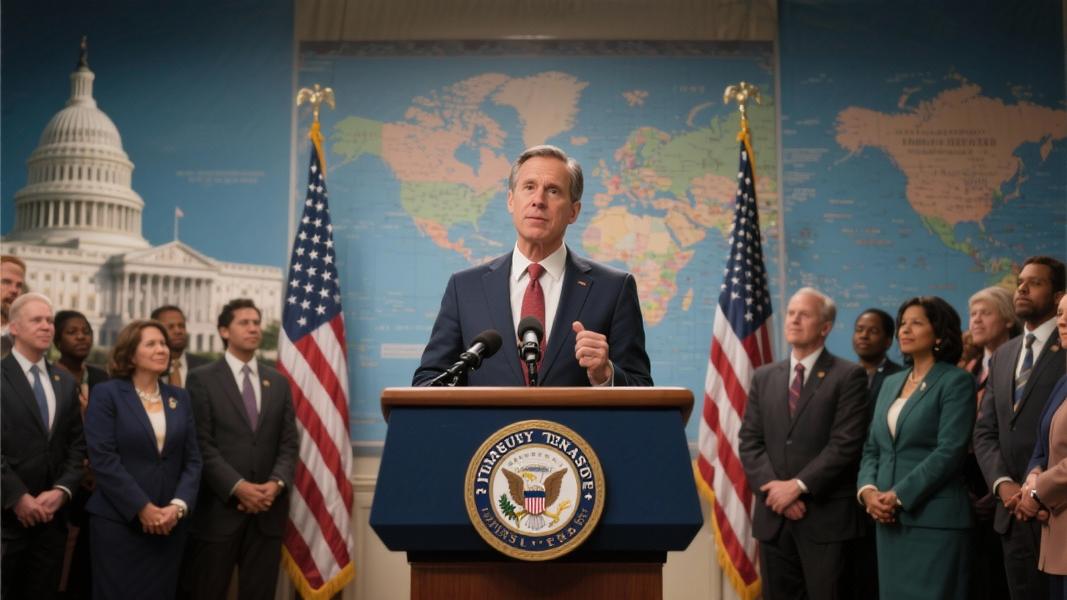
The United States has secured a landmark carve-out from the global minimum tax framework, effectively exempting U.S. multinational corporations from a tax regime that would have subjected them to additional foreign scrutiny and potentially higher tax bills. Treasury Secretary Scott Bessent announced the agreement Tuesday, marking a significant shift in international tax policy.
Under the revised agreement, more than 145 countries in the OECD/G20 Inclusive Framework have agreed to update the global minimum tax deal, creating specific exemptions for U.S.-headquartered companies. These businesses will remain subject only to U.S. global minimum taxes — not the additional layer of international oversight originally envisioned in the OECD’s Pillar Two framework.
“President Trump’s Day One Executive Orders made clear that the Biden Administration’s proposed OECD Pillar Two deal would have no force or effect for the United States,” Bessent said in a statement outlining the agreement.
A Tale of Two Tax Systems
The agreement essentially creates a side-by-side system with safe harbors for jurisdictions like the U.S. that already have domestic tax regimes aligned with Pillar 2 objectives. What does this mean in practice? U.S. multinationals will be exempt from the income inclusion rule and undertaxed profits rule that other countries’ corporations must navigate.
This carve-out wasn’t a given. For months, negotiations between U.S. officials and OECD representatives have been tense, with American negotiators pushing hard for recognition of U.S. tax sovereignty. The breakthrough comes after significant diplomatic pressure from Washington.
Bessent framed the agreement as a win for American sovereignty, stating that “this side-by-side agreement recognizes the tax sovereignty of the United States over the worldwide operations of U.S companies and the tax sovereignty of other countries over business activity within their own borders.”
The revisions also simplify rules and better align global standards with the U.S. tax regime, according to tax policy experts. For U.S. multinational corporations, this means less regulatory complexity and reduced compliance costs that would have come with navigating dual systems.
Winners and Questions
Major U.S. technology and pharmaceutical companies — which often employ complex international structures to manage their tax obligations — stand to benefit significantly from the exemption. These firms had lobbied extensively against subjecting their operations to foreign tax authorities.
But will other countries view this as special treatment for American businesses? That’s the lingering question as the revised framework rolls out. Some European officials have privately expressed frustration that U.S. companies won’t face the same scrutiny as their continental counterparts.
The agreement represents the culmination of years of negotiations over how to ensure multinational corporations pay their “fair share” of taxes in an increasingly digital global economy. Originally conceived as a universal framework, the final version now includes significant carve-outs that reflect political realities and the economic heft of the United States.
As implementation begins, tax specialists are already poring over the details, looking for how the parallel systems will interact in practice. For American multinationals operating globally, the message is clear: Washington has successfully shielded them from a potentially costly layer of foreign tax oversight — at least for now.
