
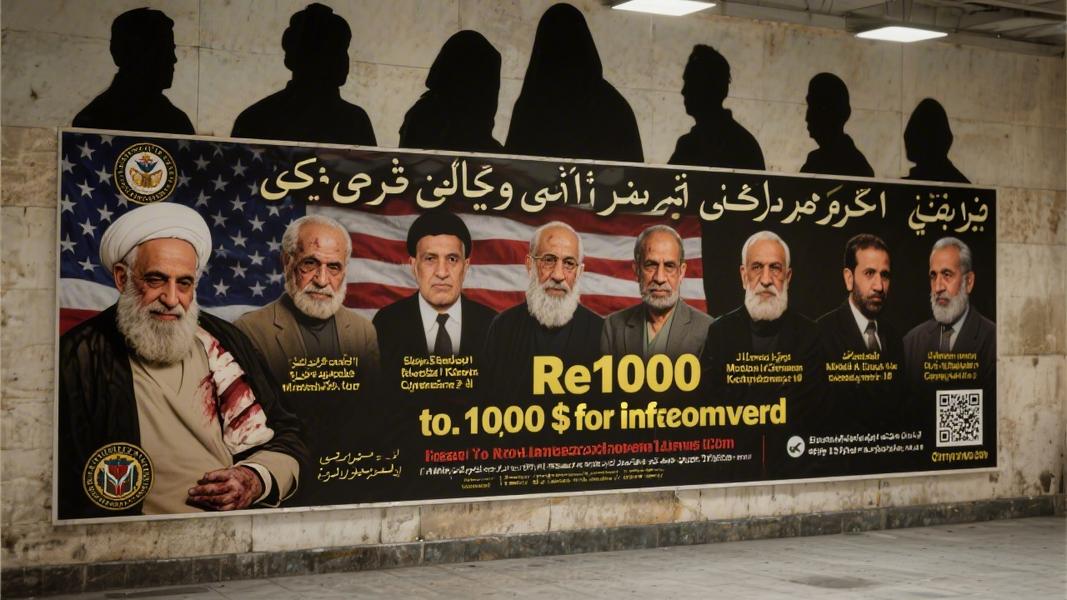
The United States is now offering up to $10 million for information on the whereabouts of Iran’s new Supreme Leader — a man who, just days ago, didn’t officially exist in that role. The reward comes as Mojtaba Khamenei delivers his first public statements from the shadows, calling for continued war and threatening to choke off one of the world’s most critical oil passages.
The U.S. State Department’s Rewards for Justice program announced the bounty targeting ten senior Iranian leaders, including Mojtaba Khamenei and nine key commanders within the Islamic Revolutionary Guard Corps. The offer — which includes potential relocation for informants — signals just how seriously Washington is taking the new Iranian leadership, even as that leadership refuses to show its face. Literally.
A Leader in the Shadows
When Mojtaba made his first public statement on Thursday, March 12, 2026, it wasn’t through a televised address or a press conference. Iranian state media read his words aloud — a newscaster’s voice, not his. No face. No voice. Just a written message filtered through a broadcast desk, as if the new Supreme Leader of one of the world’s most consequential nations was already operating like a ghost.
He was elected unanimously by the Assembly of Experts on March 9, 2026, stepping into a vacuum left by the death of his father, Ayatollah Ali Khamenei, who was killed in a missile strike at the very start of the conflict. Mojtaba had long been a figure of speculation — a man rumored to wield significant influence behind the scenes. Now he wields it from the front, or at least tries to, while remaining entirely out of sight.
Hormuz and Hard Warnings
What did he actually say? That’s where things get sharper. In his written message, Mojtaba called for the sustained use of the Strait of Hormuz as a pressure lever — a move that, if fully executed, could ripple through global energy markets almost overnight. “Certainly the lever of blocking the Strait of Hormuz must continue to be used,” he wrote, according to Iranian state media.
But he didn’t stop there. The statement, which Iran International and the Jerusalem Post both covered extensively, went further — hinting at entirely new fronts. “Studies have been conducted on opening other fronts where the enemy has little experience and will be extremely vulnerable,” he warned, “and their activation will be carried out if the war situation continues and based on the observance of interests.”
That’s not throwaway rhetoric. It’s a carefully worded signal — vague enough to deny specifics, specific enough to unsettle anyone paying attention.
Allies Named, Enemies Warned
Mojtaba also used his debut statement to thank Iran’s regional partners by name — Yemen’s Houthis, Hezbollah, and Iraqi resistance factions all received acknowledgment. It reads less like diplomatic courtesy and more like a public ledger: here are the forces still in play, still loyal, still armed.
At the same time, the statement carried an unmistakable warning to regional governments currently hosting U.S. military bases: close them. The implication being that hosting American forces makes those governments part of the conflict, whether they’ve chosen sides or not. It’s a pressure campaign aimed at countries that have, so far, tried to stay out of the crossfire.
A $10 Million Question
Still, there’s something almost surreal about the situation. The United States is offering a $10 million bounty — plus relocation — for a man who just gave a speech he didn’t even read out loud. The Rewards for Justice program has historically targeted terrorists and cartel figures. Placing a sitting head of state — even one Washington doesn’t recognize as legitimate — in that same framework is a significant, deliberate escalation.
The nine IRGC commanders listed alongside Mojtaba represent the operational backbone of Iran’s military structure. Targeting them financially, alongside the Supreme Leader himself, suggests the U.S. is betting that internal pressure — or outright defection — might accomplish what military strikes haven’t.
Whether anyone collects that reward is another matter entirely. But the message is clear: Washington doesn’t just want to find these men. It wants everyone around them to know there’s a price on their heads.
A new Supreme Leader who won’t show his face, threatening to close the world’s most critical oil chokepoint, while the United States offers millions for his location — if this is the opening chapter of Mojtaba Khamenei’s reign, it’s hard to imagine it getting quieter from here.
