
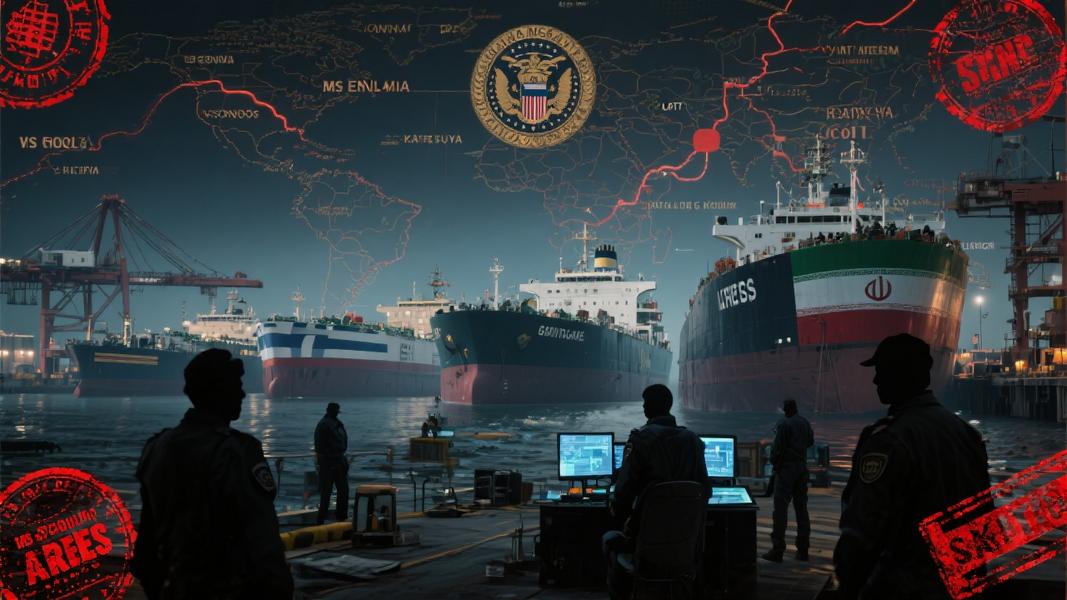
The U.S. Treasury Department has unleashed a new round of sanctions targeting Greek shipping magnate Antonios Margaritis and his network, part of an escalating effort to disrupt Iran’s shadow fleet that continues to smuggle oil globally despite international restrictions.
The sanctions, announced Tuesday by the Office of Foreign Assets Control (OFAC), target Margaritis personally, along with his web of shipping companies and nearly a dozen vessels that Treasury officials say have been instrumental in helping Iran circumvent sanctions on its petroleum sector.
Decades of Experience Turned to Illicit Trade
According to Treasury officials, Margaritis has leveraged his extensive shipping industry knowledge to facilitate the transportation and sale of Iranian oil through various front companies, including Marant Shipping and Trading S.A., Square Tanker Management Ltd., and several others. The Greek national’s operation represents a significant node in Iran’s attempts to maintain oil revenue streams despite international pressure.
“Today’s action against Margaritis and his network degrades Tehran’s ability to fund its advanced weapons programs, support terrorist groups, and threaten the safety of our troops and our allies,” Treasury Secretary Scott Bessent stated in the announcement. “Under the leadership of President Trump, Treasury remains determined to hold accountable all those who seek to aid the Iranian regime and threaten global security.”
The sanctions extend beyond Margaritis himself. UAE-based Ozarka Shipping – FZCO was also targeted for managing vessels VICTORY ARI, SONDOS, and KATSUYA — ships that have reportedly transported millions of barrels of Iranian petroleum products, primarily to China. Several Hong Kong-based shipping companies including U Beacon Shipping Co., Hong Kong Hangshun Shipping Limited, and Ares Shipping Limited were also designated for their roles in the shadow fleet.
Massive Oil Shipments Documented
Just how much Iranian oil has been moving through this network? The numbers are staggering.
Treasury officials documented that since March 2025, the vessel LAFIT has transported over four million barrels of Iranian oil to customers in China. Another vessel, GIANT, moved approximately two million barrels, while the ADELINE G shipped more than a million barrels to Chinese ports. Perhaps most notably, the vessel ARES has facilitated nearly ten million barrels of Iranian oil shipments since mid to late 2024.
These shipments represent a significant revenue stream for Tehran at a time when the U.S. has renewed its “maximum pressure” campaign against the Iranian regime. The sanctions fall under Executive Order 13902, which specifically targets Iran’s petroleum sector, and align with National Security Presidential Memorandum 2 (NSPM-2) issued by President Trump.
The sanctions effectively freeze all U.S.-based assets belonging to Margaritis and the designated entities, while also prohibiting Americans from conducting business with them. Any violations could result in civil or criminal penalties, Treasury officials warned.
Shadow Fleet Tactics
Iran’s shadow fleet has evolved significantly in recent years, employing increasingly sophisticated methods to evade detection. Ships frequently engage in “dark” activities — turning off tracking systems, conducting ship-to-ship transfers in international waters, and falsifying documentation to obscure the Iranian origin of petroleum products.
The vessels identified in Tuesday’s sanctions have reportedly engaged in multiple ship-to-ship transfers with previously sanctioned vessels, creating a complex web of transactions designed to mask the true origin of the oil.
For maritime security experts, the move represents the latest chapter in a cat-and-mouse game between Iranian oil smugglers and international authorities. But critics question whether sanctions alone can effectively halt the flow of Iranian oil to willing buyers like China.
As Secretary Bessent emphasized, the sanctions are intended not just to limit Iran’s oil revenue but specifically to restrict funding that could support “advanced weapons programs” and “terrorist groups” — suggesting the Treasury Department sees direct links between these oil sales and broader security threats in the Middle East region.
With this latest round of designations, the message from Washington seems clear: the shadow fleet may operate in darkness, but it can’t entirely escape scrutiny.
