
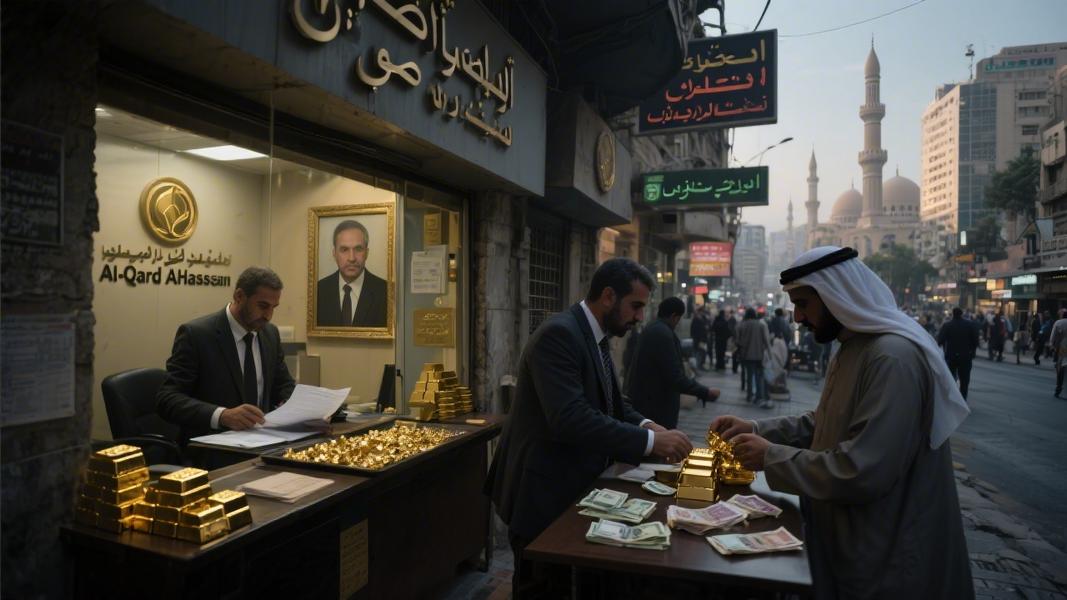
The U.S. Treasury Department has stepped up its campaign against Hezbollah’s financial networks, targeting a gold exchange company it says converts the militant group’s reserves into usable funds.
In a statement released Tuesday, the Office of Foreign Assets Control (OFAC) announced sanctions against Jood SARL, a Lebanese company that allegedly operates under Hezbollah’s already-sanctioned financial arm, Al-Qard Al-Hassan (AQAH). The move represents the latest attempt to squeeze Hezbollah’s access to the global financial system amid ongoing regional tensions.
“Hizballah is a threat to peace and stability in the Middle East,” Treasury Secretary Scott Bessent said. “Treasury will work to cut these terrorists off from the global financial system to give Lebanon a chance to be peaceful and prosperous again.”
Beyond Gold: A Broader Network
The sanctions don’t stop at Jood SARL. The Treasury Department’s action targeted a total of two individuals, four entities, and two vessels linked to Hezbollah under Executive Order 13224, which focuses on disrupting terrorist financing networks. Among those designated was Mohamed Nayef Maged, a Lebanese national born in 1989 who’s allegedly connected to AQAH’s operations.
What makes Jood SARL particularly concerning to U.S. officials? According to Treasury records, the company was established relatively recently — on June 3, 2025 — and operates with Lebanese registration numbers 2078233 and 6007003. But its innocent-sounding facade allegedly masks a more sinister purpose.
“Jood SARL masquerades as a non-governmental organization,” a senior Treasury official told reporters on condition of anonymity. In reality, the company allegedly serves as a crucial cog in Hezbollah’s financial machinery, converting gold reserves into liquid assets that can fund the group’s operations throughout the Middle East.
Financial Shell Games
The sanctions highlight the increasingly sophisticated methods Hezbollah employs to evade international financial restrictions. Authorities believe the militant group has been exploiting Lebanon’s informal financial sector to move money and assets outside traditional banking channels that are more easily monitored.
It’s a strategy that complicates enforcement efforts. By utilizing gold — a portable, valuable commodity that can be traded without leaving the same electronic footprint as bank transfers — Hezbollah can more easily bypass conventional financial intelligence gathering.
The State Department confirmed that these latest sanctions specifically target “Hizballah operatives exploiting Lebanon’s informal financial sector,” suggesting a broader concern about how militant groups might leverage alternative financial systems.
Hezbollah itself has been listed on the Specially Designated Nationals (SDN) List as both a Foreign Terrorist Organization (FTO) and Specially Designated Global Terrorist (SDGT), subjecting it to secondary sanctions that can affect anyone doing business with the group.
Regional Implications
Will these sanctions actually work? That question looms large over Tuesday’s announcement. Previous rounds of sanctions have certainly created headaches for Hezbollah’s financial networks, but the group has repeatedly demonstrated an ability to adapt and find new funding channels.
For ordinary Lebanese citizens, the situation remains complicated. Lebanon’s economy has been in freefall for years, with a devastating currency collapse and widespread banking restrictions already making daily life difficult. Many Lebanese rely on alternative financial services — including gold exchanges — simply to conduct basic transactions in a broken system.
“We’re very conscious of the humanitarian situation in Lebanon,” the Treasury official said. “These sanctions are precisely targeted at Hezbollah’s financial networks, not the Lebanese people.”
The Treasury Department’s action comes amid heightened tensions between Hezbollah and Israel, with cross-border exchanges of fire becoming increasingly frequent. U.S. officials have expressed concern that the situation could escalate into a wider regional conflict.
For now, Treasury officials say they’ll continue tracking Hezbollah’s financial networks and targeting key nodes in its funding apparatus — a cat-and-mouse game that shows no signs of ending soon.
