
U.S. Treasury Sanctions Indian Nationals for Trafficking Fentanyl-Laced Pills
Deadly Deception: Online Pharmacies Fueling America’s Opioid Crisis
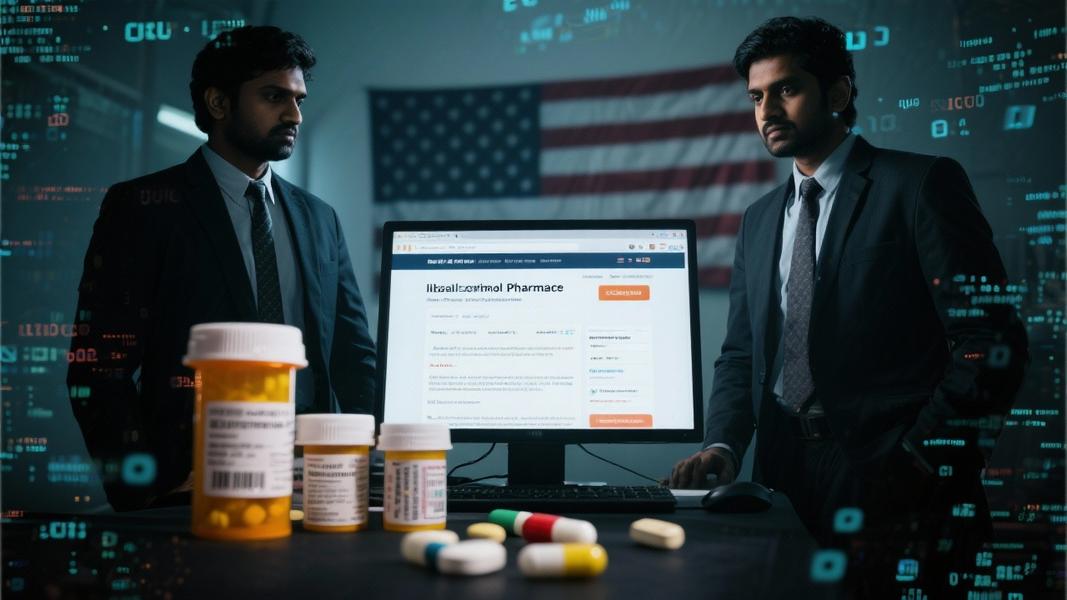
Two Indian nationals have been sanctioned by the U.S. Treasury Department for trafficking hundreds of thousands of counterfeit pills laced with fentanyl to American consumers. Sadiq Abbas Habib Sayyed and Khizar Mohammad Iqbal Shaikh, along with an India-based online pharmacy, were targeted for their role in a scheme that exploited victims who believed they were purchasing legitimate medications.
“Too many families have been torn apart by fentanyl. Today, we are acting to hold accountable those who profit from this poison,” said Under Secretary for Terrorism and Financial Intelligence John K. Hurley. “Treasury will continue to advance President Trump’s commitment to Make America Fentanyl Free by targeting drug traffickers.”
The sanctions come amid intensifying U.S.-India cooperation under their Drug Policy Framework, which aims to combat illicit drugs, improve public health, and strengthen global supply chains. Fentanyl remains the primary driver of the synthetic opioid crisis that has claimed hundreds of thousands of American lives, with opioid overdose now the leading cause of death for Americans between 18 and 45 years old.
Sophisticated Criminal Operation
What makes this case particularly alarming? The sanctioned individuals operated with remarkable sophistication, working alongside narcotics traffickers in the United States and Dominican Republic. They marketed counterfeit pills as discounted pharmaceuticals, which were instead filled with deadly fentanyl, fentanyl analogues, and methamphetamine.
Shaikh owns KS International Traders, an online pharmacy that served as a front for these criminal activities. Despite previous indictments, the operation had continued unabated until these sanctions.
“These pills frequently resemble brand name and generic medication. U.S. consumers, believing they are purchasing from legitimate pharmacies, fall victim to the dangerous operations of these deceptive pharmacies,” the Treasury Department explained in its announcement.
On October 4, 2024, the Drug Enforcement Administration issued a stark warning about the proliferation of illegal online pharmacies shipping counterfeit pills containing fentanyl and methamphetamine to unsuspecting Americans who thought they were buying legitimate pharmaceuticals like Oxycodone, Adderall, and Xanax.
International Enforcement Coordination
The sanctions were applied pursuant to Executive Order 14059, which targets international drug trafficking networks. This action involved extensive coordination between multiple U.S. agencies, including the Department of Justice, DEA, Homeland Security Investigations, IRS – Criminal Investigations, and the U.S. Postal Inspection Service.
As a result of these sanctions, all property and interests belonging to the designated individuals and entities that are in the United States or controlled by U.S. persons are now blocked and must be reported to the Office of Foreign Assets Control (OFAC). Any transactions with the sanctioned individuals are prohibited without explicit authorization, with violations potentially carrying severe civil and criminal penalties.
Still, OFAC emphasizes that sanctions aren’t meant to be permanent punishments. “The ultimate goal of sanctions is not to punish, but to bring about a positive change in behavior,” the Treasury stated. Designated persons can petition for removal from the Specially Designated Nationals and Blocked Persons List through OFAC’s established process.
A Growing Threat
This case highlights the evolving nature of the fentanyl crisis. No longer limited to street drugs, the deadly synthetic opioid is increasingly finding its way into counterfeit pharmaceuticals marketed through seemingly legitimate online channels.
India-based online pharmacies have emerged as significant players in this global illicit drug trade, deceiving consumers worldwide with pills that mimic brand-name medications but contain deadly synthetic substances.
For American families already devastated by the opioid epidemic, this new front in the battle against fentanyl represents yet another challenge in a crisis that continues to evolve faster than regulatory and enforcement efforts can respond. And as digital commerce expands, the line between legitimate online pharmacies and criminal enterprises grows increasingly blurred for average consumers seeking affordable medications.
