
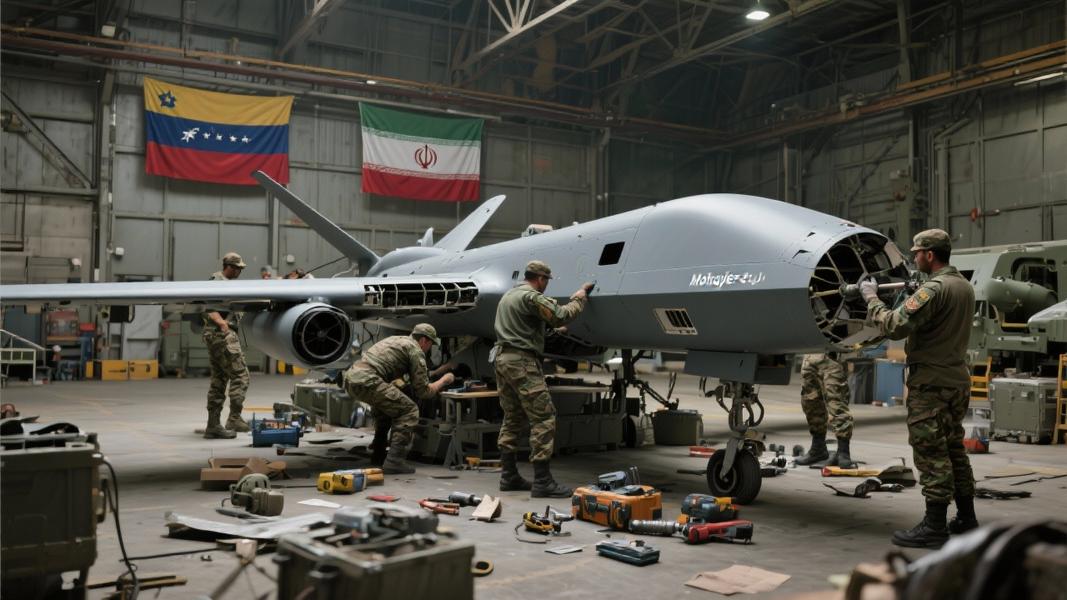
The U.S. Treasury Department has taken aim at a weapons procurement network spanning Venezuela and Iran, slapping sanctions on 10 individuals and entities involved in the transfer of combat drones and other military technology.
The sanctions, announced Tuesday, specifically target companies facilitating Iran’s unmanned aerial vehicle (UAV) exports to Venezuela and networks supporting Tehran’s missile program. “Treasury is holding Iran and Venezuela accountable for their aggressive and reckless proliferation of deadly weapons around the world,” said Treasury Under Secretary for Terrorism and Financial Intelligence John K. Hurley.
Among those hit by the sanctions is a Venezuelan company that officials say has played a crucial role in Iran’s drone trade with Venezuela. The move freezes any U.S.-based assets owned by the targeted entities and generally prohibits Americans from conducting business with them.
Escalating Pressure
This isn’t Treasury’s first move against Iran’s weapons proliferation. The latest action builds on previous nonproliferation designations from October and November, supporting the September 27, 2025 reimposition of United Nations sanctions on Iran that had been lifted under the 2015 nuclear deal.
Why target Venezuela now? The South American nation has increasingly deepened its military ties with Iran in recent years, with Iranian drones becoming a particularly sensitive flashpoint for U.S. policymakers concerned about regional security.
“We will continue to take swift action to deprive those who enable Iran’s military-industrial complex access to the U.S. financial system,” Hurley added in his statement.
The sanctions reflect growing concern about Iran’s expanding weapons exports, which have included not just drones to Venezuela but also missiles and other military technology to Russia for use in Ukraine and to militant groups across the Middle East.
Both Iran and Venezuela have developed closer ties in part due to their shared opposition to U.S. policy, with military cooperation becoming one of the most visible aspects of their relationship. The two nations, both under various U.S. sanctions already, have sought ways to circumvent international isolation through mutual support.
For Washington, the challenge now becomes monitoring whether these latest sanctions will actually deter the weapons trade or simply push it further underground as Iran and Venezuela develop more sophisticated methods to evade international restrictions.
