
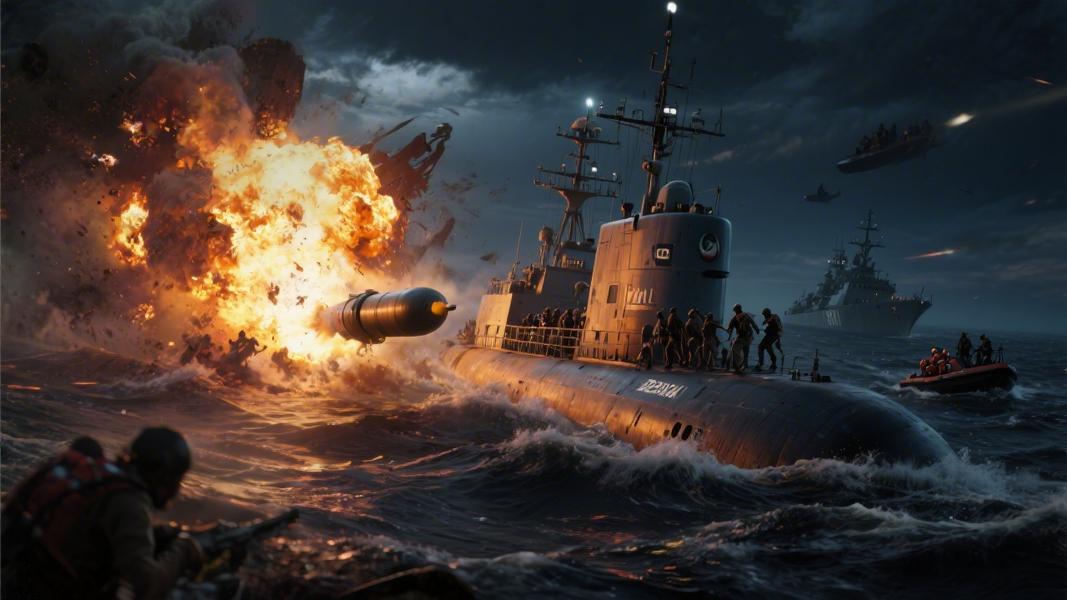
A U.S. Navy submarine slipped through the Indian Ocean and sent an Iranian warship to the seafloor with a single torpedo — the most dramatic naval strike the United States has executed since the Second World War.
The attack, confirmed late Tuesday night, targeted the IRIS Dena, an Iranian frigate that now sits somewhere on the ocean bottom along with an estimated 140 missing crew members. It’s the kind of moment that doesn’t just mark a battle. It marks a turning point. Secretary of Defense Pete Hegseth was blunt about what it means, telling reporters that “the Iranian Navy rests at the bottom of the Persian Gulf — combat ineffective, decimated, destroyed, defeated. Pick your adjective.”
One Torpedo. One Ship. One Message.
The weapon used was a Mark 48 torpedo, a deep-running, wire-guided munition that the U.S. Navy has carried in its arsenal for decades but has rarely had occasion — until now — to fire at an enemy vessel in open conflict. The fast-attack submarine that launched it hasn’t been publicly identified, which is standard practice. What isn’t standard is any of this. The last time an American submarine sank an enemy warship in combat was documented during World War II. That’s not a small thing.
Hegseth described the strike as a “quiet death” — a phrase that carries a certain cold precision to it. The Dena didn’t go down in a blaze of missile fire or a surface confrontation. It was hunted from below, in the dark, and it was gone. That’s what modern submarine warfare looks like, and confirmed reports indicate the Pentagon considers it a textbook execution.
The Broader Toll
How bad is it for Iran’s naval forces? By the Pentagon’s own accounting, more than 20 Iranian naval vessels have been destroyed since the conflict began. The Dena is simply the latest — and perhaps the most symbolically devastating. A frigate isn’t a patrol boat. It’s a warship. Losing one to a single submarine torpedo, without apparent warning or defense, is the kind of loss that reverberates through a navy’s institutional confidence.
Still, the human cost extends well beyond the battlefield. The Sri Lankan navy, operating in proximity to where the Dena went down, noted the vessel’s sinking and the roughly 140 personnel unaccounted for. Separately, at least 1,097 Iranian civilians have been killed since U.S. strikes began — a figure that sits uncomfortably alongside the military victories being announced from Washington podiums.
The war, whatever its strategic logic, is no longer abstract. It’s in the body counts, the missing sailors, the ships that aren’t coming home.
What Comes Next
The Pentagon hasn’t said much beyond Hegseth’s remarks, and the White House has so far let the Defense Secretary carry the message. That’s deliberate. The administration appears comfortable letting the military record speak for itself — a decimated Iranian navy, a submarine force operating freely, and a conflict that the U.S. is, at least by the metrics it’s choosing to emphasize, winning at sea.
But it’s not that simple. Tehran hasn’t collapsed. Iranian forces remain active. And the civilian death toll is the kind of number that generates international pressure regardless of how the naval ledger reads. The outlined situation on the ground suggests a conflict still very much in motion — not a war winding down, but one that’s found its rhythm.
Pick your adjective, as the Secretary said. Just know that whoever’s picking it, somewhere in the Indian Ocean, there are 140 people who haven’t been found yet.
