
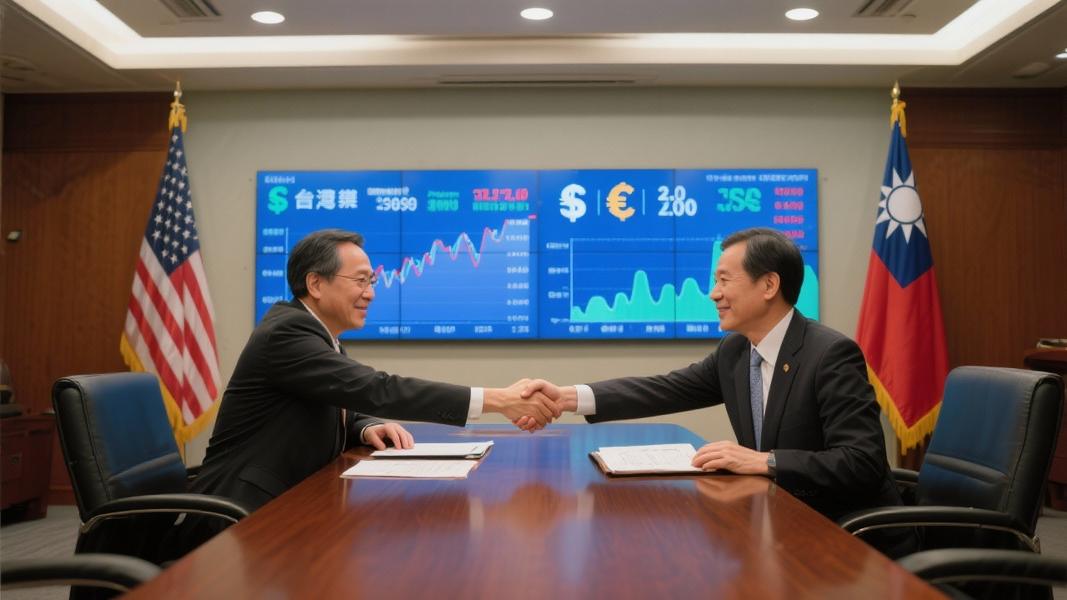
US Treasury and Taiwan’s central bank have struck a deal aimed at promoting exchange rate transparency and halting currency manipulation, marking a significant step in their economic relationship amid ongoing trade tensions in the Asia-Pacific region.
The agreement, announced by the US Department of the Treasury, commits both sides to “avoid manipulating exchange rates or the international monetary system” to prevent balance of payments adjustments or gain unfair competitive advantages. It comes as Taiwan’s foreign exchange reserves have swelled to $602.94 billion as of September 2025, cementing its position as one of the world’s largest reserve holders.
No Manipulation Found, But Watchful Eyes Remain
Why does this matter now? Taiwan has been under the Treasury’s microscope since 2020, appearing in currency monitoring reports due to its substantial trade surpluses and massive foreign exchange reserves. The island’s reserves have grown by $25.34 billion since January alone, when they stood at $577.6 billion.
That said, the Treasury’s latest assessment concluded that “no major U.S. trading partner manipulated the rate of exchange between its currency and the U.S. dollar” during the four quarters through June 2024. Taiwan was in the clear — for now.
The agreement establishes clear guidelines about when intervention in currency markets might be appropriate. Both sides agreed that intervention “should be reserved for combatting excess volatility and disorderly movements in exchange rates,” with equal consideration given to addressing “excessively volatile or disorderly depreciation or appreciation.”
Taiwan’s central bank attributed its recent reserve increase to “returns from foreign exchange reserves management” and “exchange rate movements of other reserve currencies against the USD” — not direct market intervention.
Transparency Commitments
Perhaps the most concrete outcome? Both parties have committed to quarterly public disclosure of any foreign exchange interventions and reserves data, with a one-quarter lag, consistent with IMF standards.
“Both sides confirmed that they will avoid manipulating exchange rates,” the Treasury stated, while also agreeing that “macroprudential or capital flow measures will not target exchange rates for competitive purposes.”
What about Taiwan’s massive public investment vehicles? The agreement specifically addresses them, noting that “pension funds invest abroad for risk-adjusted return and diversification purposes, and not to target the exchange rate for competitive purposes.”
The deal represents another thread in the complex economic fabric between the US and Taiwan, which has become increasingly important as global supply chains — particularly for semiconductors — face heightened scrutiny and reorganization.
For Taiwan, a trade-dependent economy often caught between major powers, the agreement offers some breathing room while maintaining its fiscal autonomy. For Washington, it’s another step in ensuring what it considers fair play in global currency markets — even as the definition of “fair” remains perpetually contested.
