
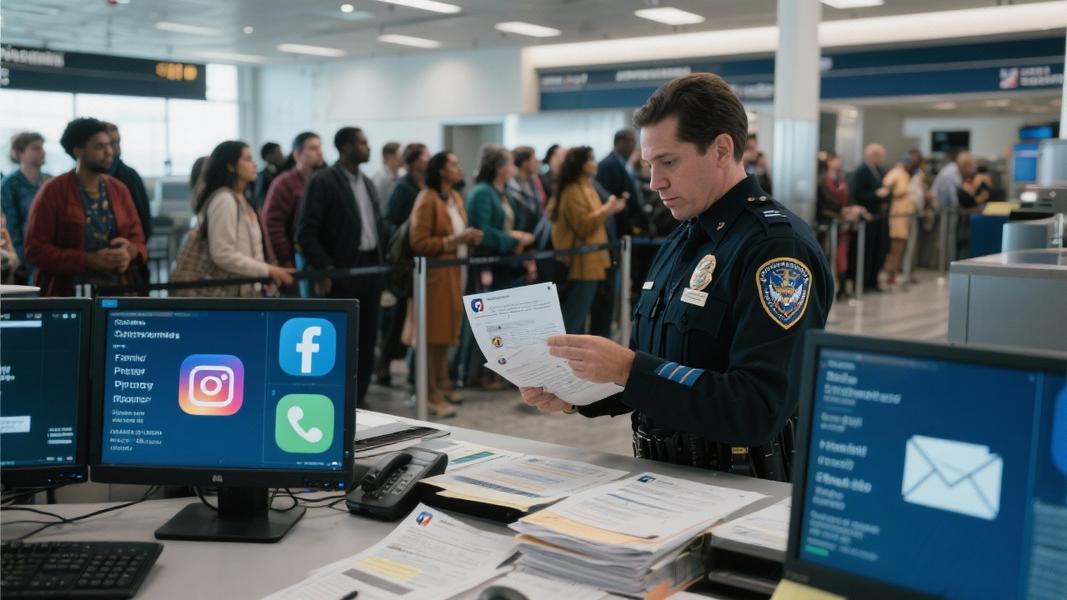
The Trump administration plans to dramatically expand the information foreign visitors must surrender before entering the United States, requiring travelers from 42 visa-waiver countries to disclose five years of social media history, email addresses, phone numbers, and even photo metadata.
Under the proposed changes, tourists from countries like the United Kingdom, Australia, and Spain would face unprecedented scrutiny of their online presence and personal communications. The overhaul would transform the Electronic System for Travel Authorization (ESTA) into a mobile-only application process demanding significantly more personal data than ever before.
Digital Life Under a Microscope
The mandatory disclosure of social media activity represents a major shift in U.S. border policy. Customs and Border Protection (CBP) plans to collect not just usernames and platforms, but also emails used over the past decade and personal information about immediate family members.
“The submission of social media history from the last five years will be a mandatory requirement under the proposal,” according to the official notice from CBP. The agency will also demand phone numbers used during the past five years, creating a comprehensive digital profile of each visitor.
Think that’s intrusive? The requirements don’t stop there. Travelers will also need to provide IP addresses, metadata from their electronic images, and biometric information including facial images, fingerprints, and potentially even DNA or iris scans.
National Security Justification
The Trump administration has framed these expanded screening measures as essential for national security. The State Department has been gradually increasing the scrutiny of visa applicants’ online presence, incorporating comprehensive reviews of social media as part of its vetting process.
The proposed changes would affect travelers from all 42 countries in the Visa Waiver Program, which includes most European nations, Australia, Japan, South Korea, and several others. Citizens of these countries have historically enjoyed relatively easy access to the U.S. for tourism or business visits of up to 90 days.
But the convenience of visa-free travel now comes with a significant privacy tradeoff. Visitors will need to submit to what amounts to a digital strip search, revealing years of online activity, personal connections, and communication patterns.
Mobile-Only Application
Perhaps the most striking change is the shift to a mobile-only application process. All applicants will be required to use a smartphone app to capture a “selfie” — presumably for facial recognition and identity verification purposes.
This requirement could potentially create barriers for elderly travelers or those without access to modern smartphones, though the administration hasn’t addressed how these edge cases might be handled.
Privacy advocates are likely to raise concerns about the vast collection of personal data, particularly as it includes information spanning a decade of digital life. The government has not yet clarified how this information will be stored, for how long, or which agencies might have access to it.
As the proposal moves forward, international travelers must prepare for a new reality at the U.S. border — one where their digital footprints will be scrutinized alongside their passports, with the line between security screening and privacy invasion increasingly blurred.
