
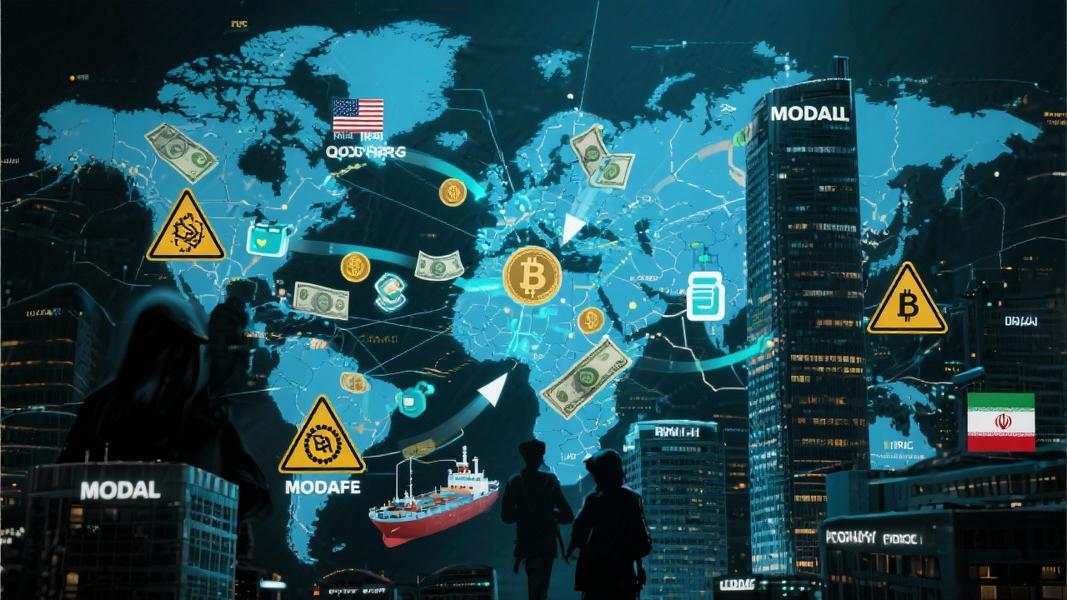
The U.S. Treasury has unveiled a sweeping new round of sanctions targeting Iranian shadow banking networks that have funneled millions in oil profits to fund terrorism and weapons development. The crackdown, announced Tuesday, marks the second major action against Iran’s covert financial infrastructure since President Trump directed maximum pressure on the regime.
“Iranian entities rely on shadow banking networks to evade sanctions and move millions through the international financial system,” said Under Secretary of the Treasury for Terrorism and Financial Intelligence John K. Hurley. “Under President Trump’s leadership, we will continue to disrupt these key financial streams that fund Iran’s weapons programs and malign activities in the Middle East and beyond.”
Cryptocurrency and Front Companies: Iran’s Sanctions Evasion Playbook
At the center of the Treasury’s action are two Iranian nationals who orchestrated a sophisticated financial shell game. Between 2023 and 2025, Alireza Derakhshan and Arash Estaki Alivand coordinated cryptocurrency purchases exceeding $100 million from Iranian oil sales, the Treasury revealed. The pair used an intricate network of front companies spanning multiple countries to mask the true origin of the funds.
The sanctions, issued under counterterrorism authority Executive Order 13224, target entities supporting the Islamic Revolutionary Guard Corps-Qods Force (IRGC-QF) and Iran’s Ministry of Defense and Armed Forces Logistics (MODAFL) — both previously designated for supporting terrorism and weapons development.
How extensive is this shadow network? Investigators found Alivand acted as both financial facilitator and oil broker for the Syria-based Al-Qatirji Company, a primary IRGC-QF oil sales partner. He also collaborated with Hizballah-associated money changer Tawfiq Muhammad Sa’id al-Law, who assisted with cryptocurrency transfers to further obscure the money trail.
Meanwhile, Derakhshan maintained communications with sanctioned Iranian currency exchanger Ramin Jalalian, who manages UAE-based entities Powell Raw Materials Trading L.L.C and Powell International FZE. Treasury officials say Derakhshan oversees daily operations of multiple front companies handling hundreds of millions in transactions for MODAFL and IRGC.
Web of Deception Spans Multiple Countries
The Treasury’s action targets a sprawling network of companies across the United Arab Emirates and Hong Kong, including Alpa Trading – FZCO, Alpa Investment L.L.C, and Alpa Hong Kong Limited. These entities served as vital cogs in Iran’s sanctions evasion machinery.
“As of mid-2025, Derakhshan is responsible for the day-to-day operations of a group of UAE- and Hong Kong-based front companies that includes UAE-based Alpa Trading – FZCO,” the Treasury stated.
The sanctions extend to individuals controlling or acting on behalf of other designated entities, including Vahid Derakhshan, Leila Karimi, and companies like Paul AD Sons Trading FZE and Everest Investment L.L.C.
This isn’t Treasury’s first move against such networks. The department has undertaken multiple prior actions, including designations on July 9 and June 6, 2025, targeting networks laundering billions through exchange houses and front companies.
The Impact: Assets Frozen, Transactions Blocked
The practical effect? All property and interests belonging to these individuals and entities within U.S. jurisdiction are now blocked. Transactions by U.S. persons are prohibited without specific authorization from OFAC. Violations can trigger civil or criminal penalties — and foreign financial institutions facilitating transactions for designated persons risk exposure to secondary sanctions.
Beyond the immediate financial impact, the Treasury’s action highlights growing concerns about Iran’s support for regional proxies like the Houthis. “The Houthis continue to threaten U.S. personnel and assets in the Red Sea, attack our allies in the region, and undermine international maritime security in coordination with the Iranian regime,” Hurley noted.
The sanctions come amid escalating tensions with Iran and its proxies throughout the Middle East. By targeting the financial lifelines that fund these operations, the Treasury aims to choke off resources fueling regional instability.
Will it work? That remains to be seen. But one thing is clear: the cat-and-mouse game between Iranian financial facilitators and U.S. sanctions enforcers shows no signs of slowing down — and cryptocurrency has emerged as the latest battlefield in this shadowy financial war.
