
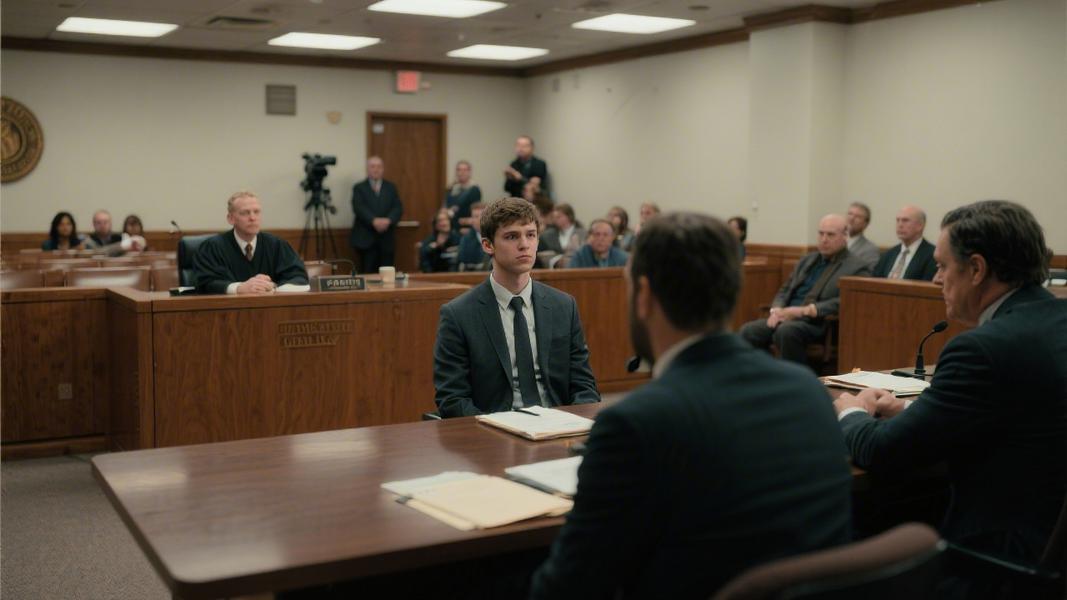
A Utah man accused of fatally shooting conservative commentator Charlie Kirk at a university event is now at the center of a sprawling legal battle — one that’s starting to look as complicated as the crime itself.
Tyler Robinson faces charges of aggravated murder, felony discharge of a firearm, obstruction of justice, witness tampering, and a violence offense committed in the presence of a child, stemming from the September 10, 2025, shooting death of Kirk at Utah Valley University. The case has drawn national attention not only for its target — a polarizing figure in American conservative politics — but for the legal maneuvering that has already begun reshaping how the trial might unfold, including a potential death penalty fight that defense attorneys are working aggressively to complicate.
What Investigators Found
The physical evidence against Robinson is substantial, at least on paper. Investigators recovered a firearm from a wooded area near campus with DNA consistent with Robinson’s profile, along with a screwdriver found on a rooftop and social media messages tied to Robinson that investigators say point directly to his involvement in the shooting. It’s the kind of layered forensic case prosecutors typically feel confident bringing before a jury.
But confident doesn’t mean clean.
A Witness in the Crowd — and a Conflict of Interest
Here’s where things get tangled. The prosecutor handling Robinson’s case has an 18-year-old daughter who was present at the Kirk rally the day of the shooting. She didn’t witness the shooting directly, but she was there — and she texted her father in real time as the chaos unfolded. In a sworn affidavit, she described the moment the gunfire erupted: “While the second person in line was speaking with Charlie, I was looking around the crowd when I heard a loud sound, like a pop. Someone yelled, ‘he’s been shot.'” That account, now part of the official record, has handed the defense a potentially significant opening.
Robinson’s attorneys are now seeking to disqualify the prosecution team entirely, citing a conflict of interest tied to that deputy county attorney’s personal connection to the event. It’s a bold move — and not an entirely toothless one. When a prosecutor’s own family member is embedded in the factual record of a case, even as a peripheral witness, courts have sometimes found that relationship hard to ignore. Defense experts have suggested the conflict claim, if successful, could fundamentally reshape the death penalty proceedings against Robinson.
Cameras Out, Doors Closed
That’s not the only front Robinson’s legal team is fighting on. Defense attorneys have also filed a motion to partially close an upcoming hearing and bar cameras and photographers from the proceedings. Their argument centers on what they describe as potentially harmful, prejudicial, misleading, and private information likely to surface — language that suggests sensitive material, possibly related to Robinson’s background or mental state, could be at issue. In a case already generating wall-to-wall media coverage, the defense appears intent on limiting the court of public opinion wherever it legally can.
They’re also pushing to block the murder video from being admitted into evidence, calling it highly disturbing. Whether that argument gains traction remains to be seen, but it signals the defense’s broader strategy: chip away at the prosecution’s most visceral and damaging materials before a single juror is ever seated.
A Case That Won’t Stay Simple
Still, the weight of evidence publicly outlined against Robinson — the DNA-linked firearm, the rooftop screwdriver, the digital trail — suggests prosecutors aren’t operating from a weak position. The conflict-of-interest motion may slow things down, but it doesn’t erase what investigators say they found.
What it does do is guarantee that this trial, whenever it arrives, won’t be a quiet one. A politically charged victim, a death penalty on the table, a prosecutor’s daughter woven into the evidentiary fabric, and a defense team swinging at every available procedural target — this case was never going to be simple. The only question now is just how messy it’s willing to get before it reaches a verdict.
In American courtrooms, the truth doesn’t always arrive in a straight line. Sometimes it comes in a pop, and then someone yells.
