
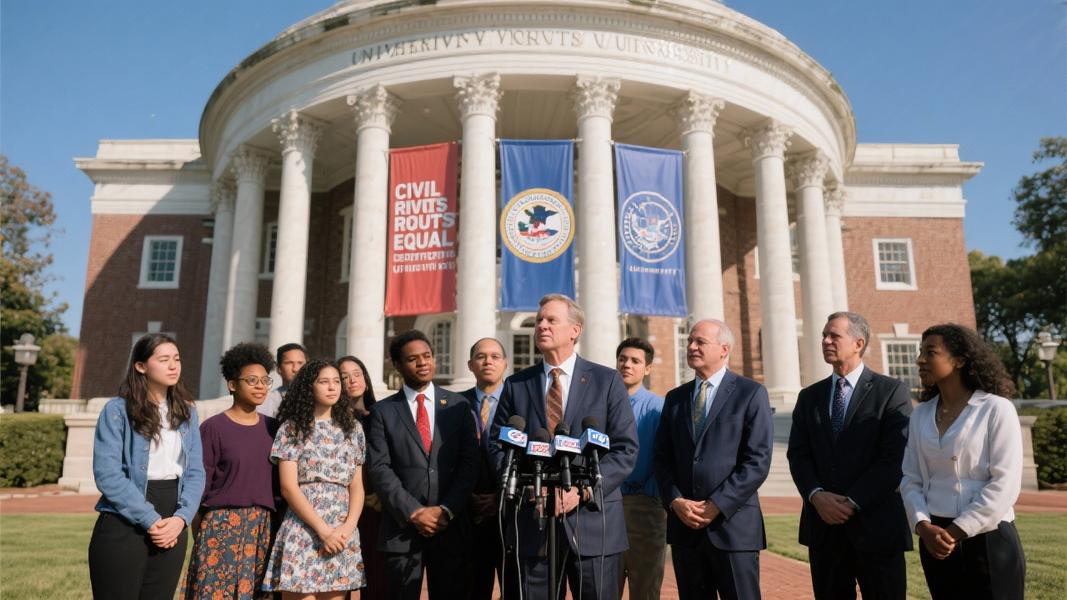
The University of Virginia has rejected the so-called “Trump Compact” while simultaneously striking a separate agreement with the Department of Justice to end investigations into its diversity initiatives, setting up what could become a blueprint for higher education institutions navigating the new administration’s approach to campus policies.
The DOJ announced an agreement with UVA that requires the university to protect students and faculty from discrimination based on race, sex, or national origin, with regular compliance reports through 2028. In exchange, the department will pause ongoing civil rights investigations and maintain the university’s eligibility for federal funding.
“This notable agreement with the University of Virginia will protect students and faculty from unlawful discrimination, ensuring that equal opportunity and fairness are restored,” said Assistant Attorney General Harmeet K. Dhillon in a statement from the Civil Rights Division. “We appreciate the progress that the university has made in combatting antisemitism and racial bias, and other American universities should be on alert that the Justice Department will ensure that our federal civil rights laws are enforced for every American, without exception.”
A Tale of Two Agreements
But the Justice Department deal came as UVA explicitly rejected a separate, more controversial proposal from the Department of Education known as the “Trump Compact.” That 10-page document would have required the university to eliminate race and sex considerations in admissions and adhere to a strict binary gender definition, among other provisions.
Interim President Ian Baucom Mahoney informed Education Secretary Mitch McConnell that while the university agrees “with many of the principles outlined in the Compact,” including fair admissions and institutional neutrality, it would not sign the agreement, according to Inside Higher Education.
The decision makes UVA the first public and Southern institution to formally reject the compact, following significant internal pressure. Over 1,000 faculty and staff had gathered to protest the proposal, with faculty groups voting overwhelmingly against even discussing its terms.
Why the split approach? The university appears to be threading a needle between demonstrating compliance with federal civil rights laws while preserving some institutional autonomy.
Leadership Upheaval
The negotiations occurred against a backdrop of leadership turnover at UVA. Former President Jim Ryan resigned amid the DOJ civil rights investigations, with Mahoney, the former UVA Law School dean, stepping in as interim president. The university also dissolved its diversity, equity and inclusion office following complaints from conservative alumni and legal entities.
Democratic state senators had warned of significant budget consequences if UVA signed the compact. After the university’s rejection, campus organizers celebrated what they considered a victory.
“Today’s events demonstrate the power of collective organizing and action to defeat tyranny,” the university’s faculty chapter said in a statement following the announcement.
Free Speech Concerns
Several civil liberties organizations had raised alarms about the Trump Compact’s potential impact on academic freedom. Both the Foundation for Individual Rights and Expression (FIRE) and the American Civil Liberties Union expressed concerns that the agreement would grant the Justice Department excessive control over university operations.
“Under the First Amendment, the government can’t make [employee and institutional] silence the condition for funding,” wrote a FIRE representative, as reported by the Cavalier Daily, the university’s student newspaper.
The Justice Department had previously sent seven letters questioning UVA’s diversity initiatives and protections against antisemitism, leading to the investigations that the new agreement now pauses.
The separate DOJ agreement requires the university to submit quarterly compliance reports through 2028, with the university president personally certifying compliance each time — a significant administrative commitment that will span several academic years.
Still, the university appears to have found a compromise that allows it to maintain access to federal funding without accepting what many faculty viewed as the more restrictive terms of the Education Department’s proposal.
As other institutions across the country face similar pressures, UVA’s dual-track response — rejecting one federal agreement while accepting another — may signal how universities will navigate the complex terrain of federal oversight in higher education going forward.
