
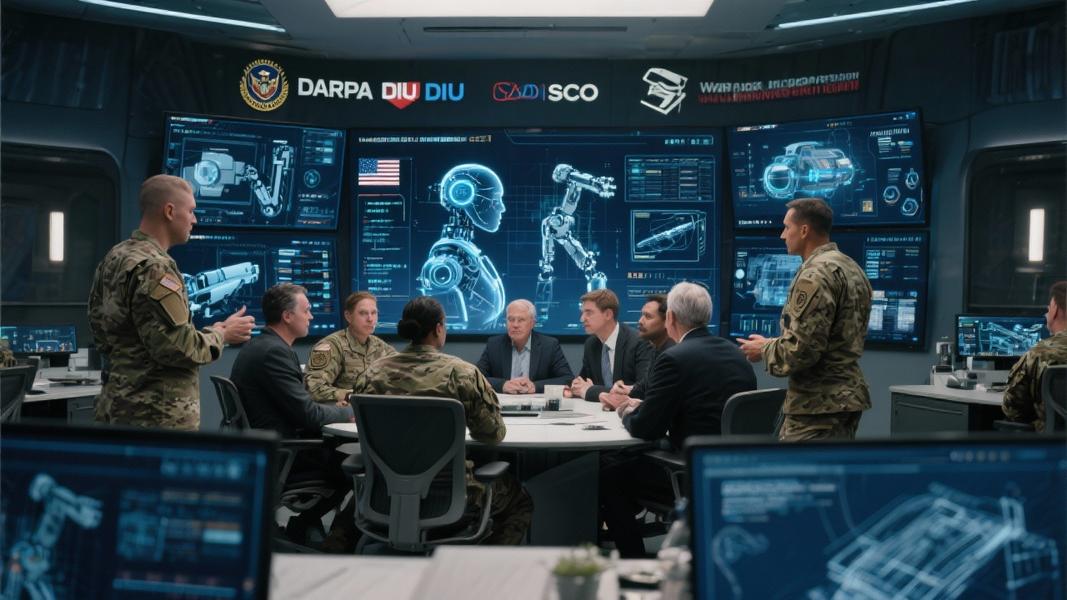
The Department of War announced a sweeping overhaul of its innovation ecosystem Tuesday, establishing a unified structure designed to accelerate the adoption of cutting-edge commercial technologies for military applications.
Under the new framework, the Defense Innovation Unit (DIU) has been designated as a Department of War Field Activity, positioning it to provide technology scouting and rapid contracting services while working directly with operational units to identify and implement commercial solutions. The restructuring represents one of the most significant changes to the department’s innovation apparatus in years, officials said.
New Leadership, Streamlined Structure
At the helm of this revamped DIU will be Owen West, whose appointment marks a significant shift in the unit’s leadership approach. West, who previously served as Assistant Secretary of War for Special Operations and Low-Intensity Conflict in the Trump administration, brings “Marine Corps combat experience, private capital expertise and a warfighter’s mindset” to the role, according to department documents.
The Strategic Capabilities Office has also been designated as a Field Activity and will continue its mission to identify “disruptive applications of new systems, unconventional uses of existing systems, and near-term technologies that create strategic effects,” the department confirmed.
Perhaps most notably, the department has tapped Cameron Stanley as the new Chief Digital and Artificial Intelligence Officer. Stanley’s mandate? To “drive Department-wide AI adoption across warfighting, intelligence, and enterprise use cases” — a move that aligns with what officials describe as “President Trump’s mandate of American AI dominance,” according to a department statement.
Emil Michael, Under Secretary of War for Research and Engineering, framed the restructuring as an invitation to the tech sector. “We are rolling out the red carpet for innovators who want to work with the War Department,” Michael explained. “This new structure creates a stronger identity for our innovation ecosystem and gives industry a more direct path to move technology into the hands of the American warfighter.”
Putting Money Where It Matters
The reorganization comes amid significant financial commitments to defense innovation. The Accelerate the Procurement and Fielding of Innovative Technologies (APFIT) program has now awarded more than $1 billion to small businesses and non-traditional defense contractors, a milestone that defense acquisition experts note is accelerating capability development while strengthening the domestic industrial base.
And it’s not just about software or AI. The department has made targeted investments in critical hardware production as well, including $32.7 million in Defense Production Act Title III investments split between Systima Technologies ($5 million) and REDAR ($27.7 million) to expand solid rocket motor component production, according to industry reports.
What’s driving this push for faster innovation? The growing recognition that traditional acquisition processes simply can’t keep pace with either technological change or emerging threats.
Cutting Red Tape
Defense Secretary Pete Hegseth signaled the department’s impatience with bureaucracy in August when he announced the elimination of the Joint Capability Integration and Development System (JCIDS), replacing it with a streamlined Requirements and Resourcing Alignment Board. The move was widely seen as addressing long-standing complaints about acquisition timelines that often stretch into decades, defense analysts observed.
The department has also created a Wartime Production Unit to replace the Joint Production Accelerator Cell established in 2023. The new unit will offer financial incentives for companies that increase production rates and delivery speed while negotiating contracts on faster timelines, according to officials familiar with the plans.
The unified innovation ecosystem now operates under the Chief Technology Officer and comprises six execution organizations: the Chief Digital and Artificial Intelligence Office, Defense Advanced Research Projects Agency, Defense Innovation Unit, Office of Strategic Capital, Strategic Capabilities Office, and Test Resource Management Center.
Still, questions remain about how effectively these structural changes will translate into actual battlefield advantages. Previous reform efforts have sometimes struggled to overcome entrenched bureaucratic resistance and congressional funding constraints.
“This is about creating a more direct path between American innovation and American warfighters,” a senior War Department official said, speaking on background. “In today’s security environment, speed of adoption isn’t just an advantage — it’s a necessity.”
