
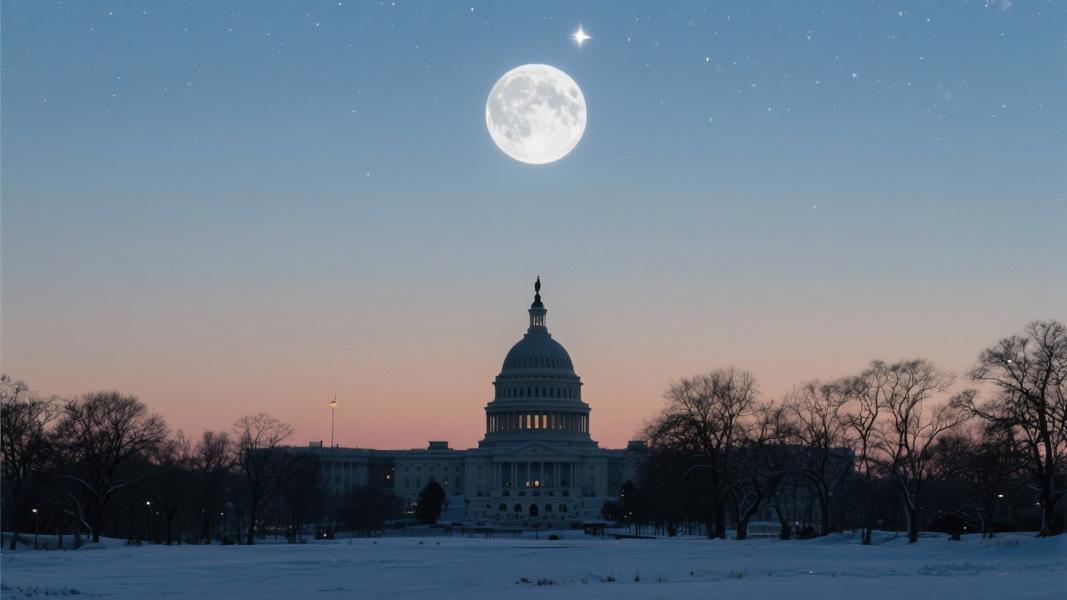
The next full Snow Moon will illuminate night skies across North America on February 1, 2026, offering skywatchers their first celestial spectacle of the month. This luminous winter event will reach peak brightness at precisely 5:09 p.m. Eastern Standard Time.
February’s Frosty Moniker
February’s full moon has earned its “Snow Moon” designation due to the historically heavy snowfall that blankets much of the Northern Hemisphere during midwinter. The name reflects traditional seasonal observations when February’s frigid temperatures and abundant snowfall made this lunar cycle particularly notable for early cultures tracking the changing seasons.
Astronomy enthusiasts can expect optimal viewing conditions shortly after sunset on Sunday, February 1, as the moon rises in the east. The Snow Moon will appear in the constellation Leo, positioned just below the glittering Beehive Cluster — creating a particularly photogenic celestial arrangement.
Interestingly, the moon will continue to appear nearly full to casual observers throughout the following day. “The Snow Moon will still look bright and full on February 2nd,” notes LiveScience, making this a two-evening event for those who miss the actual peak.
Viewing Tips
Want the best view of 2026’s first winter full moon? The ideal time to observe will be at dusk when the moon rises above the eastern horizon. This timing creates what photographers call the “moon illusion” — when our satellite appears larger near the horizon than when it’s higher in the sky.
While the moon will technically reach its peak fullness at 5:09 p.m. EST on Sunday, as confirmed by multiple astronomical sources, the best viewing will come shortly after as it rises above the horizon. No special equipment is needed, though binoculars or a small telescope will reveal crater details invisible to the naked eye.
The February 2026 full moon follows a pattern of traditional names that track seasonal changes. Other full moons throughout the year carry similar weather or nature-based designations, including the Strawberry Moon in June and Harvest Moon in autumn.
For those in urban areas, finding a spot away from bright street lights will provide the best lunar viewing experience. Weather permitting, the Snow Moon should be visible across North America, though regions experiencing actual February snowstorms might find their view obscured by cloud cover — a fitting if frustrating irony given the moon’s seasonal name.
Mark your calendars for Sunday evening, February 1, 2026. Whether you’re a dedicated astronomer or simply someone who appreciates the rhythmic dance of celestial bodies, the Snow Moon offers a moment to pause and connect with the ancient cycles that continue to influence our modern world.
