
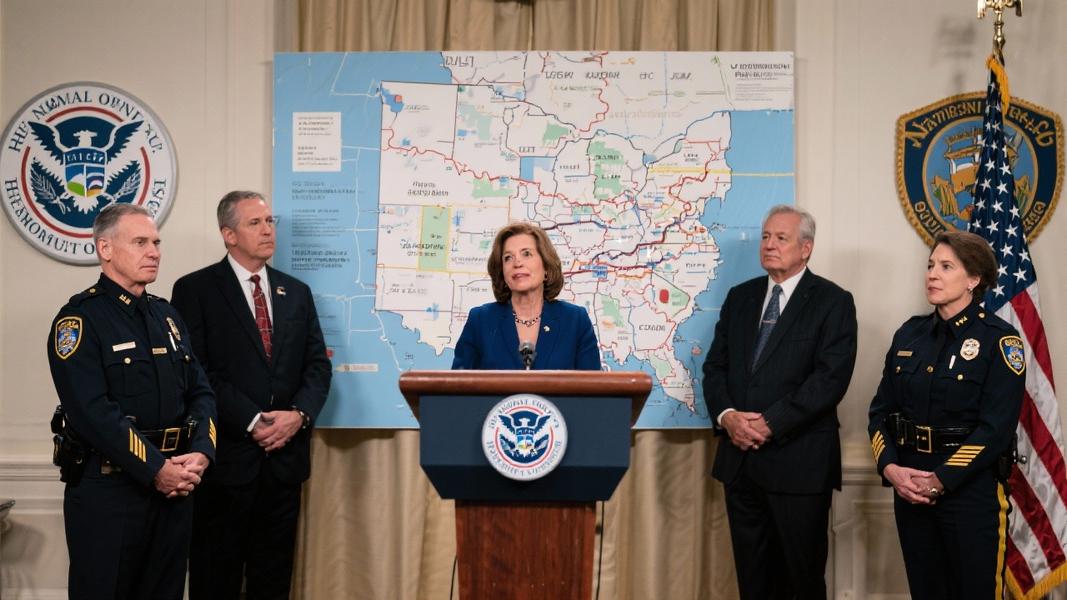
The White House has added two more counties to its list of high-intensity drug trafficking hot spots, expanding a program that officials say delivers more than $68 in seized drugs and cash for every dollar spent.
St. Joseph County, Indiana and Rogers County, Oklahoma are the newest additions to the High Intensity Drug Trafficking Areas (HIDTA) Program, the White House Office of National Drug Control Policy announced this week. The designations will funnel additional federal resources to local law enforcement agencies battling drug trafficking organizations in those regions.
“The Trump Administration is leveraging all available authorities to stop dangerous illicit drugs from reaching our communities,” said Acting Director Victor Avila in a statement accompanying the announcement.
A “Force Multiplier” Against Drug Networks
What exactly does the HIDTA designation mean for these communities? In practical terms, it opens the door to increased coordination between federal, state, local, tribal, and territorial law enforcement agencies across all 50 states, Puerto Rico, and the District of Columbia. The program provides critical support to Homeland Security Task Forces working to dismantle drug trafficking networks.
Avila described the program as a “force-multiplier in the effort to eliminate the criminal production and distribution networks that have flooded our neighborhoods with deadly substances like fentanyl.” He added that the new designations will “ensure these areas get the critical resources and support they need to combat drug trafficking organizations.”
The HIDTA Program isn’t new — it’s been around since 1988 — but its importance has grown as the nation continues to grapple with an addiction and overdose crisis. In 2024 alone, the program seized an estimated $18 billion in illicit drugs and cash, representing what officials call an impressive return on investment.
Expanding Reach, Increasing Resources
These two counties aren’t the only recent additions to the program. In the past year, the White House designated nine other counties as HIDTAs, strategically deploying resources to areas hardest hit by drug trafficking, overdoses, and poisonings.
Behind this expansion is substantial federal funding. “The President’s FY 2025 Budget will provide $290 million to support federal, state, local, and Tribal law enforcement working to stop drug traffickers across all 50 states,” Dr. Rahul Gupta, ONDCP Director, stated earlier this year.
But money alone isn’t what makes the program effective. Officials point to regional leadership as a critical factor in the program’s success, with some HIDTAs even expanding beyond traditional enforcement.
Take the New Mexico HIDTA, for example. It recently volunteered to pilot prevention initiatives focusing resources on underserved and high-risk areas while maintaining its core drug enforcement mission. “Strong and decisive leadership at the regional level is essential to the overall success of the National HIDTA Program,” the ONDCP noted when recognizing the New Mexico team’s innovative approach.
Beyond Enforcement
Is the HIDTA program solely about enforcement? Not entirely. While its primary mission remains disrupting drug trafficking organizations, the program’s evolution suggests a growing recognition that enforcement alone can’t solve America’s complex drug crisis.
The cost-effectiveness of the program — $68.07 returned for every dollar invested — has made it an attractive tool for policymakers seeking tangible results in the fight against drug trafficking. That return comes primarily through seizures, but the program’s impact extends to intelligence sharing, coordination improvements, and, increasingly, prevention efforts.
For residents of St. Joseph County, Indiana and Rogers County, Oklahoma, the designation represents both a recognition of the severity of their local drug trafficking challenges and a promise of additional resources to address them. Whether those resources can meaningfully turn the tide remains to be seen, but for now, they’re the newest front lines in America’s ongoing battle against illicit drugs.
