
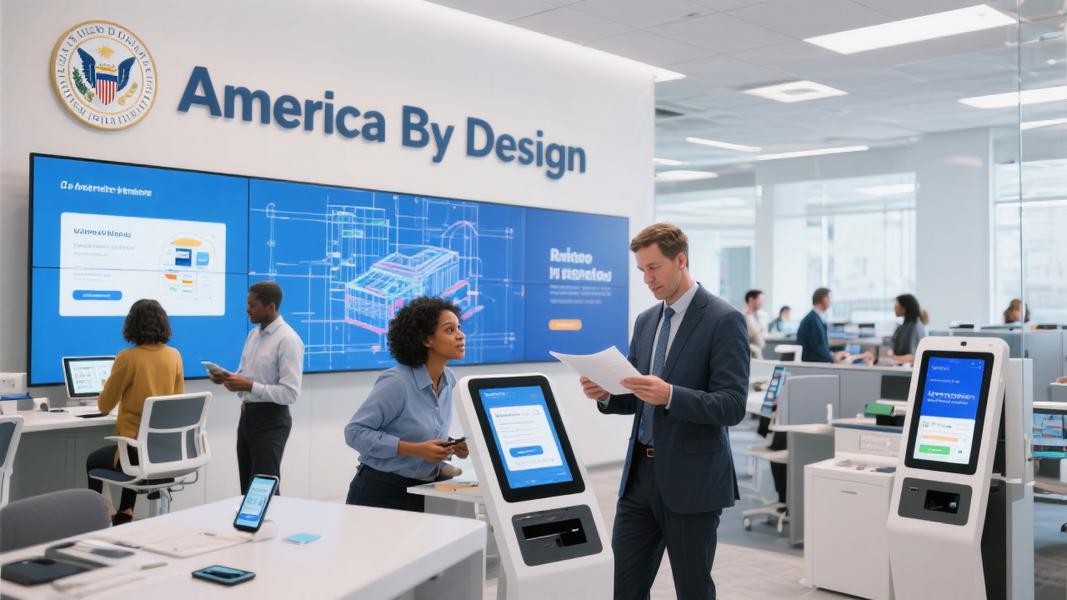
The White House is embarking on an ambitious overhaul of the federal government’s digital presence, establishing a new “Chief Design Officer” position to transform how Americans interact with government services online and in person.
President Trump signed Executive Order 14318 this week, launching the “America by Design” initiative aimed at modernizing the sprawling ecosystem of federal interfaces that many Americans find frustrating and outdated. The order creates a National Design Studio tasked with bringing user-centered design principles to everything from veteran benefits applications to national park signage.
Digital Bureaucracy in Disarray
The federal government currently maintains approximately 26,000 websites across various agencies — a digital labyrinth that the administration characterizes as inefficient and user-unfriendly. Only 6% of these sites are rated “good” for mobile performance, while a staggering 45% aren’t mobile-friendly at all.
How bad is it? Less than 20% of federal websites currently use code from the United States Web Design System, creating a fragmented user experience across government platforms. The administration plans to leverage AI tools to accelerate the modernization process, part of a broader technology push outlined in the White House’s 28-page AI Action Plan released last month.
The new Chief Design Officer will be charged with recruiting design talent from the private sector to collaborate on reimagining these digital touchpoints. The position falls under the broader umbrella of Project 2025, a conservative policy agenda developed by former Trump administration officials and The Heritage Foundation.
Beyond Websites: A Broader Beautification Push
The digital makeover comes alongside other aesthetic initiatives, including the President’s Make America Beautiful Again Commission, which will focus on conservation and restoration of public lands and waters.
“We’re restoring American excellence through better design,” reads a White House fact sheet on the initiative, which touts several early wins in government service improvements. These include reducing the backlog of veterans waiting for benefits by more than 37% and transitioning from paper-based to electronic payments.
The administration is also promoting American AI technology exports and accelerating federal permitting for data center infrastructure, reflecting a tech-forward approach to governance that emphasizes both aesthetics and efficiency.
Streamlining the Red Tape
Beyond the cosmetic changes, there are practical implications for businesses and citizens who navigate federal bureaucracy. Agencies have been mandated to simplify funding opportunity announcements using plain language — a change that could benefit small businesses seeking government contracts.
The initiative also aims to digitize federal retirement paperwork, which has historically been managed in a limestone mine using outdated record-keeping systems.
That said, critics question whether aesthetic improvements will address deeper structural issues in government services. Budget watchdogs have also raised concerns about potential costs associated with redesigning thousands of digital properties.
For now, the administration is betting that better design isn’t just about looks — it’s about rebuilding Americans’ trust in their government’s basic competence to deliver services in the digital age.
