
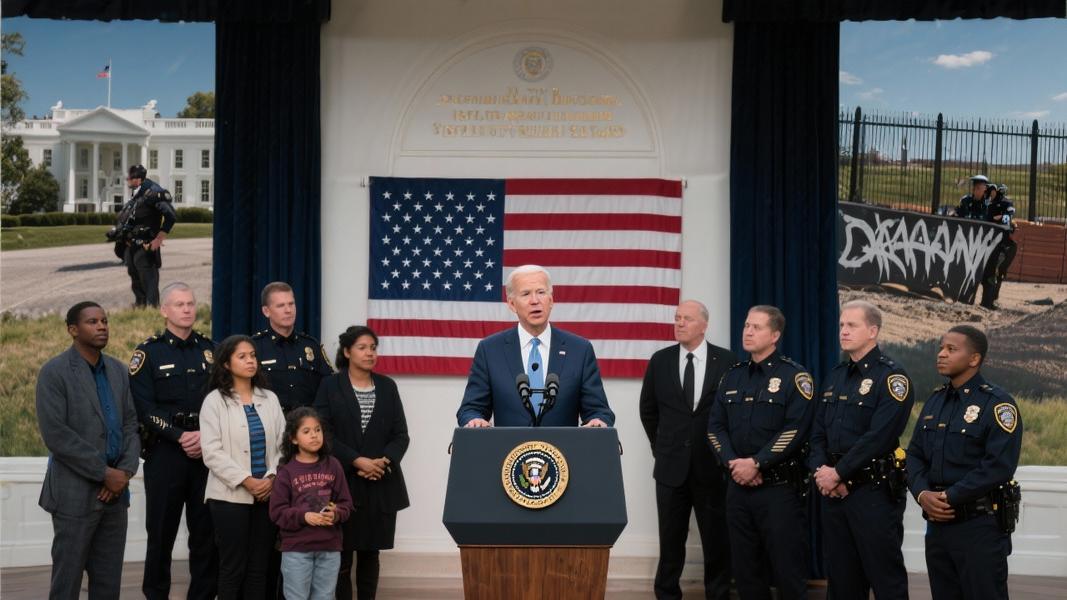
The White House has declared a new era in the fight against gang violence, issuing a Presidential Message for National Gang Violence Prevention Week that promises the “largest mass deportation operation in American history” to combat what it describes as unprecedented criminal activity from transnational gangs.
In stark language that signals a dramatic shift in federal priorities, the administration has targeted specific gangs by name, particularly Tren de Aragua and MS-13, which it claims “roamed our streets freely, terrorizing countless communities” under the previous administration. The message marks a hardline approach that began immediately after the January 2025 inauguration, when the President designated these organizations as Foreign Terrorist Organizations.
Emergency Measures and Mass Deportations
“Upon taking office, I immediately declared a National Emergency at our southern border,” the President stated in the official message, adding that the designation of certain gangs as terrorist groups was intended “to bring their reign of lawlessness and evil to an end.” This formal classification provides federal authorities with expanded powers to target gang members and their financial networks.
The administration has made the removal of gang members a cornerstone of its public safety agenda, with the President touting that “thousands of violent gang members” have already been removed from communities across the country. This effort is being supported by the recently passed “One Big Beautiful Bill,” which allocates funding for border wall construction and increased resources for Immigration and Customs Enforcement.
Law enforcement officials are being hailed as heroes in this campaign. “We extend our sincere gratitude and support to the heroic men and women of American law enforcement who are working tirelessly to rid our streets of these vicious criminals,” the Presidential message emphasized.
A Different Approach from Previous Administration
How dramatic is the shift? The contrast with the previous administration’s approach couldn’t be more pronounced. While the Biden Administration established the White House Office of Gun Violence Prevention focused on implementing the Bipartisan Safer Communities Act and related executive orders, the current administration has pivoted to a strategy centered on deportations and border security.
The National Gang Center, formed in 2009 through the merger of previously separate youth and adult gang initiatives, continues to provide communities with resources to combat gang activity. However, its role appears to be evolving under the new directive to prioritize removal operations over community intervention strategies.
The administration has also linked homelessness to public safety concerns, noting that the previous administration saw record levels of street homelessness—274,224 individuals on a single night—with significant portions struggling with drug addiction and mental health issues. “The Federal Government and the States have spent tens of billions of dollars on failed programs that address homelessness but not its root causes, leaving other citizens vulnerable to public safety threats,” according to White House documents.
Balancing Enforcement and Community Needs
While the tough stance has garnered support from those concerned about violent crime, some advocates worry about the broader implications. Community violence intervention specialists, who were previously “celebrated by the White House” under the last administration, now face uncertainty about how their approaches fit into the current strategy.
The National Gang Center still exists to “inform, equip, and train communities to prevent gang violence,” as its mission states. This suggests that even within a deportation-focused approach, there remains recognition that gang violence requires a multi-faceted response.
“Above all, we reaffirm our commitment to arresting and removing all bloodthirsty gang members, cartels, and drug traffickers from our streets and making America safe again,” the Presidential message concludes—a statement that encapsulates the administration’s uncompromising stance on what it perceives as one of the nation’s most pressing public safety challenges.
