
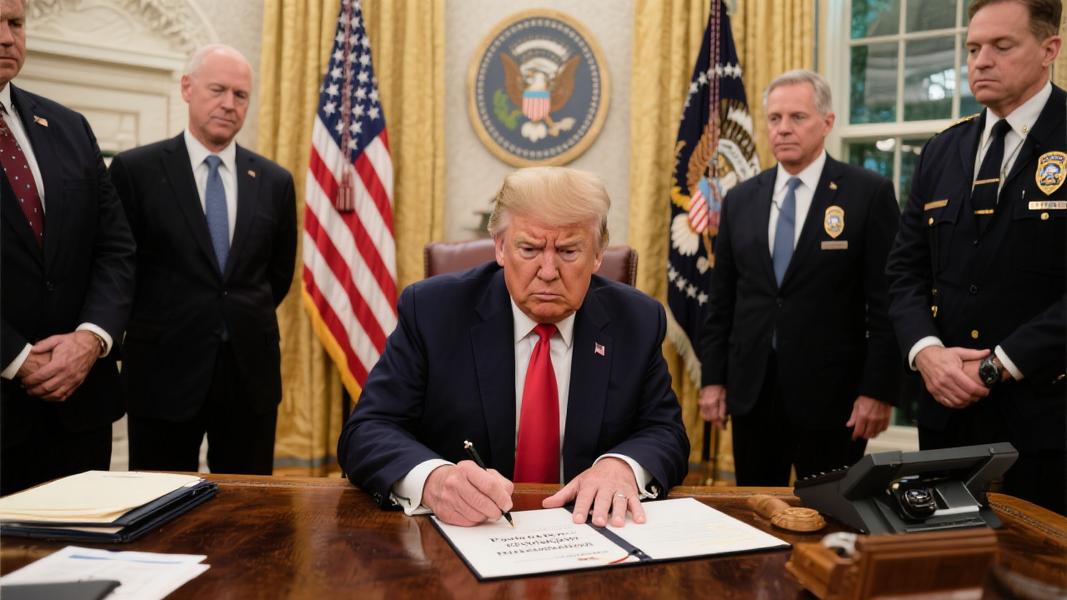
The White House has declared war on cashless bail, signing two executive orders that could dramatically reshape how criminal suspects are handled before trial across the nation — with special focus on Washington D.C.
In a sweeping policy shift, the administration has ordered the Department of Justice to identify jurisdictions that have “substantially eliminated cash bail” and propose suspending federal funding to those areas. The executive order takes specific aim at what it characterizes as policies that allow “dangerous individuals to be released,” calling such approaches a threat to public safety and a waste of resources.
“Our great law enforcement officers risk their lives to arrest potentially violent criminals, only to be forced to arrest the same individuals, sometimes for the same crimes, while they await trial on the previous charges,” the order states.
D.C. Emergency Declaration
A companion order goes even further for the nation’s capital, declaring a “crime emergency” in Washington D.C. and directing federal law enforcement to hold arrestees in federal custody “to the fullest extent permissible under applicable law.” The administration has instructed agencies to pursue federal charges whenever possible, specifically to circumvent the District’s prohibition on cash bail.
Why target D.C. specifically? The order blames the District’s pretrial release policies for creating “disgraceful conditions” that endanger “American citizens visiting our Nation’s capital, Federal workers discharging their duties to our Nation, and citizens of the District of Columbia trying to live their lives safely.”
Under the directive, members of the newly formed “D.C. Safe and Beautiful Task Force” will work to ensure suspects are held in custody before trial rather than released under the District’s current system.
National Crackdown Coming
The broader executive order gives Attorney General 30 days to compile a list of jurisdictions that have eliminated cash bail for crimes “that pose a clear threat to public safety and order.” This includes offenses involving “violent, sexual, or indecent acts, or burglary, looting, or vandalism,” according to the document.
Criminal justice reform advocates have long argued that cash bail systems disproportionately impact low-income defendants while allowing wealthy suspects to purchase their freedom regardless of public safety risk. But the administration’s orders reflect a sharp philosophical shift, emphasizing incarceration for those whose “pending criminal charges or criminal history demonstrate a clear ongoing risk to society.”
The order suggests jurisdictions with cashless bail policies are “encouraging” individuals to “further endanger law-abiding, hard-working Americans because they know our laws will not be enforced.”
Legal Questions Remain
Can the federal government actually withhold funding from states and cities based on their bail policies? The executive order includes standard language noting it “shall be implemented consistent with applicable law and subject to the availability of appropriations.”
It also specifies that it doesn’t “create any right or benefit, substantive or procedural, enforceable at law or in equity by any party against the United States.” This suggests potential limitations to its enforceability.
Still, the Department of Justice now faces a tight timeline to identify jurisdictions that have eliminated cash bail and propose specific actions against them, potentially setting up legal battles with states and municipalities over federal funding.
For residents of the District of Columbia, the impact could be immediate, as federal agencies bypass local courts entirely when handling certain arrests. Whether this represents a temporary emergency measure or a permanent shift in federal-local relations remains to be seen.
