
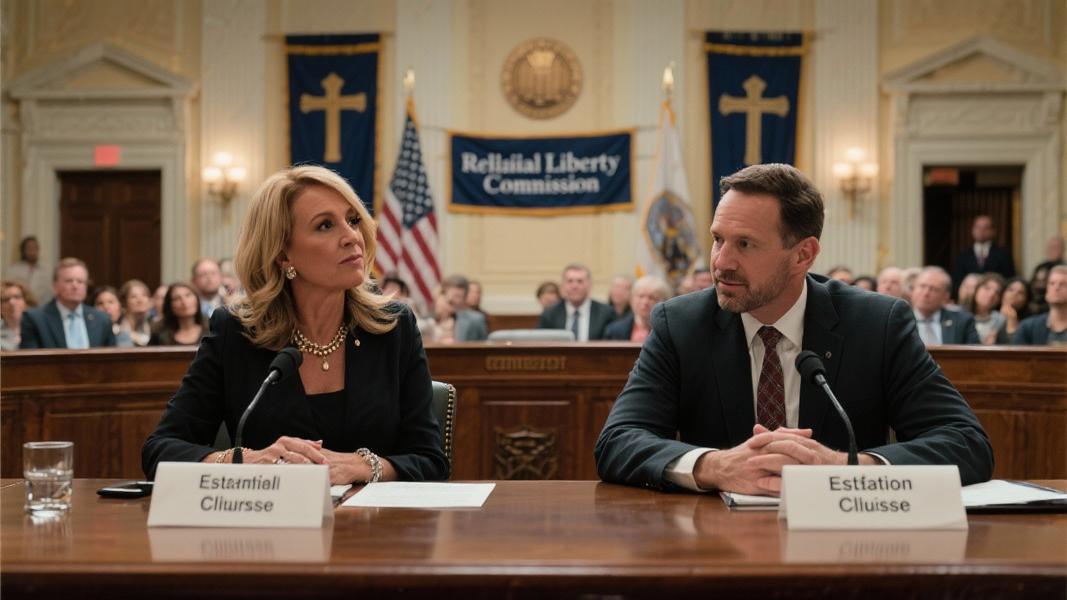
In a symbolic gathering at the Museum of the Bible in Washington, D.C., the White House Religious Liberty Commission launched its first meeting with a clear message: religious freedom isn’t just a political issue — it’s America’s bedrock principle.
The inaugural session, held on June 16, 2025, brought together faith leaders and legal experts to address what the commission describes as a critical mission: “to protect religious freedoms for all Americans of all faiths, for all times,” as stated in the opening remarks. The commission, operating under President Trump’s second administration, signaled its intention to develop long-term strategies for preserving religious liberties across denominational lines.
Faith as Foundational
Pastor Paula White, addressing the assembly, emphasized religious liberty as “the fundamental foundation of the country,” drawing connections between America’s founding documents and religious principles. “The Declaration of Independence is consistent with the Bible, and the Bible is consistent with the Declaration of Independence,” she explained, framing the commission’s work as helping Americans “reclaim that inheritance our founders gave us.”
The commission examined religious liberty through multiple lenses — as an individual right, a component of spiritual formation, a parental right, and a public value. Speakers repeatedly warned against what they characterized as modern attempts to restrict religion to a private sphere, away from public life and discourse.
Why now? Commission members pointed to what they perceive as growing challenges to religious expression in American life. “Where can I pray? When can I pray? Who can I pray to?” were questions raised during discussions, underscoring the commission’s stated commitment to protecting expressions of faith across religious traditions.
Historical Context
Speakers drew heavily from historical sources, particularly America’s founding era. George Washington’s farewell address received special attention for its assertion that “All the dispositions and habits which lead to political prosperity, religion and morality are indispensable supports.”
The commission’s rhetoric consistently positioned religious liberty as deriving from divine rather than governmental authority. “The Declaration of Independence affirms that our rights come from our Creator, not from government, but from God himself,” one speaker noted, establishing a framework where religious freedom is viewed as pre-political and inherent.
Allyson Ho’s presentation on “Courage and Religious Liberty” struck a defiant tone, warning against compromising principles for political expediency. “Please do not accept the sacrifice of religious liberty for political convenience,” she urged fellow commission members, calling such compromises “a cheap counterfeit of liberty.”
The choice of venue — the Museum of the Bible — itself reflected the commission’s orientation, providing a symbolic backdrop for discussions that frequently referenced scriptural foundations for American governance principles.
While the commission emphasized its commitment to “all faiths,” the inaugural meeting’s rhetoric and framing drew primarily from Christian theological frameworks and interpretations of American founding documents, raising questions about how broadly its eventual recommendations might apply across America’s diverse religious landscape.
The commission is expected to continue its work through a series of hearings before presenting formal recommendations on religious liberty protections to the White House later this year.
