
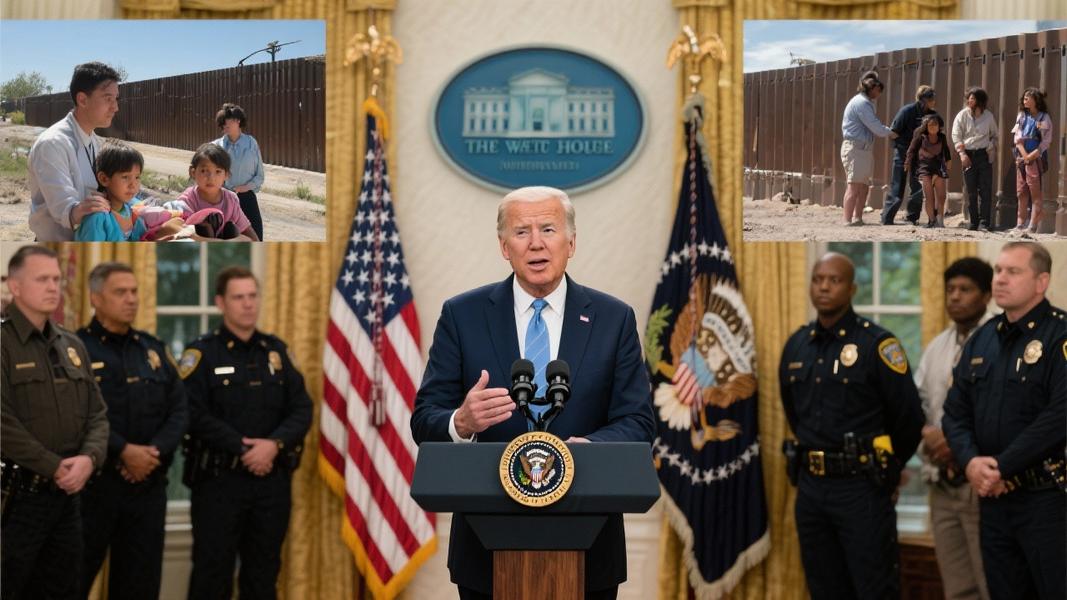
The White House has leveled scathing criticism at the previous administration’s handling of unaccompanied migrant children, claiming hundreds of thousands were “lost” to smugglers and sex traffickers in what it described as a “moral catastrophe.” The presidential message, released this week to mark National Slavery and Human Trafficking Prevention Month, outlines sweeping actions including the declaration of a national emergency and designating cartels as Foreign Terrorist Organizations.
“Under the previous administration, hundreds of thousands of unaccompanied children who entered our country were lost, with many being placed in the hands of smugglers and sex traffickers,” the White House stated in its January 6 message. “This was not only a failure of policy—it was a moral catastrophe that allowed perpetrators of modern-day slavery to exploit our country and our borders.”
The timing of the message coincides with National Slavery and Human Trafficking Awareness and Prevention Month, which has been observed each January since President Obama first established the designation in 2010 through a presidential proclamation. This year’s theme, “Stronger Connections. Stronger Futures.,” emphasizes how family, community, and institutional ties serve as protective factors against trafficking vulnerability.
Global Crisis, Local Impact
Human trafficking remains a devastating global phenomenon affecting an estimated 27.6 million victims worldwide. The California Department of Social Services has highlighted January 11 as National Human Trafficking Awareness Day, promoting the Department of Homeland Security’s Blue Campaign and its #WearBlueDay initiative to raise public awareness about recognizing trafficking indicators.
But is the current administration’s tough rhetoric matched by substantive action? That’s becoming a point of contention among anti-trafficking advocates.
A high-profile summit scheduled for January 22 at The Catholic University of America will bring together five former U.S. Ambassadors-At-Large to Combat Trafficking in Persons from different administrations. According to event organizers, the ambassadors plan to discuss significant challenges in the anti-trafficking space, including controversial moves by the current administration to reduce the anti-trafficking office staff by more than half and terminate 69 international programs.
The summit comes as Congress continues its own efforts to highlight the issue. The Senate has introduced S.Res.39, supporting the observance of National Trafficking and Modern Slavery Prevention Month from January 1 to February 1, 2025.
Trafficking prevention advocates from Lone Star Legal Aid emphasize that human trafficking can affect anyone regardless of age, gender, nationality or background, though certain populations face heightened risks. The organization points to strong community connections as crucial shields against exploitation.
“This isn’t just about border policy or law enforcement,” said one advocate who requested anonymity due to the politically charged nature of the issue. “Effective anti-trafficking work requires comprehensive approaches that address root causes of vulnerability while providing trauma-informed services to survivors.”
As federal agencies and non-profits mark this awareness month with educational campaigns and policy announcements, the stark contrast between the administration’s forceful rhetoric and reported cuts to anti-trafficking programs raises questions about the coherence of the national strategy against what remains one of the world’s most persistent human rights violations.
