
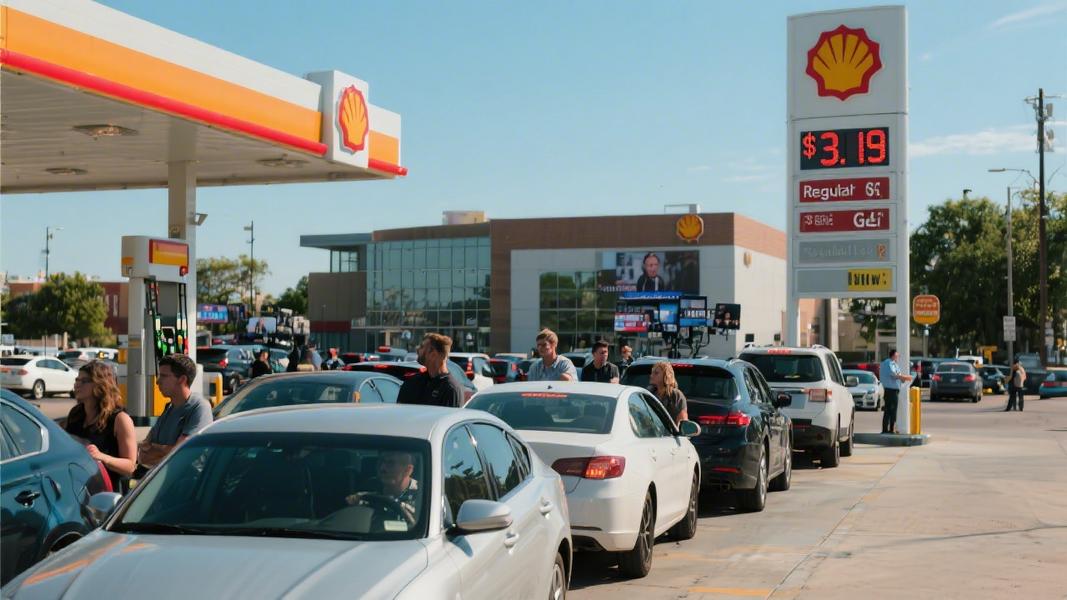
Gas prices are climbing fast — and for millions of drivers in Texas and across the country, the pain at the pump is starting to feel very real, very quickly.
In the span of just a few weeks, a combustible mix of Middle East tensions and global shipping disruptions has sent fuel costs spiraling upward. North Texas drivers watched prices jump 60 cents in a single week, while the national average has swung from modest to genuinely uncomfortable territory. The culprit, broadly, is the ongoing conflict involving Iran and its chokehold on one of the world’s most critical oil corridors.
A Perfect Storm at the Pump
It started with the Strait of Hormuz — that narrow sliver of water through which roughly 20% of the world’s oil supply passes. Disruptions there don’t stay in the Middle East. They ripple outward almost immediately, and American drivers feel them within days. That’s essentially what happened here. Crude oil briefly surged past $100 per barrel on Monday, a psychological threshold that tends to send shockwaves through commodity markets.
The national numbers tell a clear story. The U.S. average for regular gasoline sat at $2.468 per gallon on January 5 — not a bad place to be. By March 2, that figure had climbed to $2.711, a 9.9% increase in under two months. Then came the next shoe dropping: by March 5, the national average had jumped nearly 27 cents in one move, landing at $3.25 per gallon, with crude settling into the mid-$70 range as Middle East tensions kept markets on edge.
Texas Isn’t Immune
How bad is it in the Lone Star State? Well, it depends on your zip code. As of March 2, Texas ranked 7th cheapest in the nation at a statewide average of $2.62 per gallon, which sounds relatively tame — until you drive into the Forney area, where regular unleaded was ranging from $2.99 to $3.39 by March 7. That’s a gap that can feel pretty significant when you’re filling up a truck.
Still, Texas is faring better than most. The broader national average had already crossed the $3.00 mark by early March, up six cents from the prior week alone, noted analysts tracking weekly fuel data. The trend line, at least for now, is pointing in only one direction.
The Diplomatic Wildcard
But it’s not that simple — because buried inside this energy crisis is a geopolitical one. The U.S. conflict with Iran isn’t just about military posturing. It’s about oil supply, and there are those who believe the pressure campaign could ultimately unlock more barrels for the global market. “The goal here is to basically have Iran come back to the negotiations table and be able to work with the rest of the world and become a good citizen of the world,” one analyst explained. “And then provide their oil on the market. That’s an additional 3 million barrels at global rates.”
Three million barrels a day would be a meaningful injection into a market that’s clearly running tight. Whether that diplomatic resolution materializes — and how long it takes — is the question nobody can answer right now. In the meantime, the geopolitical standoff is functioning as a slow tax on every American commuter.
What Comes Next
Spring typically brings higher gas prices anyway, as refineries switch over to summer-blend fuel formulations. Layer an active Middle East conflict on top of that seasonal trend, and analysts aren’t exactly bullish on relief arriving soon. The variables are stacked against the consumer.
That’s the catch. Even in a best-case scenario — where diplomacy works, Iran returns to the table, and those extra barrels hit the market — the timeline is measured in months, not days. And $3.25 national averages have a way of becoming $3.50 before anyone quite notices.
For now, drivers are doing what they’ve always done: grumbling, adjusting, and watching the numbers on the pump tick upward with the quiet resignation of people who know they don’t really have a choice. The world’s oil politics are playing out in real time — one gallon at a time.
