
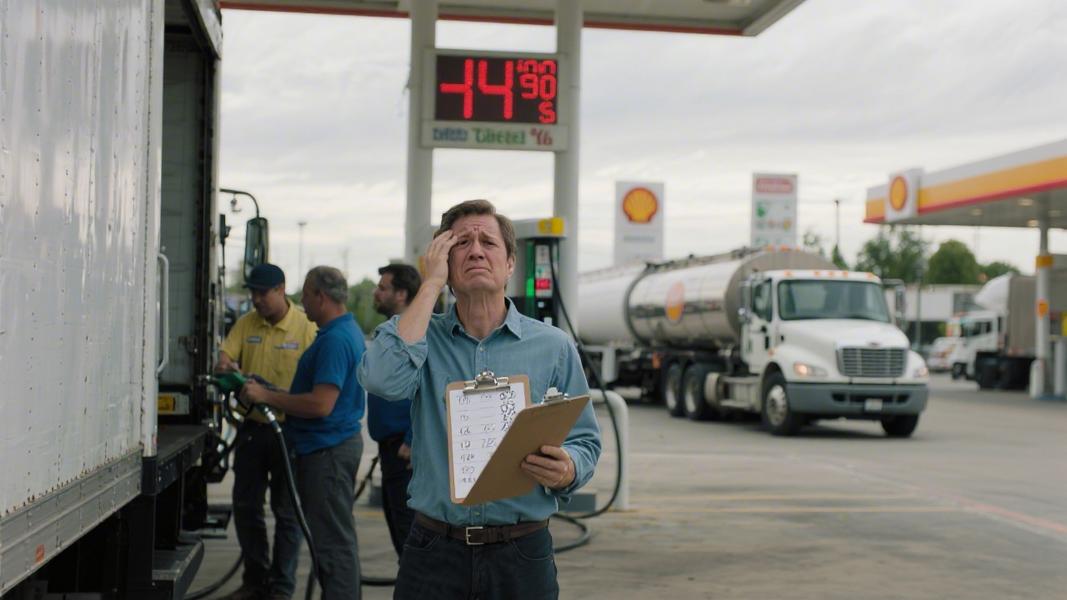
Americans filling up at the pump are facing a rude awakening — and it’s only getting worse. Gas prices have surged to their highest point since 2024, and the forces driving them higher show no signs of letting up anytime soon.
The national average for a gallon of unleaded regular gasoline has climbed to roughly $3.54, a 21% jump from just a month ago, according to data tracked by energy analysts. That’s not a seasonal blip. It’s a sharp, sustained spike that’s squeezing household budgets, rattling small business owners, and renewing a familiar, uncomfortable debate about America’s energy future.
A Perfect Storm at the Pump
What lit the fuse? The escalating conflict between the U.S. and Iran has thrown the Strait of Hormuz — one of the world’s most critical oil chokepoints — into turmoil. The disruption triggered the largest three-day price jump since Hurricane Katrina battered Gulf Coast refineries back in 2005, a milestone that underscores just how severe the current shock really is.
Since January 1st alone, the average national price per gallon has risen nearly 14% — more than 40 cents added to every fill-up, according to figures from ABC News. That kind of increase doesn’t happen in a vacuum. It compounds. It shows up in delivery costs, grocery bills, and the quiet, grinding math that working families do every week just to get by.
AAA has also confirmed the trend, placing the national average at $3.41 per gallon — up a full fifty cents from the prior month and the highest reading since August 2024. The spread between different data sources reflects timing and methodology, but the direction is unmistakable: up, and fast.
Not What Anyone Was Expecting
Here’s the irony. Just last year, the U.S. Energy Information Administration was forecasting a price decrease in 2024, citing expanded refinery capacity and growing fuel inventories. And for a while, that held. The EIA’s own data shows the average retail price for regular grade gasoline across all of 2024 came in at $3.30 per gallon — 21 cents less than 2023, a modest but real relief for consumers.
That relief now feels like a distant memory. Geopolitical shocks have a way of overriding even the most carefully modeled projections, and the Hormuz disruption is a textbook example of how quickly global events can unravel domestic price stability.
Families and Small Businesses Left Holding the Nozzle
Who feels it most? The people who can least afford it. Higher fuel costs are forcing American families and small business owners into increasingly difficult trade-offs — cutting back on discretionary spending, delaying purchases, or simply absorbing the hit and hoping things stabilize. Memorial Day, historically a high-demand travel weekend, was already flagged as one of the priciest holiday periods at the pump in recent memory.
“Our households, small businesses, and communities need relief,” one energy policy group stated bluntly. “The only remedy for America’s families and small businesses is embracing commonsense energy policies that do not limit our energy choices, and which foster reliable, affordable energy and environmental progress.” It’s a sentiment that tends to find bipartisan sympathy — even when the policy prescriptions behind it are anything but.
For business owners whose livelihoods depend on vehicles — contractors, couriers, food distributors, landscapers — the math is especially brutal. Every gallon is a line item, and right now that line item is growing faster than most businesses can adjust their pricing to compensate.
What Comes Next
Still, it’s worth remembering that energy markets are volatile by nature. Prices that spike fast can also retreat fast — particularly if diplomatic pressure eases tensions around the Strait of Hormuz or if domestic production ramps up to offset the shortfall. But that’s cold comfort for the driver standing at a pump today, watching the dollar counter spin.
The deeper question isn’t just when prices will come down. It’s whether the country has built enough structural resilience — in supply chains, in energy policy, in household savings — to weather these shocks without the kind of economic pain that tends to land hardest on people already stretched thin. Right now, the honest answer is: not quite.
