
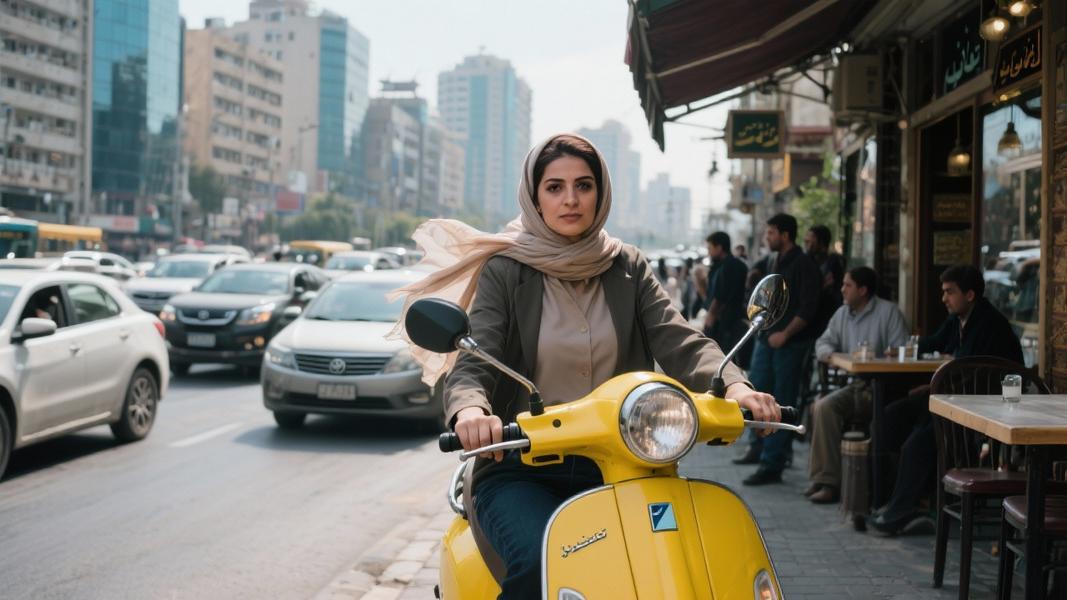
The streets of Tehran are witnessing a quiet revolution on two wheels. Despite legal prohibitions and longstanding religious taboos, women are increasingly taking to the city’s congested roads on motorcycles, challenging the status quo in one of the most visible signs of Iran’s evolving social landscape.
The phenomenon is remarkable in a country where women still cannot legally obtain motorcycle licenses and are officially banned from riding motorbikes in public. Yet amid Tehran’s notorious traffic — a daily crush of over 4 million cars and 4 million motorcycles — women riders have become an increasingly common sight.
Breaking Barriers on Two Wheels
Behnaz Shafiei stands as a pioneering figure in this movement. She’s the only Iranian woman to have competed in professional road racing and was among the first to receive official permission to practice on off-road circuits, though even she remains barred from riding publicly on city streets, according to motorcycle advocacy group Motoress.
What’s driving this shift? For many women, motorcycles represent more than just transportation — they’ve become symbols of independence and equality in Iranian society. Reformists have increasingly called for overturning the male-only licensing rules, framing the issue as one of basic rights and practical mobility.
The desire for two-wheeled transportation isn’t limited to motorcycles. A comprehensive study involving 7,141 questionnaires revealed that 72% of Iranian women expressed interest in cycling, despite three-quarters not actively riding at the time of the research. Even more telling, 81% indicated they would like to use bicycles for their daily activities, according to research from the University of Portsmouth.
Social Media Fuels the Movement
Social media has amplified what was once an invisible rebellion. A growing community of female motorcyclists is now documenting their rides online, effectively challenging the unwritten ban through visibility and collective action.
Is this just another fleeting push against boundaries that will eventually face crackdown? Not necessarily. Unlike previous social movements in Iran, women’s motorcycle riding has gradually gained a foothold without provoking immediate, severe reactions from authorities.
The trend represents part of a broader pattern of social change in Iran, where younger generations have increasingly tested traditional restrictions. ABC News notes that women on motorbikes are just the latest sign of Iran’s evolving social mores, particularly in urban centers like Tehran.
For the women participating in this quiet revolution, the stakes extend beyond transportation. Each ride represents a personal declaration of autonomy in a society where women’s freedoms have historically been circumscribed by both law and custom.
As Tehran’s traffic problems continue to worsen, pragmatic considerations may eventually outweigh traditional restrictions. After all, in a city paralyzed by congestion, efficient transportation might ultimately prove more compelling than maintaining gender-specific mobility rules that increasingly appear out of step with contemporary Iranian society.
