
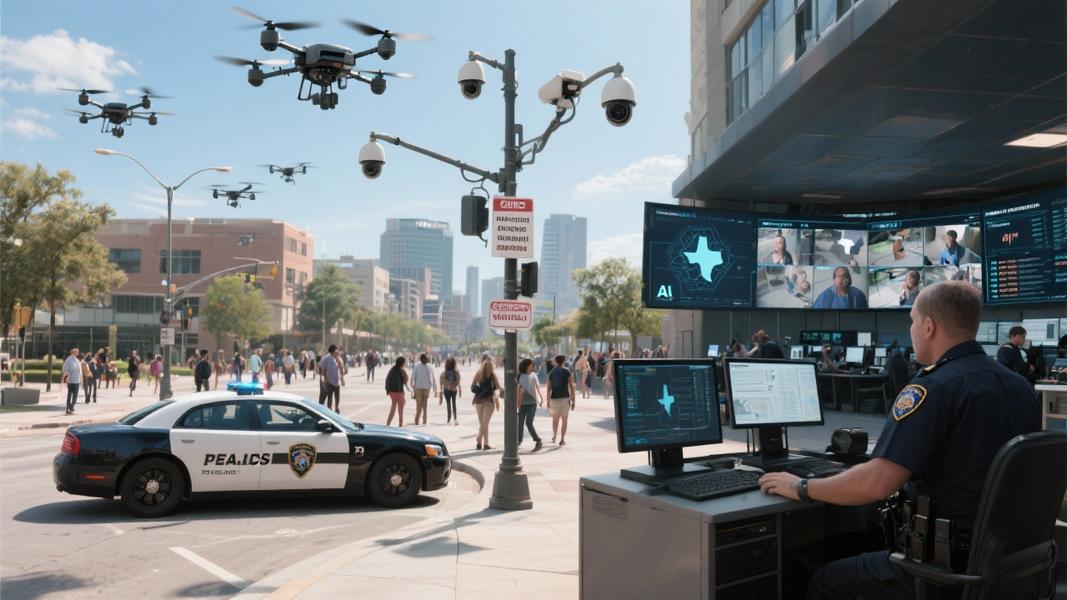
Texas is placing its bets on artificial intelligence, drones, and predictive policing as part of an ambitious new security strategy that significantly expands state surveillance powers through 2030.
The Texas Department of Public Safety has unveiled a five-year homeland security plan that emphasizes “surveillance, prediction and preemptive law enforcement” — signaling a major shift toward technology-driven policing that aims to identify and neutralize threats before they materialize.
AI and Predictive Policing Take Center Stage
The comprehensive strategy includes six goals spanning prevention, protection, mitigation, response, recovery, and “enabling capabilities” — bureaucratic language for the technological infrastructure needed to support the state’s expanding security apparatus. With 31 objectives and 158 priority actions, the plan represents Texas’ most technologically ambitious security framework to date.
At its core, the strategy relies heavily on artificial intelligence and data analytics. State officials plan to deploy AI analysis, intelligence platforms, and “fusion centers” to monitor potential threats across both physical and digital domains. These systems will gather intelligence and conduct real-time analysis to predict criminal activity before it occurs.
Sound like something from a science fiction movie? The technology is already being implemented.
Million-Dollar Surveillance Tools Already Deployed
The DPS isn’t starting from scratch. In June, the agency signed a five-year contract worth nearly $5.3 million for a surveillance tool called “Tangles” from tech firm PenLink. The system will cost Texas taxpayers approximately $1 million annually through 2029.
What’s particularly notable is that this isn’t Texas’ first foray into advanced surveillance. The Intelligence and Counterterrorism division has been using Tangles since 2021, when it was first purchased under an “emergency award” with no public solicitation as part of Governor Greg Abbott’s Operation Lone Star border initiative.
That initial $200,000 contract has now expanded twenty-five-fold, reflecting the state’s growing commitment to surveillance technology.
Border Surveillance Expands
The Texas-Mexico border remains a focal point of the state’s security strategy. The newly established Homeland Security Division will manage “Operation Drawbridge,” a program that establishes and monitors cameras and surveillance equipment along the border.
These technologies will work in tandem with the expanded drone operations outlined in the strategic plan, creating a multi-layered surveillance network that spans physical and digital domains.
“This updated strategy supersedes the previous Texas Homeland Security Strategic Plan 2021-2025 and features many changes to address evolving threats and hazards,” according to a statement from the DPS.
Civil liberties advocates have yet to fully respond to the expanded surveillance framework, but the plan’s emphasis on prediction and preemption raises obvious questions about privacy, due process, and the potential for algorithmic bias in law enforcement.
For now, Texas appears committed to its technological vision of homeland security — one where cameras watch, algorithms predict, and law enforcement acts before crimes occur. Whether this represents the future of public safety or the erosion of civil liberties remains to be seen, but one thing is clear: the surveillance state in Texas isn’t just growing — it’s getting smarter.
