
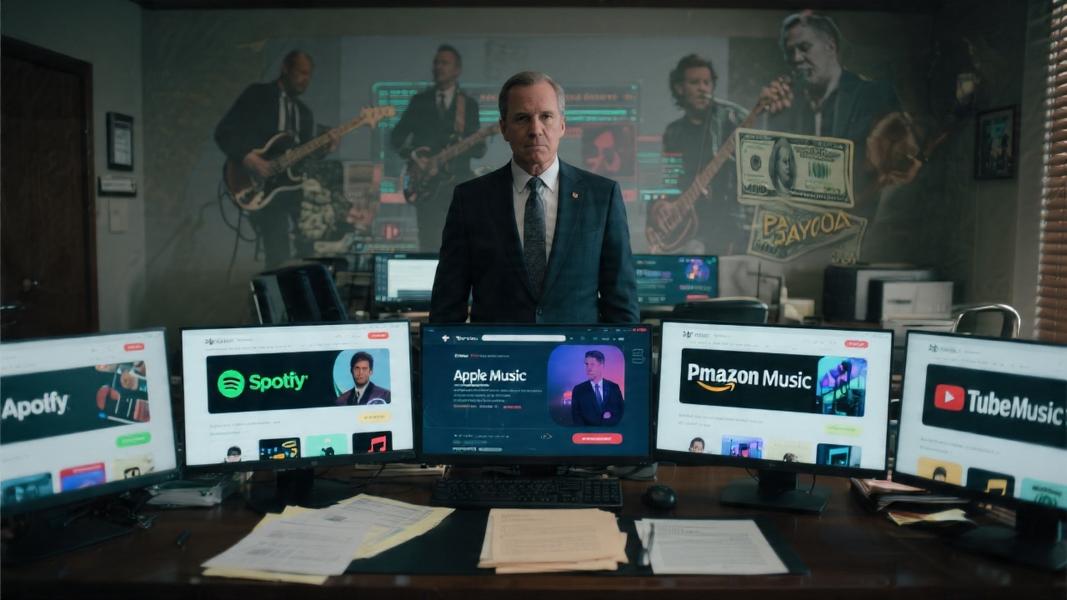
Texas Attorney General Ken Paxton is coming for your playlist — and the companies quietly shaping it. In a sweeping new investigation, Paxton’s office has set its sights on some of the biggest names in music streaming, alleging they’ve been taking undisclosed payments to push certain songs and artists to the top of your feed.
The probe targets Spotify, Apple Music, Pandora, Amazon Music, and YouTube Music — essentially the entire streaming ecosystem that hundreds of millions of listeners rely on daily. At the center of the allegations is a practice with a very old name: payola. The modern version, Paxton’s office contends, involves financial arrangements between streaming platforms and record labels or promoters that secretly influence playlist placement and recommendation algorithms, all without any disclosure to users or competing artists.
A Digital-Age Spin on an Old Scandal
Payola isn’t new. The practice of paying for radio airplay without disclosure scandalized the music industry in the 1950s and again in the early 2000s. But it’s one thing to slip a DJ an envelope — it’s another when the “DJ” is an algorithm serving personalized recommendations to half a billion people. The scale here is fundamentally different, and that’s precisely what makes this investigation worth watching.
Paxton’s office has issued Civil Investigative Demands — essentially legal orders compelling the companies to hand over documents — targeting any financial arrangements that may have influenced how music is surfaced to listeners, as reported by KRLD. The demands are broad by design. Paxton wants receipts, contracts, communications — anything that might reveal whether these platforms have been operating as a pay-to-play system dressed up as a meritocracy.
“Music artists deserve to compete on a level playing field, not one distorted by bribes, and listeners deserve transparency in what they are being recommended,” Paxton said. It’s a line that plays well, and it’s not wrong. Independent artists who can’t afford to grease the right wheels — if greasing is indeed what’s happening — would be the clearest losers in a system like this.
What’s Actually Being Alleged?
That’s the key question, and right now, the answer is still coming into focus. The investigation doesn’t yet mean charges have been filed or that any wrongdoing has been proven. What it does mean is that Texas believes there’s enough smoke to go looking for fire — and it has the legal tools to do it. Civil Investigative Demands carry real weight; companies that ignore them do so at their own peril.
The specific concern, as detailed by the Dallas Express, centers on whether platforms accepted money to enhance a song’s visibility — through curated playlists, algorithmic boosts, or recommendation features — without telling users that the placement was paid for. Under Texas consumer protection law, that kind of hidden commercial arrangement could constitute deceptive trade practices. It’s not a small allegation.
Still, the streaming companies haven’t exactly been caught red-handed. Spotify and others have long maintained that their editorial playlists and algorithmic recommendations are independent processes. Whether the CIDs turn up anything that contradicts those assurances is the whole ballgame here.
The Broader Stakes
For artists — especially independent ones — the implications are significant. Playlist placement on a major streaming platform can be the difference between a song breaking through and disappearing entirely. If the algorithm isn’t neutral, if it’s tilted by money changing hands behind closed doors, then the entire premise of the streaming economy as a democratizing force for music starts to crack.
For listeners, the issue is arguably just as personal. People trust recommendation engines to surface music they’ll actually like, not music that someone paid to put in front of them. There’s a reason streaming platforms market themselves on discovery — “find your next favorite artist” — and a pay-to-play back-channel would make that promise hollow, as noted by Changeflow.
None of the targeted platforms have publicly responded in detail to the investigation at this stage. That’s not unusual — companies rarely comment substantively while a probe is in its early phases. But the silence is its own kind of story. When the documents start flowing in response to those CIDs, things could get considerably louder.
Payola killed careers and tarnished institutions the last time it ran rampant. If it’s found to have quietly migrated into the streaming era, the reckoning may be just as messy — only this time, the jukebox is in everyone’s pocket.
