
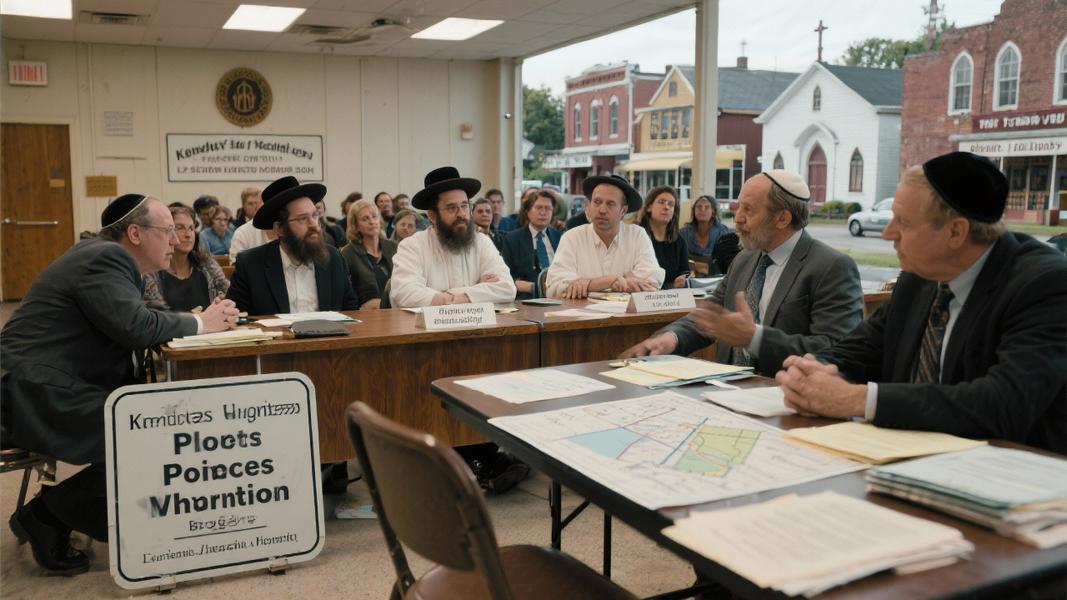
In a significant legal settlement, the borough of Kingston, Pennsylvania must overhaul zoning ordinances that effectively blocked religious establishments from operating in most of the municipality, particularly impacting the local Jewish community that had been worshipping in a basement while seeking permanent space.
The U.S. Justice Department announced the consent order Wednesday, resolving allegations that Kingston’s 2023 zoning code violated the Religious Land Use and Institutionalized Persons Act (RLUIPA) by subjecting religious organizations to stricter requirements than comparable secular establishments.
Unequal Treatment Under the Law
At the heart of the case was a stark disparity in how Kingston regulated different types of gathering spaces. The borough’s ordinance required places of worship to obtain special exception permits while allowing similar secular venues like theaters, bowling alleys, and libraries to operate “as of right.” Additionally, religious establishments faced a one-acre minimum requirement that wasn’t imposed on nonreligious assembly spaces.
“Time and time again, local governments enact zoning laws that treat places of worship and religious schools worse than comparable secular places of assembly, and unreasonably limit where religious land uses can locate,” the Justice Department stated in its complaint. “And too often the Jewish community bears the brunt of those restrictions.”
Just how restrictive were these regulations? In Kingston, only 49 parcels of land met the one-acre minimum requirement, effectively limiting religious establishments to a tiny fraction of available properties throughout the borough.
The Chabad Community’s Struggle
The lawsuit highlighted the plight of Kingston’s Chabad community, which had been conducting worship services in a private home’s basement. When the group purchased a property at 445 Wyoming Ave. in Kingston’s commercial district to establish a permanent home, they ran straight into the borough’s restrictive zoning wall — the plot was smaller than the mandatory one-acre minimum.
This barrier proved particularly problematic given the community’s size. The Times Leader reported that more than 500 pre-school, elementary school, and middle school children of Chabad families reside in Kingston, underscoring the significant need for adequate religious facilities.
Terms of the Settlement
Under the consent order, Kingston must substantially revise its zoning ordinance to eliminate discriminatory barriers. The changes include:
• Allowing places of worship and religious schools as permitted uses in commercial districts and as special uses in residential districts
• Eliminating acreage requirements specifically targeting religious establishments
• Ensuring religious gathering places receive comparable treatment to nonreligious assembly venues regarding parking, landscaping, and other zoning considerations
Beyond the zoning revisions, Kingston officials and employees will undergo training on RLUIPA requirements. The borough must also establish procedures for receiving and resolving any future RLUIPA complaints.
Assistant Attorney General Harmeet K. Dhillon of the Civil Rights Division didn’t mince words about the department’s commitment to enforcing religious land use protections. “The Justice Department will relentlessly pursue and prosecute jurisdictions that violate RLUIPA,” Dhillon warned.
Religious Land Use Protections
Why does this case matter beyond Kingston? RLUIPA, enacted in 2000, provides crucial federal protections against discriminatory land use regulations that can effectively shut out religious communities from establishing places of worship.
The law specifically prohibits governments from imposing “substantial burdens” on religious exercise through land use regulations unless they can demonstrate a compelling governmental interest and show they’re using the least restrictive means possible.
For Kingston’s Chabad community, the settlement represents not just a legal victory but the practical ability to establish a permanent religious home after years of makeshift arrangements. It also serves as a reminder to municipalities nationwide that zoning powers cannot be wielded in ways that discriminate against religious institutions — intentionally or otherwise.
