
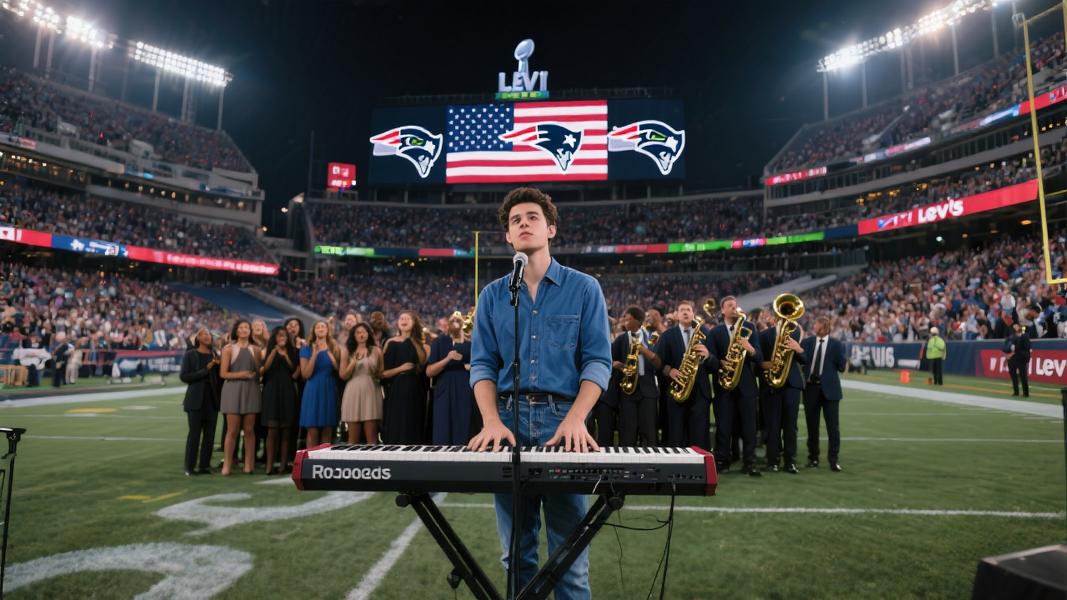
Charlie Puth delivered a swift but mostly well-received rendition of “The Star-Spangled Banner” at Super Bowl LX, clocking in at just under two minutes as the Seattle Seahawks and New England Patriots prepared to face off.
The 34-year-old singer performed the national anthem at Levi’s Stadium in Santa Clara, California, on February 8, 2026, according to reports. His 1-minute, 56-second performance fell on the shorter side of Super Bowl anthem history, breaking from the trend of lengthy, melismatic interpretations that have dominated recent years.
Reaction across social media was largely positive, though not without its critics. “Charlie Puth killed it holy s—,” wrote one enthusiastic fan on social media, while others noted what they perceived as heavy use of autotune during the performance.
The New Jersey native’s journey to the Super Bowl stage represents a full-circle moment for the artist who first gained attention through YouTube cover songs before skyrocketing to fame with his 2015 collaboration with Wiz Khalifa, “See You Again.” That track, which served as a tribute to the late actor Paul Walker in “Furious 7,” helped establish Puth as a mainstream artist.
Why Puth for such a high-profile performance? The four-time Grammy nominee from Rumson has maintained steady popularity while avoiding major controversy — increasingly important criteria for the NFL when selecting anthem performers for its flagship event. His selection follows recent performances by country stars and established pop vocalists at previous Super Bowls.
The matchup between the Seahawks and Patriots added an extra layer of drama to the proceedings, with the teams facing off in a rematch of their memorable Super Bowl XLIX contest from 2015 — coincidentally the same year Puth broke through to mainstream success with “See You Again.” The NFL confirmed the performance was among the shorter national anthems in recent Super Bowl history.
For Puth, who turned 34 just weeks before the performance, the Super Bowl platform represents one of music’s most visible stages — a brief but career-defining opportunity witnessed by over 100 million viewers and scrutinized note by note across social media platforms and sports bars nationwide.
