
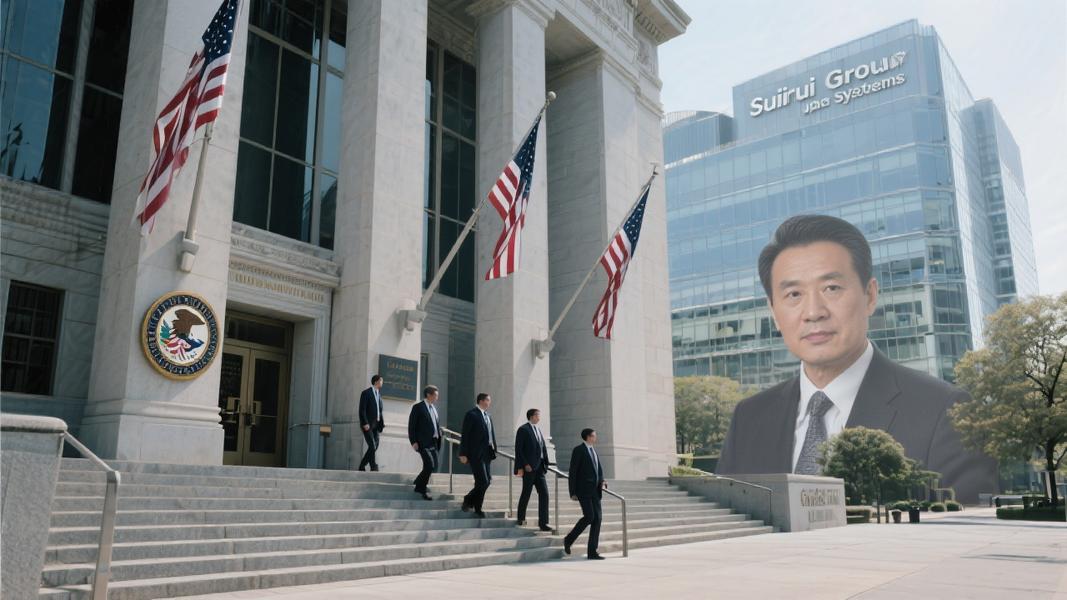
The Department of Justice has launched an unprecedented legal action to force a Chinese company to surrender its American acquisition, marking the first time federal prosecutors have gone to court to enforce a presidential divestment order under national security powers.
Filed on February 9, 2026, the complaint targets Suirui Group over its 2020 purchase of Jupiter Systems, a visualization technology company whose clients include the CIA, NSA, and NASA. The legal move follows President Donald Trump’s July 2025 executive order demanding the Chinese firm divest from Jupiter, citing national security concerns.
“There is credible evidence that leads me to believe that the transaction threatens to impair the national security of the United States,” President Trump declared in the July 8th order, which gave Suirui 120 days to completely divest from the American company.
Five Years Later, CFIUS Strikes
What makes this case particularly striking is its timing. The acquisition happened in February 2020 — more than five years before Trump’s order to unwind it. The Committee on Foreign Investment in the United States (CFIUS) determined that Suirui’s ownership constituted a national security risk, specifically citing “potential compromise of Jupiter’s products used in military and critical infrastructure environments.”
Jupiter Systems isn’t exactly a household name, but its technology is deeply embedded in sensitive government operations. The company specializes in audiovisual equipment that’s deployed across critical infrastructure and military installations — precisely the kind of technology the administration has increasingly viewed as vulnerable to foreign exploitation.
The presidential order goes beyond simply requiring divestment. It also prohibits Suirui from accessing Jupiter’s non-public source code and technical information, while restricting Jupiter from maintaining interests in Chinese subsidiaries acquired after the original transaction.
First Test Case Under Second Trump Term
This represents the first presidential block by CFIUS under Trump’s second administration, according to legal experts tracking foreign investment cases. The retroactive nature of the order — reaching back to undo a completed transaction from years earlier — signals a potentially aggressive approach to Chinese investments in U.S. technology companies.
The case, officially captioned United States v. Suirui Group Co., Ltd., et al., No. 26-cv-00369 (D.D.C.), marks uncharted legal territory. Never before has the Justice Department filed a federal district court action to enforce a presidential divestment order.
Legal analysts note that the move represents a significant escalation in the administration’s toolbox for controlling foreign access to sensitive American technologies. “This isn’t just about one transaction,” said a national security lawyer who requested anonymity to speak freely. “It’s about setting precedent for what CFIUS can do years after deals close.”
The Long Arm of CFIUS
The formal complaint comes exactly seven months after Trump’s initial order, which was published in the Federal Register on July 11, 2025. Hong Kong-based Suirui International Co. Ltd., a subsidiary of Chinese Suirui Group, had completed its acquisition of Jupiter Systems LLC in February 2020, during Trump’s first term as president.
The retroactive prohibition raises questions about the stability of completed foreign investments in U.S. companies, particularly those involving sensitive technologies. For investors and companies alike, the message seems clear: No acquisition is truly final if national security concerns emerge later.
Can foreign investors ever feel secure in their U.S. acquisitions? That question now looms large over the cross-border investment landscape, especially for Chinese firms eyeing American technology assets. The five-year gap between Jupiter’s acquisition and the forced divestment suggests CFIUS reviews may have no practical time limit.
As the case moves through federal court in what will likely be closely watched proceedings, it may establish important precedents for how aggressively the U.S. government can police foreign investments — and how far back it can reach to undo them.
For now, Suirui faces the prospect of unwinding a five-year-old acquisition under the watchful eye of federal prosecutors determined to enforce the president’s national security directive, regardless of how much time has passed since the deal closed.
