
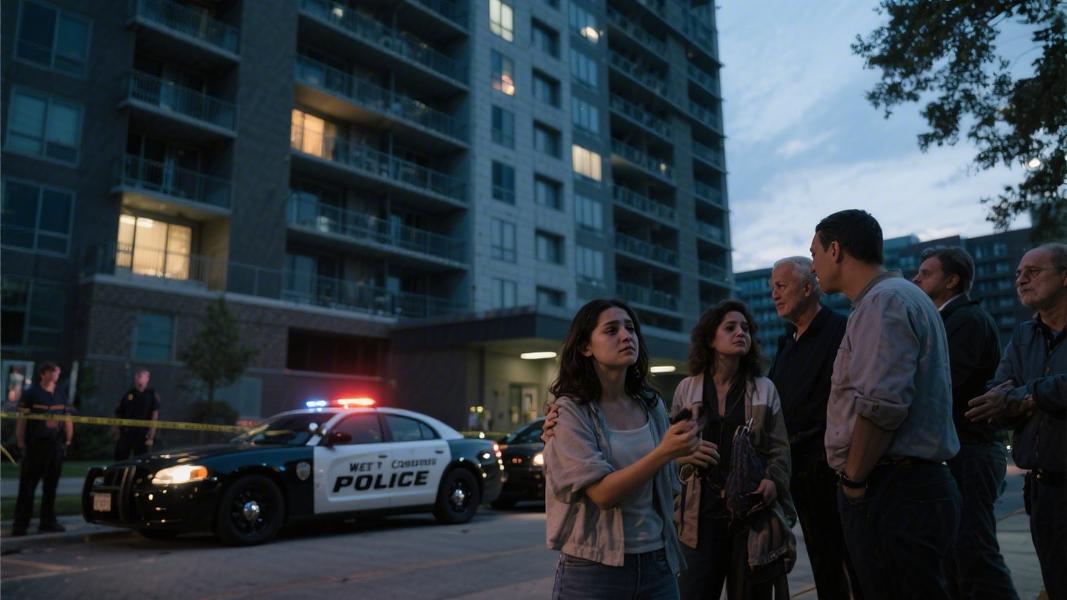
The Travis County Medical Examiner has ruled 19-year-old Brianna Aguilera’s death a suicide, confirming the Austin Police Department’s earlier assessment of the Texas A&M student’s fatal 17-story fall from a West Campus apartment building last November.
According to multiple sources familiar with the report, Aguilera died from blunt force trauma after falling from the 21 Rio Apartment Complex on November 29, 2025, where she had been visiting for the Texas vs. Texas A&M football game. The ruling, expected for public release as early as February 13, 2026, bolsters APD’s December classification of “death by suicide” — a conclusion her family has vehemently rejected.
Evidence Behind the Ruling
Austin police based their determination on what they described as substantial evidence, including witness statements, video footage, and digital records. Perhaps most significant was the discovery of a suicide note dated November 25, 2025 — four days before her death — found in a deleted folder on Aguilera’s computer, along with text messages expressing suicidal thoughts sent the day before her death.
“From the moment this call originated up until now, between all of the witness statements, all of the video evidence, and all of the digital evidence collected, at no time did any evidence point to this being anything of a criminal nature,” APD Homicide Detective Robert Marshall said during a December press conference.
The medical examiner’s report specifically cites information provided by Austin police detectives, paired with an independent investigation conducted by the examiner’s office.
Family Disputes Findings
What happens when a grieving family rejects official conclusions? In this case, they hire high-profile attorney Tony Buzbee and take matters into their own hands.
Buzbee, representing Aguilera’s family, has launched a blistering attack on the investigation’s thoroughness. “The Austin Police Department’s ‘investigation’ fell woefully short,” Buzbee said in a statement. “Brianna deserved better. Her family deserves better.”
On January 5, the family filed a wrongful death lawsuit in Travis County seeking at least $1 million from Austin Blacks Rugby Club and UT Latin Economics and Business Association. The suit alleges these organizations served alcohol to the underage Aguilera at a tailgate event, leading to her becoming “grossly intoxicated.”
Buzbee’s critique extends to specific investigative failures he claims undermined the conclusion. “They failed to review phone records of Brianna and those immediately connected to her or those at the scene. They failed to interview all witnesses, failed to take statements under oath, failed to put together an accurate timeline, failed to secure video footage, and most importantly, failed to follow through and interview witnesses, even the ones that we identified for them.”
Questions Remain
The crux of Buzbee’s argument centers on uncertainty about Aguilera’s final moments. “Who was with Brianna on that balcony, when she went over the balcony? And why did she go over the balcony,” Buzbee said last month. “That’s the question and police don’t seem to be interested in the answer to that question.”
Despite the medical examiner’s ruling, Austin Police have confirmed their investigation remains open. “Until it is closed, Austin Police will not be providing any additional information,” the department stated.
Buzbee maintains the lawsuit will enable an independent investigation through legal mechanisms unavailable to the family otherwise. “This effort will give us the ability to put witnesses under oath, subpoena records, and compel cooperation of potential witnesses. We will do what the police and other authorities have failed to do.”
For now, two starkly different narratives surround Aguilera’s death: official investigations pointing consistently toward suicide, and a family convinced there’s more to the story than authorities have uncovered. “The medical examiner’s flawed conclusion,” Buzbee insists, “changes nothing.”
