
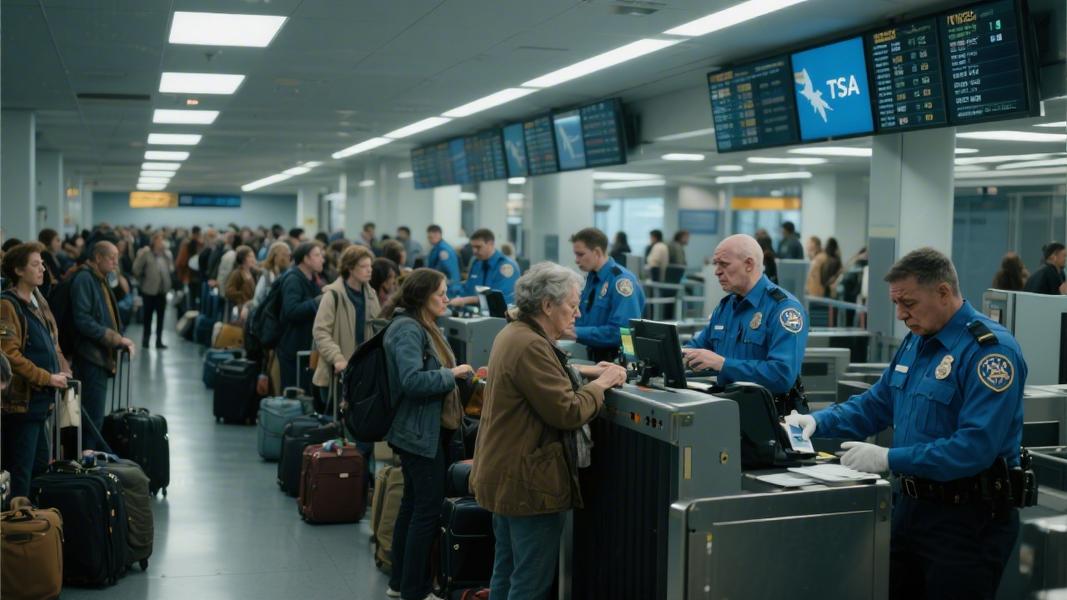
TSA workers are once again clocking in without paychecks as a partial Department of Homeland Security shutdown entered its second day, threatening longer security lines and mounting frustration among essential airport personnel forced to work without compensation.
The shutdown, which began at midnight between February 13-14, 2026, comes after Congress failed to approve DHS funding amid a bitter partisan standoff over federal immigration enforcement policies. Unlike the record 43-day shutdown that ended last November, this impasse affects only DHS operations, with approximately 95% of TSA workers deemed essential and required to continue screening passengers without pay until lawmakers reach a deal.
Travelers Face Uncertainty at Security Checkpoints
While the Federal Aviation Administration remains fully funded through September, preventing widespread flight cancellations, travelers are already seeing impacts at security checkpoints across the country. At Boston’s Logan Airport, what began as minimal disruption has evolved into noticeable delays during the February vacation rush, with Terminal A experiencing particularly long queues, according to reports.
“I am frustrated, angry, disappointed,” said Maggie Sabatino, a TSA agent and executive vice president of union chapter Local 333 at Philadelphia International Airport. “It’s frustrating to know that to both parties, to this administration, that this is okay to do to the American people… It’s the complete opposite. It’s devastating.”
Security experts warn that even a small number of unscheduled absences can dramatically extend wait times at understaffed checkpoints, particularly at smaller airports with limited screening capacity. Airlines may hold departures for passengers stuck in security lines, potentially creating a cascading effect of delays throughout the system, analysts note.
Real Human Cost
For the 47,000 TSA officers represented by the American Federation of Government Employees, the shutdown presents an acute financial crisis. Many are still recovering from the previous government funding lapse.
Sabatino, a 13-year TSA veteran and mother of two including a 9-year-old son with autism, described receiving just $104 after taxes for three days of work following the last shutdown. “Full tax has come out of that three-day’s worth of pay, and by the time it’s done, you’re receiving $104. That’s not a paycheck that’s supposed to carry you over through a shutdown,” she explained.
With a negative bank balance and less than two weeks of autism medication remaining for her son, Sabatino exemplifies the approximately 1.5 million federal workers who faced similar hardships during previous shutdowns. The financial strain is particularly acute for lower-paid essential workers who must continue reporting for duty without knowing when their next paycheck will arrive, studies show.
Political Deadlock Over Immigration Policies
What’s behind this latest Washington impasse? Democrats in both the House and Senate have refused to approve DHS funding without new restrictions on federal immigration enforcement operations following the fatal shooting of Alex Pretti and Renee Good in Minneapolis last month.
Their demands include requiring ICE agents to remove masks during operations, identify themselves during detentions, and obtain warrants before making arrests on private property – provisions Republicans have repeatedly rejected.
Complicating matters, Congress began a scheduled 10-day recess despite the funding deadline, though lawmakers may return early if a breakthrough appears possible. President Trump has indicated negotiations are continuing, but no immediate resolution appears imminent.
Advice for Air Travelers
How bad could it get? While air traffic controllers remain on the job with FAA funding secure, security screening represents the most vulnerable link in the air travel chain during this shutdown.
Travelers should plan to arrive at airports significantly earlier than normal, particularly during peak travel periods like the current February vacation week. Real-time security wait information is available on most airport websites and can help with planning.
Packing strategically also helps. Avoiding prohibited items in carry-on luggage prevents secondary screenings that further slow the process for everyone. TSA guidelines remain in effect despite the funding lapse, with full screening protocols continuing despite the personnel challenges.
Still, the situation remains fluid. Without congressional action, this partial shutdown could extend indefinitely, potentially leading to increased callouts among unpaid workers as financial pressures mount – a pattern observed during previous funding lapses.
For now, the nation’s aviation security system continues functioning on the backs of workers like Sabatino, who summed up the sentiment of many essential federal employees: “It’s not a Democrat or Republican issue. It’s an American issue.”
