
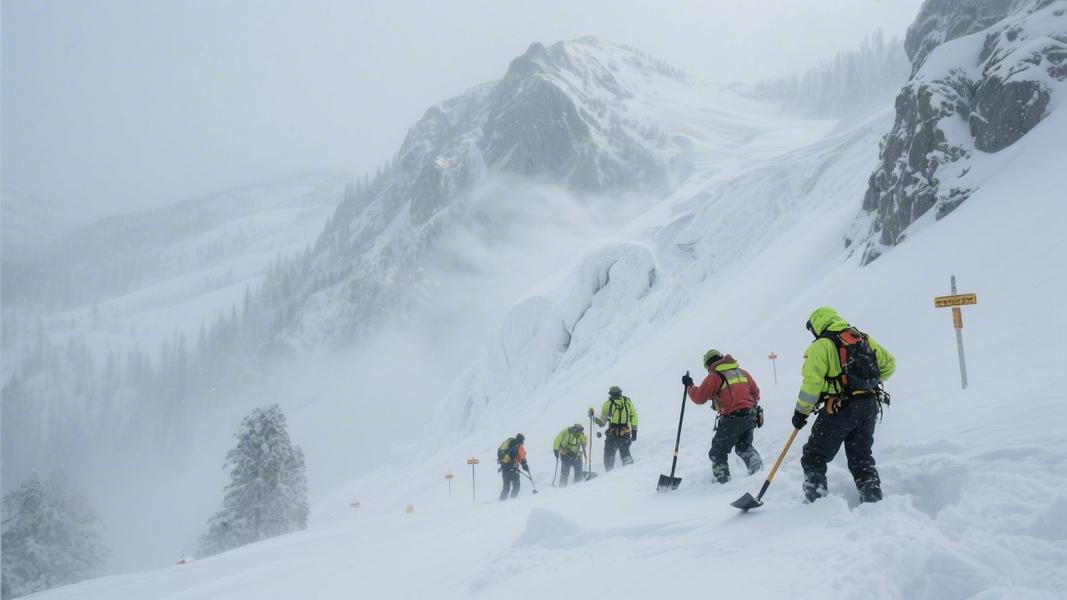
A devastating avalanche swept through a backcountry skiing expedition near Lake Tahoe on Tuesday, killing eight people and leaving one still missing in what officials are calling the deadliest U.S. avalanche in nearly 50 years.
“Someone saw the avalanche, yelled avalanche, and it overtook them rather quickly,” authorities stated as search and rescue operations continued through deteriorating conditions. The tragic incident has sent shockwaves through the tight-knit winter sports community and raised questions about backcountry safety during severe weather events.
The disaster struck around 11:30 a.m. Tuesday near Castle Peak, where 15 backcountry skiers were on the final day of a three-day expedition led by Blackbird Mountain Guides. One participant reportedly pulled out at the last minute before the group was caught in the slide, according to reports from local authorities.
Rescue Efforts in Treacherous Conditions
Six skiers were rescued with varying injuries as emergency teams battled against time and treacherous conditions. The area near Donner Summit, known for its spectacular backcountry terrain, receives an average of nearly 35 feet of snow annually, making it both a prime destination for advanced skiers and a potentially hazardous environment, experts noted.
Among the victims were three professional guides, with the deceased and missing ranging in age from 30 to 55 years old. Seven women and two men have been confirmed among the dead and missing, marking a particularly devastating toll for what had begun as a specialized adventure excursion.
Why were they out in such conditions? The storm that triggered the deadly avalanche had dumped several feet of fresh, unstable snow across the high Sierra in recent days — conditions that avalanche forecasters had warned about nearly a week prior.
The fresh powder — typically prized by backcountry enthusiasts — created a dangerous combination when layered on existing snowpack. Such conditions often produce what avalanche experts call a “slab avalanche,” where a cohesive layer of snow breaks away and slides downhill, gathering devastating momentum.
Historical Context
This tragedy represents the deadliest avalanche incident on U.S. soil since 1978, when seven people were killed at Alpine Meadows ski resort, also in the Tahoe region. That historical connection hasn’t been lost on longtime residents of the area, many of whom still remember the earlier disaster.
“These mountains demand respect,” said John Harrington, a 30-year veteran of Tahoe search and rescue operations who wasn’t involved in Tuesday’s response. “Even the most experienced backcountry users can find themselves in trouble when conditions align in just the wrong way.”
The incident has already sparked debate about backcountry access during storm warnings and the balance between adventure tourism and safety protocols. Blackbird Mountain Guides, established in 2012, has previously maintained a strong safety record according to industry observers.
As night fell over the Sierra Nevada, search teams continued working with diminishing hope of finding the remaining missing skier alive. The rugged terrain, continuing snowfall, and risk of additional slides have complicated what is already a heart-wrenching recovery operation.
For the Lake Tahoe community, which thrives on winter tourism and outdoor recreation, the disaster serves as a sobering reminder of nature’s power — even in places where beauty and danger have always existed side by side.
