
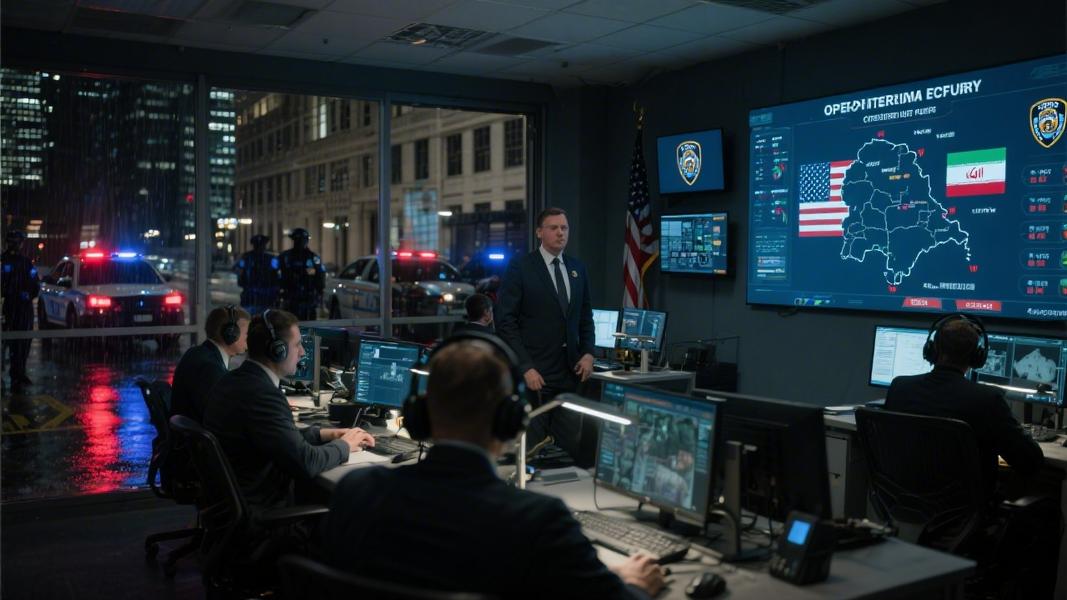
The FBI is on high alert. And if you’re wondering what that means in practice, the answer involves round-the-clock surveillance, mobilized counterterrorism teams, and a quiet but unmistakable message to anyone considering striking the American homeland: we’re watching.
In the hours following U.S. military strikes against Iran, federal law enforcement agencies shifted into an elevated posture that officials haven’t deployed lightly. FBI Director Kash Patel announced late this week that he had personally directed the bureau’s counterterrorism and intelligence divisions to mobilize, a signal that Washington is treating the geopolitical fallout as a domestic security matter — not just a foreign policy one.
The FBI’s Message: We’re Already Working
“Last night, I instructed our Counterterrorism and intelligence teams to be on high alert and mobilize all assisting security assets needed,” Patel wrote on X. “Our JTTFs throughout the country are working 24/7, as always, to address and disrupt any potential threats to the homeland.” The reference to Joint Terrorism Task Forces — the interagency teams embedded in cities across the country — suggests the alert isn’t just bureaucratic posturing. It has operational teeth.
Nationwide, the bureau has elevated both its counterterrorism and counterintelligence teams, with agents increasing surveillance of priority suspects, tasking confidential sources, and reviewing technical intelligence streams that might reveal early indicators of a planned attack. It’s the kind of surge that doesn’t happen unless someone at the top believes the threat environment has genuinely shifted.
Homeland Security Secretary Kristi Noem echoed that posture, saying she is operating “in direct coordination with our federal intelligence and law enforcement partners as we continue to closely monitor and thwart any potential threats to the homeland.” Short on specifics, long on resolve — which is more or less the template for statements like these.
No Credible Threat — Yet
Here’s the part that offers a sliver of reassurance, at least for now. Federal law enforcement officials say there is no specific, credible threat to the U.S. homeland at this moment. But they are actively tracking two categories of concern: Hezbollah-affiliated networks already present inside the United States, and so-called lone wolves — individuals radicalized enough to act independently, without direction from Tehran or any other state sponsor.
That’s a meaningful distinction. Lone wolves are notoriously difficult to detect precisely because they don’t communicate with known networks. They don’t show up in the intercepts. They don’t meet with handlers. They just — act. And in a heightened atmosphere like this one, the risk of that kind of attack tends to climb.
Sleeper Cells and Existential Stakes
Still, the more alarming scenario involves something more organized. Colin Clarke, a counterterrorism analyst, didn’t mince words when assessing what Iran might do next. “For Iran, this war is existential,” he warned. “And because it is, I would fully expect Tehran to activate any sleeper cell capacity it has in the West to make this painful for the U.S. and Israel. Hezbollah and other assets could very well seek to conduct attacks in Europe, North America, etc.”
That framing — existential — matters enormously when trying to predict state behavior. Countries that believe they’re fighting for survival don’t play by the same rules as countries managing a manageable setback. Iran’s calculus right now, according to analysts like Clarke, may be less about proportionality and more about pain. How much can they inflict, and where, before the pressure becomes unbearable?
It’s a chilling question. And it’s one that the men and women staffing those JTTFs at 3 a.m. are almost certainly asking themselves tonight.
What Comes Next
For now, the official posture is watchful but measured. No travel warnings have been issued. No public emergency declarations. The machinery of federal law enforcement is humming at a higher frequency — but quietly, deliberately, in the background. That’s by design. Panic is its own kind of vulnerability.
But the broader truth is harder to ignore. When the United States strikes Iran directly, the question isn’t whether there will be a response. It’s what form that response will take, and whether it arrives in a missile battery or in a crowded train station somewhere in the West. The FBI’s alert is, in many ways, an acknowledgment of that uncertainty — a hedge against a threat that doesn’t yet have a face or a location, but feels very, very real.
As one intelligence axiom goes: the absence of evidence is not evidence of absence. Washington, it seems, is taking that lesson seriously.
