
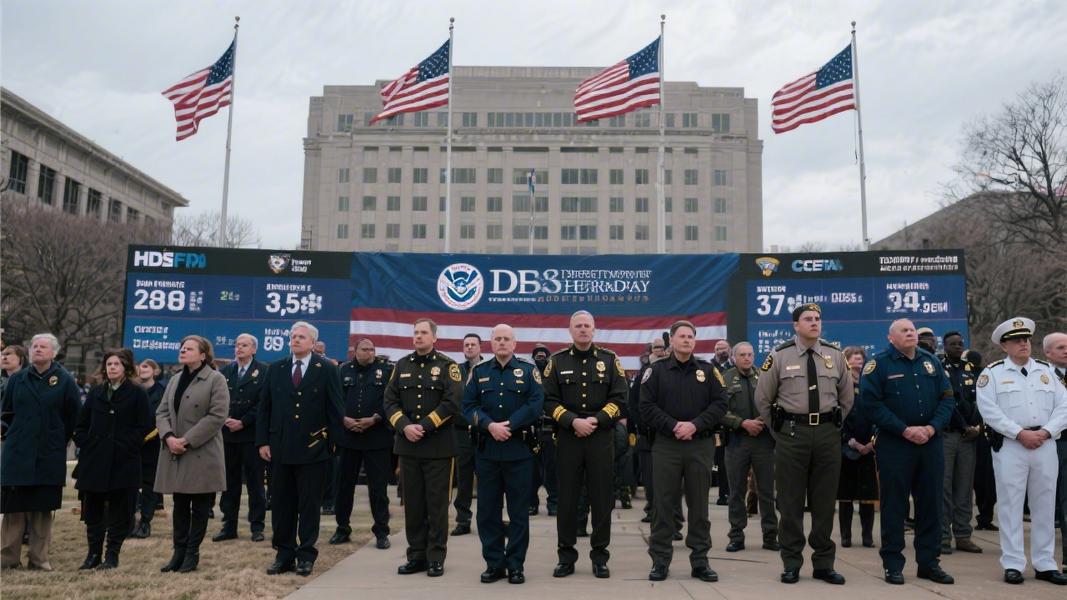
Twenty-three years ago, the United States government did something it almost never does: it moved fast. Within months of the September 11 attacks, Congress and the White House scrambled to build an entirely new federal department from scratch — and on March 1, 2003, the Department of Homeland Security officially opened its doors.
Now, on its 23rd anniversary, DHS is marking the occasion against a backdrop of budget pressures and a shifting global threat environment that its founders could only have partially imagined. The agency that was born from tragedy has grown into one of the most sprawling — and scrutinized — institutions in the federal government.
From Crisis to Cabinet Department
The origin story is worth revisiting. Congress established DHS in November 2002, less than 14 months after hijacked planes brought down the World Trade Center and struck the Pentagon. The goal was straightforward, if enormously complex to execute: unify the patchwork of federal agencies responsible for keeping Americans safe under one roof.
What that looked like in practice was a department that absorbed border security, immigration enforcement, cybersecurity, disaster response, counterterrorism, and maritime interdiction — all at once. It wasn’t clean. Merging 22 separate agencies never is. But it happened, and on March 1, 2003, DHS formally commenced operations.
A Mission That Keeps Expanding
So what does DHS actually do in 2026? A lot, it turns out — and the list keeps growing. The threats that dominate today’s security briefings look markedly different from those that prompted the department’s creation. Cyberattacks on critical infrastructure, fentanyl trafficking, and geopolitical instability in the Middle East have joined traditional concerns like terrorism and border security on the agency’s plate.
Secretary Kristi Noem didn’t shy away from that reality in her anniversary remarks. “As the threat landscape continues to evolve, DHS is there,” she noted. “By air, land, sea, or in cyberspace, the DHS workforce boldly confronts the threats our nation faces every day.” It’s the kind of statement that sounds like boilerplate — until you start counting the actual domains the agency is now expected to police.
Budget Battles and Political Headwinds
That’s the catch, though. Confronting an ever-expanding threat landscape costs money, and DHS is celebrating its anniversary in the middle of a bruising budget fight in Washington. The department’s funding levels — and the political will to sustain them — are very much in question heading into the next fiscal cycle.
Still, the anniversary offers a moment to take stock. Twenty-three years in, DHS employs hundreds of thousands of people across agencies like FEMA, Customs and Border Protection, CISA, and the Secret Service. Its regulatory footprint is documented in thousands of Federal Register entries each year — a paper trail that reflects just how deeply the department has embedded itself into the machinery of American governance.
A Long Way From Ground Zero
Does any of it make the country safer? That debate hasn’t been settled in 23 years and probably won’t be anytime soon. Critics have long argued the department is too bureaucratic, too big, and too prone to mission creep. Defenders point to the absence of another catastrophic domestic attack on the scale of 9/11 as evidence that something is working.
What’s not in dispute is the scope of what was built. In under two years after the worst terrorist attack in American history, the federal government constructed a new Cabinet-level department and set it to work. Whatever its flaws, that’s a remarkable institutional fact — one that tends to get lost in the daily noise of budget fights and political squabbles.
Twenty-three years later, the department is still standing. The question its next chapter will have to answer is whether it can stay ahead of a world that keeps finding new ways to be dangerous.
