
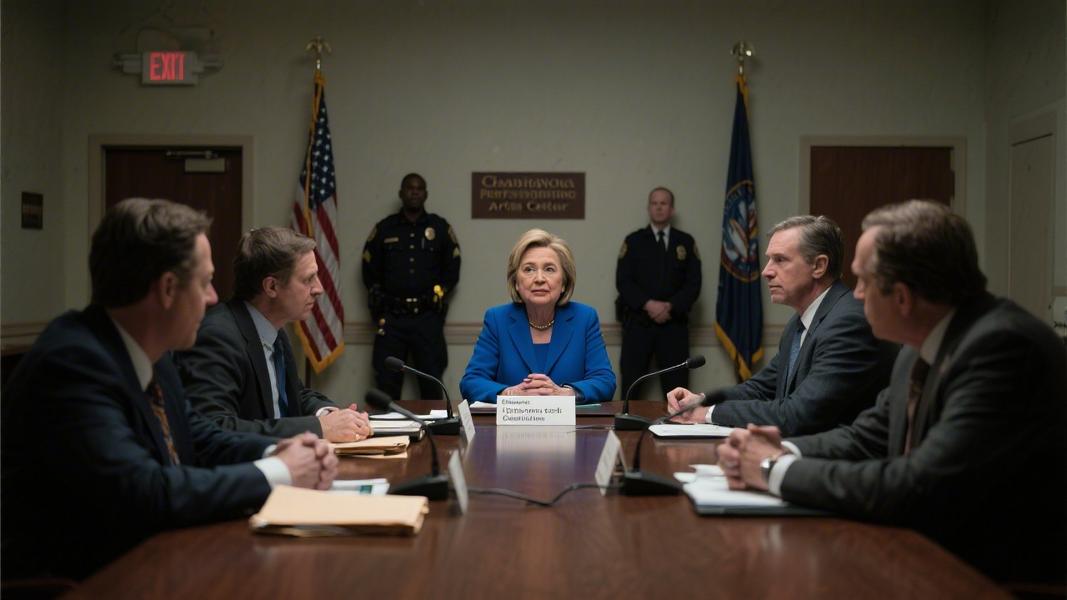
The videos were always coming. On Monday, the country finally got to see them.
Hillary Clinton and Bill Clinton sat for separate depositions before the House Oversight Committee last week as part of a sweeping congressional investigation into the late financier and convicted sex offender Jeffrey Epstein. Footage of both sessions was released publicly on March 2, 2026 — two days after the former president wrapped his own testimony — offering the most direct, on-record account yet of what the Clintons say they knew, and didn’t know, about one of the most notorious figures in recent American history.
Six Hours in Chappaqua
Both depositions were conducted behind closed doors at the Chappaqua Performing Arts Center in Chappaqua, New York — the Clintons’ home turf, as it were. Hillary’s session began at 11 a.m. ET on Thursday, February 26, and ran for more than six hours. Bill followed the next day, his deposition concluding at 5:59 p.m. ET on Friday, February 27, also lasting well past the six-hour mark. That’s a lot of time under oath for two people who insist they barely knew the man.
Hillary’s central message wasn’t subtle. “I had no idea about their criminal activities. I do not recall ever encountering Mr. Epstein,” she told investigators — a line she apparently repeated so often that, by the time it was over, she sounded almost exasperated by the necessity of it. “I don’t know how many times I had to say I did not know Jeffrey Epstein,” she told reporters afterward. She also noted that her husband had ended his relationship with Epstein well before the financier’s 2008 sexual abuse revelations became public. Rep. Nancy Mace, for her part, confirmed at the session’s close that Clinton had answered every question put to her.
A Brief Interruption — and a Familiar Name
It wouldn’t be a congressional proceeding in 2026 without at least one procedural fire to put out. At 12:43 p.m. ET, Hillary’s deposition was paused after Rep. Lauren Boebert sent a leaked photo from inside the closed-door session to conservative influencer Benny Johnson — a clear violation of committee rules prohibiting outside photographs. When the question of why she’d done it apparently arose, Boebert’s response was characteristically terse: “Why not?” The session resumed at 1:28 p.m. ET, roughly 45 minutes later, after the matter was addressed.
That’s the kind of moment that would derail coverage entirely — if the Clintons themselves weren’t the bigger story.
Bill Clinton’s Prepared Defense
Bill Clinton came in with a written opening statement, and it was pointed. He acknowledged a brief acquaintance with Epstein but insisted it ended years before any crimes came to light — and he leaned hard into the moral clarity he wanted lawmakers to walk away with. “As someone who grew up in a home with domestic abuse, not only would I not have flown on his plane if I had any inkling of what he was doing — I would have turned him in myself and led the call for justice for his crimes, not sweetheart deals,” he planned to tell the committee.
He also warned the room — and implicitly, the country — that “the search for truth and justice” matters more than “the partisan urge to score points and create spectacle.” Whether lawmakers took that to heart is another question entirely.
Still, Clinton was candid about the limits of his memory. Given that the relevant events stretch back more than 24 years, he said he might frequently respond with “I don’t recall” — not as evasion, he stressed, but because he’s bound by oath not to speculate. What he was willing to say plainly: “I saw nothing, and I did nothing wrong.” And again, for emphasis: “I saw nothing that ever gave me pause.”
Reluctant Witnesses, Willing Testimony
Neither Clinton came to this voluntarily — at least not at first. Both initially resisted the committee’s subpoenas, viewing them as politically motivated. But Bill ultimately framed his decision to testify as an act of patriotism, invoking his belief that no person is above the law and his love of country as the deciding factors. It’s a posture that’s hard to argue with publicly, even if the cynics in the room — and there were surely a few — registered it with a quiet eye-roll.
What’s undeniable is that the footage is now out there, searchable, clippable, and destined to be replayed in political contexts for years. The investigation into Epstein’s network and the powerful figures who orbited it is far from finished. Monday’s release was a chapter, not a conclusion.
As Bill Clinton himself might put it: he came to offer what little he knows. Whether that turns out to be very little — or more than anyone expected — remains the question this committee is still trying to answer.
