
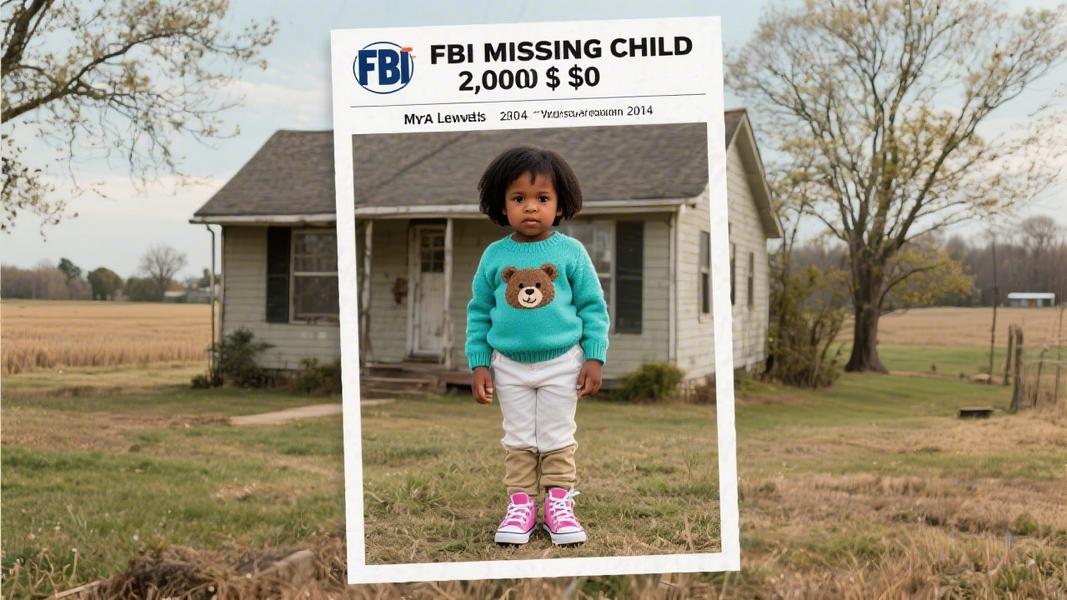
She was two years old, playing outside in the Mississippi morning air — and then she was simply gone. More than a decade later, the disappearance of Myra Lewis remains one of the most haunting unsolved missing child cases in the state’s history.
On March 1, 2014, Myra was last seen by family members between 10:30 and 11:00 a.m., playing outside her home in Camden, Mississippi. She was wearing white or khaki pants, a turquoise sweater with a bear on the front, and pink tennis shoes — the kind of detail that sticks with you long after you’ve closed the tab. She was never seen again. No confirmed sightings. No arrests. No closure for a family that has now lived with this for over a decade.
The FBI Steps In
The FBI is now offering a $20,000 reward for any information that leads to Myra’s whereabouts, a move that signals federal investigators still believe answers are out there — and that someone, somewhere, may be holding them. The reward was reported as part of a renewed push to resurface the case and shake loose whatever tips may have gone unspoken over the years.
Twenty thousand dollars is not a trivial figure. It’s the kind of number designed to make people reconsider their silence. Whether it does remains to be seen.
Twelve Years. No Answers.
How does a two-year-old vanish in broad daylight from her own yard? That question has never been satisfactorily answered, and it’s exactly the kind of thing that keeps investigators — and the public — from letting a case like this fade quietly into a cold-case file. Twelve years after that Saturday morning, the case continues to haunt Mississippi in a way that few missing-child cases do.
Myra would be 13 years old today. She’d likely be in middle school. And the family that last saw her playing outside in that turquoise sweater is still waiting — still hoping that someone, at some point, decides that what they know is worth more said than unsaid.
What Investigators Are Asking
The physical description of what Myra was wearing that morning has remained central to the case since the beginning. Authorities have noted she was dressed in white or khaki pants, a turquoise bear-print sweater, and pink tennis shoes — details that, if anyone saw her that day and stayed quiet, might finally mean something to a conscience that’s had twelve years to settle.
Still, cases this old are notoriously difficult. Memories shift. People move. Witnesses die. The FBI’s reward is, in many ways, a bet that loyalty — or fear, or time — has worn thin enough in someone’s life that $20,000 and a phone call starts to look like the right thing to do.
Anyone with information is urged to contact the FBI. Because somewhere out there, a little girl in a bear sweater deserves more than a reward poster — she deserves an answer.
