
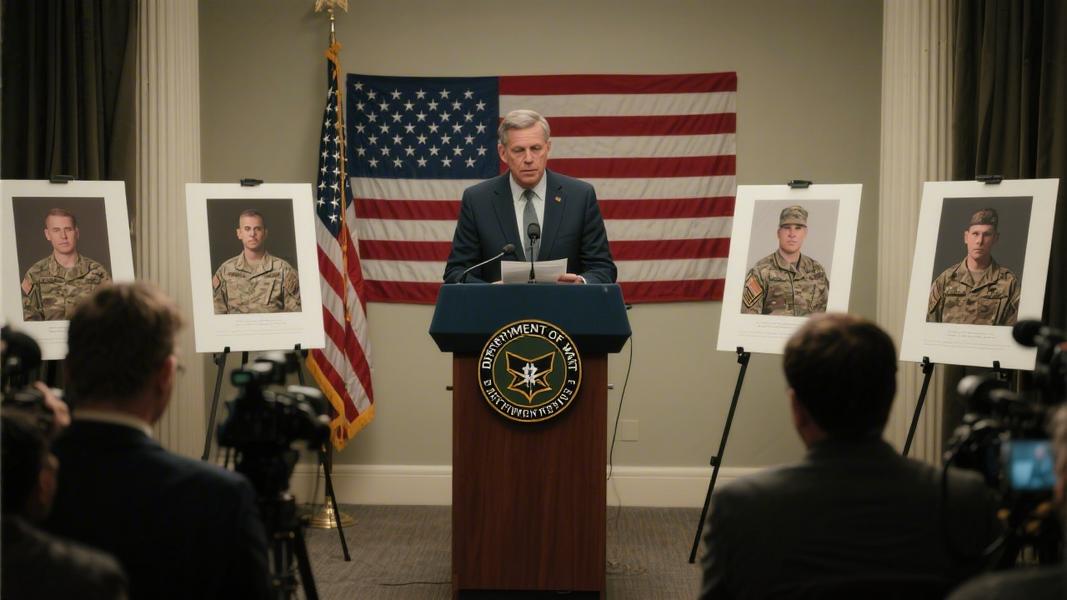
Six American service members are dead. The Pentagon is calling it the cost of war — and warning it won’t be the last.
The Department of War confirmed on March 1, 2026, that U.S. forces have suffered their first significant casualties in Operation Epic Fury, the ongoing American offensive against Iran. What began as an early-morning count of three killed in action climbed sharply as the day wore on, with U.S. Central Command ultimately confirming a total of six deaths — including two soldiers who had initially been listed as unaccounted for.
A Strike That Slipped Through
The deadliest single incident came in Port Shuaiba, Kuwait, where an unmanned aircraft — a drone — struck a tactical operations center, killing four Army Reserve soldiers and wounding several others. Defense Secretary Pete Hegseth said the projectile evaded air defenses before hitting the command post. It’s the kind of detail that tends to linger: a $50,000 drone doing what no air defense battery caught in time.
All four soldiers killed in Kuwait were assigned to the 103rd Sustainment Command out of Des Moines, Iowa. The Department of War identified them after next of kin were notified — standard protocol, but cold comfort for the families waiting by the phone back in the Midwest.
As of 9:30 a.m. ET on March 1, CENTCOM’s initial tally stood at three killed and five seriously wounded, with additional personnel sustaining minor injuries. The numbers were already grim. They got worse.
Hegseth: “War Is Hell”
That’s not exactly a revelation — but the Defense Secretary said it anyway, and he wasn’t wrong. “As the president warned, an effort of this scope will include casualties,” Hegseth stated. “War is hell and always will be.” He was direct, almost blunt, in a way Washington officials rarely are when the body count is still fresh.
Hegseth also pushed back on comparisons to past Middle East entanglements, insisting the Iran offensive won’t become an endless war — the phrase practically every administration since 2001 has used at some point, with varying degrees of accuracy. Still, the assertion carries some weight here, at least in terms of stated intent. Whether the operational reality cooperates is another matter entirely.
The Toll Climbs
How fast did the picture change? Within hours. USNI News noted the initial three-killed figure early on March 1. By the time CENTCOM issued its updated accounting — factoring in the two previously unaccounted-for troops — the number had doubled. Identities for those two additional soldiers were being withheld pending notification of their families, military officials disclosed.
That’s six Americans dead in a single day of an operation that, by the Pentagon’s own framing, is still in its early stages. The five seriously wounded remain hospitalized, their conditions not publicly updated as of press time. Minor injuries were reported across additional personnel at the site.
What Comes Next
The 103rd Sustainment Command — a logistics and support unit, not a frontline combat force — wasn’t supposed to be the face of this war’s first casualties. That’s not how it works, of course. Sustainment troops keep armies fed, fueled, and armed. They’ve always been targets. But there’s something particularly stark about reservists from Iowa becoming the first names attached to a campaign against Iran.
The Pentagon has given no indication it plans to scale back operations in response to the attack. Hegseth’s tone on Sunday was resolute, even practiced — the kind of statement a Defense Secretary prepares for, even as he hopes he’ll never have to deliver it.
Six funerals. Five more soldiers fighting for their lives in military hospitals somewhere in the region. And an administration insisting this one won’t drag on forever — as the first week isn’t even over yet.
