
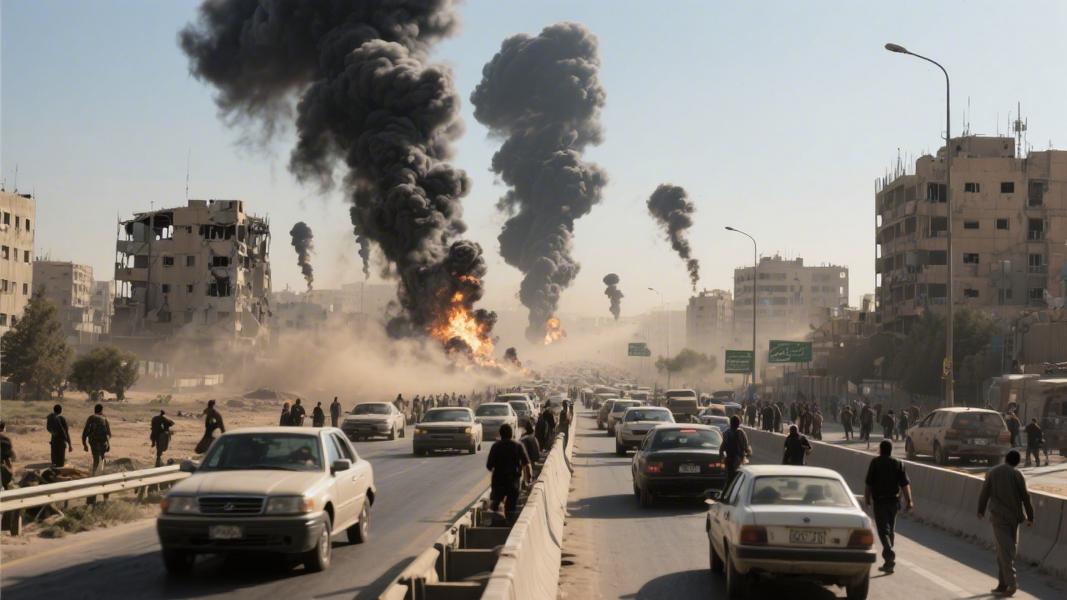
The Middle East is at war — again, and this time the United States is in it directly. What began in the final hours of February has, within days, reshaped the entire strategic landscape of the region.
On February 28, 2026, the United States launched Operation Epic Fury in coordination with Israel’s Operation Roaring Lion, targeting Iranian military and nuclear sites in what both governments described as a campaign aimed at regime change. President Donald Trump made the announcement with characteristic bluntness: “A short time ago, the United States military began major combat operations in Iran. Our objective is to defend the American people by eliminating eminent threats from the Iranian regime.”
Four Objectives, One War
Trump has since laid out the scope of what Washington is after. The administration’s goals, as the president stated publicly, include destroying Iran’s missile capabilities, wiping out its naval capacity, halting its nuclear weapons program, and — perhaps most pointedly — to “ensure that the Iranian regime cannot continue to arm, fund and direct terrorist armies outside of their borders.” It’s a sweeping mandate. Whether it’s achievable is another question entirely.
The U.S. Navy’s role in the conflict escalated sharply this week. Iranian Foreign Minister Abbas Araghchi accused American forces of sinking the Iranian frigate IRIS Dena, killing at least 87 sailors. Tehran is furious. “Mark my words: The U.S. will come to bitterly regret (the) precedent it has set,” Araghchi warned, in language that left little room for diplomatic interpretation.
Missiles Flying in Both Directions
Iran isn’t sitting still. Major General Ali Abdollahi Ali Abadi confirmed that Iranian forces have launched missile strikes against both U.S. military installations and Israeli territory, vowing to press the campaign until both adversaries are defeated. That’s not just rhetoric — one of those strikes hit Al Udeid Air Base in Qatar, the largest U.S. military installation in the Middle East. Remarkably, there were no reported injuries, but the symbolism of striking America’s regional headquarters is hard to overstate.
How bad is it getting? Bad enough that a religious leader in Iran publicly called for Trump’s blood this week, according to sources tracking the conflict. That’s the kind of inflammatory language that, in a region already on a knife’s edge, tends to matter.
Lebanon Caught in the Crossfire
The violence isn’t contained to Iran’s borders. Lebanon is bleeding again. The Lebanese Health Ministry reported at least 50 people killed and more than 300 injured since Monday following Israeli strikes — strikes that Beirut has had precious little say in, and even less protection from. The civilian toll is mounting, and with no ceasefire anywhere on the horizon, it’s unlikely to stop.
Still, the broader picture remains deeply uncertain. A coalition of U.S. and Israeli airpower against a battered but defiant Iranian military — with proxy forces activated across Lebanon, Yemen, and potentially Iraq — is not a clean, surgical operation. It never really was going to be. The administration’s stated objectives are vast, and the region has a long, unforgiving memory for promises made from thirty thousand feet.
Araghchi’s warning may be the line that echoes longest when the history of this week is written: “The U.S. will come to bitterly regret the precedent it has set.” Whether that’s a threat or a prophecy, nobody in Washington — or Tehran — knows yet.
