
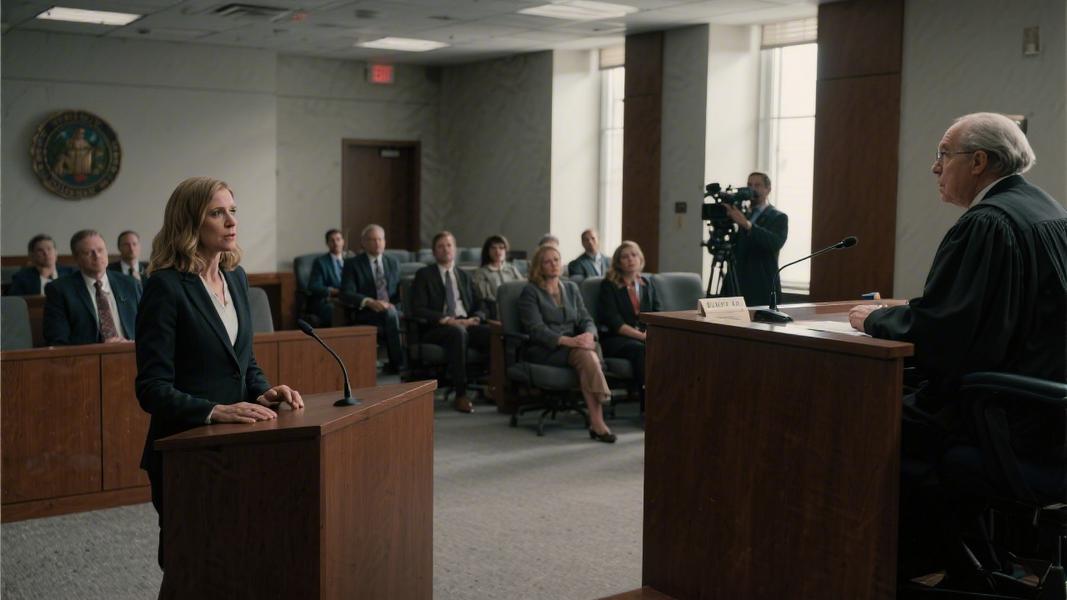
Nine people are standing trial in Fort Worth on domestic terrorism charges after what federal prosecutors say was a calculated, armed assault on a Texas immigration detention center — on the Fourth of July, no less.
The alleged attack on the Prairieland ICE detention center in Alvarado unfolded late on July 4, 2025, and left an Alvarado police officer with a bullet wound to the neck. Now, with nine defendants facing charges that mark a first for the Antifa movement in U.S. courts, the case is drawing intense national scrutiny — both for what happened that night and for what it might signal about the future of political violence in America.
What Prosecutors Say Happened
This wasn’t a protest that spiraled out of control. At least, that’s the government’s position. Prosecutors have been blunt about it: “It was a planned ambush with the intent to kill ICE corrections officers,” one official declared. “Make no mistake, this was not a so-called ‘peaceful protest’.”
Federal court documents paint a vivid, unsettling picture. Attackers arrived wearing body armor and black military-style clothing, carrying high-powered flashlights and two-way radios. They set off fireworks — perhaps as cover, perhaps as distraction — and spray-painted vehicles at the facility with messages including “ICE Pig” and “Traitor.” The choice of July 4 as the date didn’t appear to be coincidental, either.
Then came the gunfire. Two individuals positioned in nearby woods, one reportedly wearing a green mask, opened fire on an Alvarado police officer who had responded to a 911 call. They fired approximately 30 rounds from AR-15 style rifles. The officer was struck in the neck. He is expected to recover, which, given the circumstances, feels like something close to a miracle.
The Arrest That Cracked the Case Open
How do you catch someone fleeing a firefight in rural Texas? Sometimes it’s just a traffic stop. A Johnson County Sheriff’s Office detective pulled over a red Hyundai van leaving the scene — and what was inside told its own story. Authorities found a black pistol, a loaded magazine, a two-way radio, an AR-15 rifle, bulletproof vests, and a ballistics helmet.
The driver, Meagan Morris — also known as Bradford Morris — was taken into custody. That arrest appears to have been a key early break in the broader investigation that ultimately led to all nine defendants now facing trial.
A Pattern Prosecutors Can’t Ignore
Still, the Prairieland attack didn’t emerge in a vacuum. Prosecutors and federal officials have noted that it was actually the third attack on a Texas ICE facility within three months — a fact that suggests something more systematic than isolated rage. Whether these incidents were formally coordinated across groups or simply inspired by shared ideology remains a central question of the ongoing proceedings.
That’s not a small distinction. It’s the difference between a conspiracy and a contagion — and the law treats them very differently.
The Domestic Terrorism Threshold
What makes this trial genuinely historic is the charge itself. These are, by most accounts, the first domestic terrorism charges ever brought against individuals identified as Antifa members in a U.S. federal court. The movement has long operated in a legal gray zone — decentralized, loosely affiliated, resistant to formal structure precisely because structure creates liability. Prosecutors appear determined to argue that structure existed here anyway, and that it mattered.
Defense attorneys have pushed back. Four of the defendants have already pleaded not guilty, and the legal battles ahead are expected to be fierce. Questions about evidence, intent, and the constitutional boundaries of the domestic terrorism statute are all very much in play.
What isn’t in dispute is that a police officer was shot, a federal detention facility was attacked on Independence Day, and nine people are now sitting in a Fort Worth courtroom answering for it. The jury will decide the rest — but the country, it’s safe to say, is watching.
An ambush on the Fourth of July. If the symbolism wasn’t intentional, it should have been — because it’s the kind of detail that tends to define a case long after the verdict is read.
