
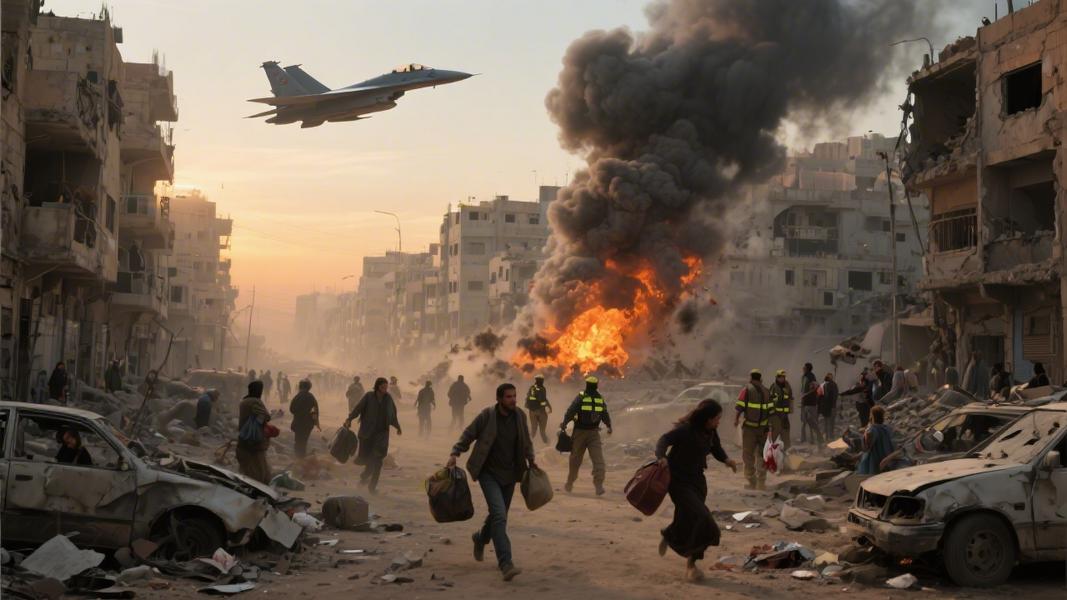
Ten days in, and the body counts are climbing fast. What began on February 28, 2026, as a coordinated U.S.-Israeli military campaign against Iran has already reshaped the Middle East in ways that will take years to fully understand — and the fighting shows no sign of slowing down.
The war entered its tenth day on March 9, with intensified strikes across multiple fronts and a death toll that, by even the most conservative estimates, has surpassed 2,100 people across the region. At the high end, that number could be closer to 5,000. The gap between those figures says something important: in the fog of this particular war, no one really knows how bad it is yet.
The Human Cost, Country by Country
Iran has absorbed the heaviest losses. At least 1,216 Iranians have been killed, with some estimates suggesting the actual toll could be as high as 4,145 — a staggering range that reflects both the chaos on the ground and the difficulty of independent verification inside the country. Lebanon has lost more than 394 lives. Israel, despite being a primary actor, has so far counted 18 of its own killed. Nine Americans have died.
That last number carries its own particular weight in Washington. Seven U.S. service members have been confirmed killed since the war started, including Sgt. Benjamin N. Pennington, 26, of Glendale, Kentucky, who died from injuries sustained in an enemy attack on March 1 at Prince Sultan Air Base in Saudi Arabia. He was one of at least six soldiers killed that same day in a single Iranian airstrike on a base in Kuwait — all from the 103rd Sustainment Command. One strike. One day. Six American families notified.
Israel’s Air Campaign: Relentless and Expanding
Israel’s military has been nothing short of ferocious from the air. Since the war began, Israeli forces have struck more than 3,400 targets inside Iran and over 600 in Lebanon — a pace of bombardment that rivals some of the most intensive air campaigns in modern military history. Among the targets hit: Iran’s so-called “space force headquarters” in Tehran and two major missile production sites, according to officials.
The logic behind those specific strikes isn’t hard to read. Iran’s missile infrastructure has long been considered the regime’s most credible deterrent — and its most dangerous offensive tool. Dismantling it, or at least degrading it, appears to be a central military objective. Whether those strikes have actually succeeded in doing so remains an open question.
The Strike That’s Hardest to Forget
How do you write about a statistic like this without stopping? On the very first day of the war, a missile struck a primary school in Minab, Iran. 175 schoolgirls and staff members were killed. One hundred and seventy-five. Whatever the intended target was — if there was one — it wasn’t a classroom full of children. The incident has drawn international condemnation and, predictably, competing narratives about responsibility. It has also, quietly, become the image that many outside the region can’t quite shake when they think about what this war means on the ground.
Where Things Stand Now
Still, the military operations are pressing forward. There’s been no serious diplomatic off-ramp announced, no ceasefire talks confirmed, no visible de-escalation from any of the three primary actors. The regional architecture — already fragile after years of proxy conflict — is being stress-tested in real time. Lebanon, which has seen more than 300 killed, is once again caught in a war that isn’t entirely its own.
That’s the catch with conflicts like this one. The countries doing the most fighting aren’t always the ones absorbing the most pain. And the numbers — the 2,000 confirmed dead, the 5,000 possible dead, the nine Americans, the 175 children in Minab — don’t yet include whatever happens tomorrow, or the day after that.
Ten days in, and history is still being written. The only certainty, for now, is that there’s a great deal more of it coming.
