
A years-long hunt for a multi-state rapist came to an end in February — not with a dramatic standoff, but with the quiet, grinding work of DNA science finally catching up to a man investigators had been chasing since 2021.
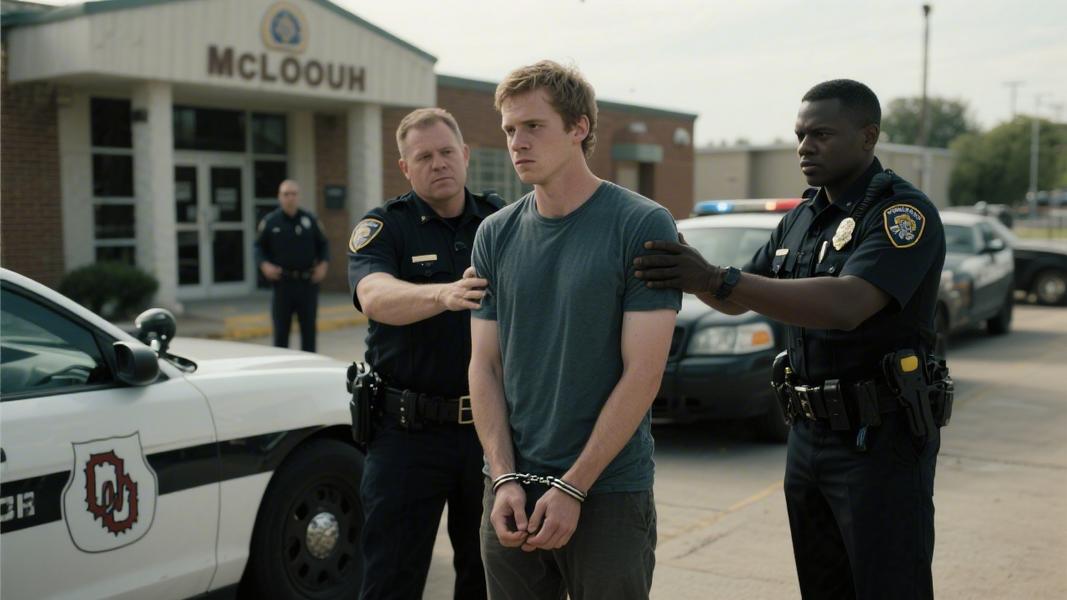
Hunter Mackey, 27, was arrested by the Oklahoma State Bureau of Investigation (OSBI) on February 17, 2026, in McLoud, Oklahoma, on a charge of first-degree rape. The arrest closes a case spanning two states and nearly five years, tied to separate sexual assaults in Fannin County, Texas, and Ardmore, Oklahoma — both occurring in 2021.
How It Started
The first known assault was reported on October 10, 2021, in North Texas. A female victim told Fannin County Sheriff’s Office investigators that she had met the man through social media — a detail that would prove central to building the case. He picked her up in a sedan bearing Oklahoma registration. What followed, she told investigators, was a sexual assault.
It’s a scenario that’s become grimly familiar to law enforcement: a suspect who crosses state lines, exploits social media connections, and leaves investigators navigating a jurisdictional puzzle with limited physical evidence. Still, the Texas Department of Public Safety Crime Laboratory submitted DNA collected from the assault to CODIS — the national DNA database — and waited.
The Break That Took Four Years
Years passed. Then, in September 2025, something shifted. Using funds from a Sexual Assault Kit Initiative (SAKI) grant, investigators sent evidence to BODE Technologies for advanced DNA analysis. The results were striking: three brothers emerged as potential suspects. From there, a positive match to Mackey was confirmed. That’s the kind of forensic patience most people don’t think about when they imagine detective work — it’s less CSI and more years of waiting for science to catch up.
Meanwhile, the OSBI had its own open wound. A separate sexual assault case out of Ardmore, Oklahoma — also from 2021 — had gone unsolved, its investigators quietly working a case that had long since fallen off the public radar. When the pieces came together, authorities described the Ardmore investigation as reaching a breakthrough, ending what they called a years-long search.
Two States, One Suspect
So what does it take to connect crimes across state lines with no immediate suspect? Coordination, time, and — increasingly — money. The SAKI grant program, a federal initiative designed specifically to address the national backlog of untested rape kits, is what ultimately cracked this case open. Without those funds, the advanced DNA testing at BODE Technologies might never have happened. That’s worth sitting with for a moment.
Mackey now faces a first-degree rape charge in Oklahoma. Authorities confirmed the arrest is connected to both the Texas and Oklahoma assaults, though the full scope of charges across jurisdictions had not been detailed at the time of reporting. The investigation, by all accounts, remains active.
What Comes Next
For the victims — women who reported their assaults in 2021 and spent years not knowing whether anyone had been held accountable — an arrest is something. It’s not everything, but it’s something. Cases like this one are a reminder that the justice system’s clock doesn’t always match the one victims are living by.
The OSBI and Texas DPS have not released further details on Mackey’s background or any prior criminal history. What’s clear is that his alleged crimes stretched across state lines, his DNA sat in a database for years, and it was a federal grant — not a lucky break — that finally put investigators on his doorstep in a small Oklahoma town in February 2026.
DNA doesn’t forget. It just sometimes takes a while to be heard.
