
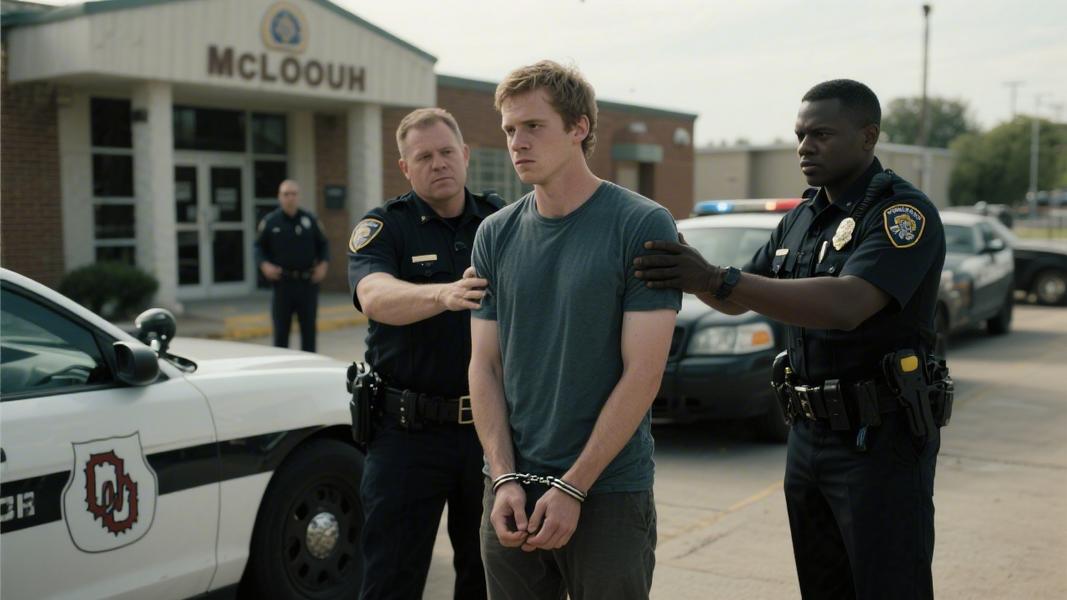
The prosecution rested its case Tuesday in what the Trump administration has called the first federal domestic terrorism trial linked to Antifa — and the evidence, if jurors believe it, paints a remarkably organized picture of violence on an American holiday.
Nine defendants are standing trial in a Fort Worth federal courthouse for an alleged coordinated attack on the Prairieland ICE Detention Center in Alvarado, Texas, on July 4, 2025. The charges are serious — rioting, conspiracy involving explosives, material support to terrorists, and firearms violations. For some, a conviction could mean life in prison. For Benjamin Hanil Song, a former U.S. Marine Corps reservist, it could mean that and more: he faces three counts of attempted murder of federal officers for allegedly firing the shot that struck Lt. Thomas Gross.
How the Prosecution Closed Its Case
Prosecutors wrapped up Tuesday, March 10, 2026, with testimony from Kyle Shideler of the Center for Public Policy, brought in as an so-called “Antifa expert.” Shideler testified that he linked the defendants to Antifa ideology through evidence photographs taken from an apartment and through the former Twitter account of defendant Ines Soto. It was the kind of testimony designed to give jurors a frame — a narrative scaffolding to hang the other evidence on.
Defense attorneys weren’t having it. They challenged Shideler’s credibility sharply, pointing out his ties to the Trump administration and, perhaps more damaging, his alleged role in actually drafting the indictment. That’s not a minor conflict of interest. It’s the sort of detail that, in a different kind of trial, might dominate the headlines entirely.
Still, the prosecution’s broader case doesn’t rest on Shideler alone. Authorities allege the group — dressed in black military-style clothing — used fireworks as a diversion while damaging buildings and vehicles, firing on federal officers, and positioning a shooter in nearby woods. An Alvarado police officer who responded to a 911 call was shot in the neck the moment he stepped out of his vehicle. He survived and was later released from the hospital. According to prosecutors, another alleged assailant fired between 20 and 30 rounds at unarmed correctional officers who had stepped outside the facility.
The Nine Defendants and the Alleged Cell
The defendants are Daniel Estrada, Ines Soto, Elizabeth Soto, Maricela Rueda, Bradford Morris, Savanna Batten, Benjamin Song, Zachary Evetts, and Cameron Arnold. Prosecutors allege they’re part of what investigators are calling a North Texas Antifa Cell — a characterization the defense flatly denies.
Song is the alleged ringleader. Before the attack, prosecutors say, he purchased four firearms, including two AR-style rifles — one of which was equipped with a binary trigger capable of rapid fire. The group allegedly coordinated through a Signal chat group they named, with a kind of grim irony, “4th of July Party!” Messages in the chat reportedly discussed fireworks, firearms, and medical kits. Reconnaissance of the facility was conducted in advance.
Body camera footage, prosecutors say, captured someone saying, “get to the rifles” — four words that prosecutors argue undercut any claim this was merely a peaceful demonstration gone sideways.
A ‘Noise Demonstration,’ Defense Says
That’s the heart of the defense’s argument. Attorneys contend the event was a “noise demonstration” — organized to show solidarity with people held in ICE custody, not to ambush law enforcement. One account from someone present that night described a gathering of roughly a dozen people who said they were protesting to show support to detainees, and that she wasn’t expecting things to get violent.
It’s not an implausible starting point. But it’s not a complete answer either, given the rifles, the Signal chat, and the man shot in the neck.
Five co-defendants accepted plea deals before trial — some pleading guilty to property damage — and are expected to testify for the prosecution. One witness who took a deal has already testified about their role in the events outside Prairieland. Another inmate witness, prosecutors say, helped Song attempt to escape after the attack. The FBI is still searching for a 12th suspect.
A Rocky Road to Trial
This isn’t even the first time this case has been in a courtroom. A mistrial was declared during jury selection in an earlier proceeding, forcing a reset. The new trial began in late February 2026 and is now in its third week, with the full proceeding expected to conclude within three weeks total. Security at the Fort Worth federal courthouse has been heavy throughout.
The Trump administration has leaned hard into the symbolism of this prosecution, describing it as the first federal domestic terrorism case associated with Antifa. Whether that framing helps or hurts the prosecution in front of a jury is another question — one the defense seems determined to exploit at every turn.
Eyewitness audio captured near the scene that night offers a snapshot of the chaos: “I think a cop got shot over there right there.” Simple words. But they carry the weight of everything this trial is really about — what happened in those woods outside Alvarado, and whether it was terrorism, a protest, or something uncomfortably in between.
The defense is expected to begin presenting its case in the coming days. Whatever the verdict, the outcome of this trial will almost certainly shape how federal prosecutors — and the public — define political violence for years to come.
