
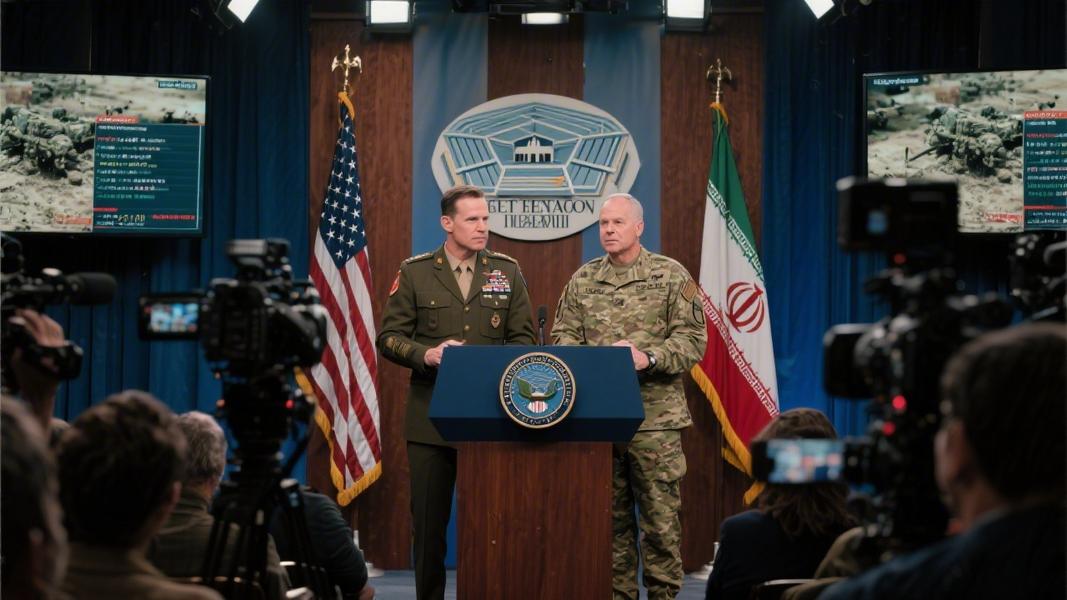
The war with Iran is exacting a toll that’s becoming harder to ignore — in blood, in treasure, and in the widening gap between what Washington says and what the battlefield is showing.
Nearly 140 U.S. service members have been wounded since fighting began, with nine American military personnel confirmed killed and at least eight severely injured as of the latest available figures. Pentagon officials have been careful to frame the picture in the most favorable light possible, noting that reported “the vast majority of these injuries have been minor, and 108 service members have already returned to duty.” That’s technically reassuring. But the broader casualty picture across all parties involved — estimated between 1,919 and 4,799 killed and more than 16,228 injured — suggests a conflict that has already grown far bloodier than early public messaging implied.
The Price Tag Nobody Wants to Say Out Loud
Then there’s the money. The Pentagon’s own estimates put U.S. operations at somewhere between $890 million and $1 billion per day. The first two days of the conflict alone burned through roughly $5 billion in munitions, according to figures cited by defense analysts. That’s not a typo. Five billion dollars in ordnance in 48 hours. At that burn rate, the financial arithmetic becomes genuinely alarming the longer this drags on.
How bad is it, really? That depends enormously on who you ask — and where they’re sitting. Iranian state media has claimed over 200 U.S. casualties following what they described as a deadly counterattack on American forces, figures amplified by official channels in Tehran. U.S. officials have pushed back sharply on those numbers. Still, the credibility gap on both sides of this conflict is wide enough to drive a convoy through.
A War Still Looking for Its Narrative
What’s striking — and more than a little uncomfortable — is how quickly the initial framing of a swift, surgical campaign has given way to something messier. Nine dead. Eight severely wounded. A documented death toll rising daily across multiple countries. These aren’t the contours of a clean operation.
That said, it’s worth being precise about what we know and what we don’t. The 108 service members who’ve returned to duty represent a real data point — not spin, exactly, but context that the Pentagon is understandably leaning into. Minor injuries in combat are common. Returning to duty matters. But “minor” is a word that tends to carry less weight the further you get from a press briefing room.
The bigger question now isn’t whether the U.S. can sustain this militarily. It almost certainly can, at least in the short term. The question is whether the American public — and Congress — will keep writing blank checks at a billion dollars a day for a war whose end conditions remain, to put it charitably, undefined.
Wars have a way of outlasting the certainty that started them.
