
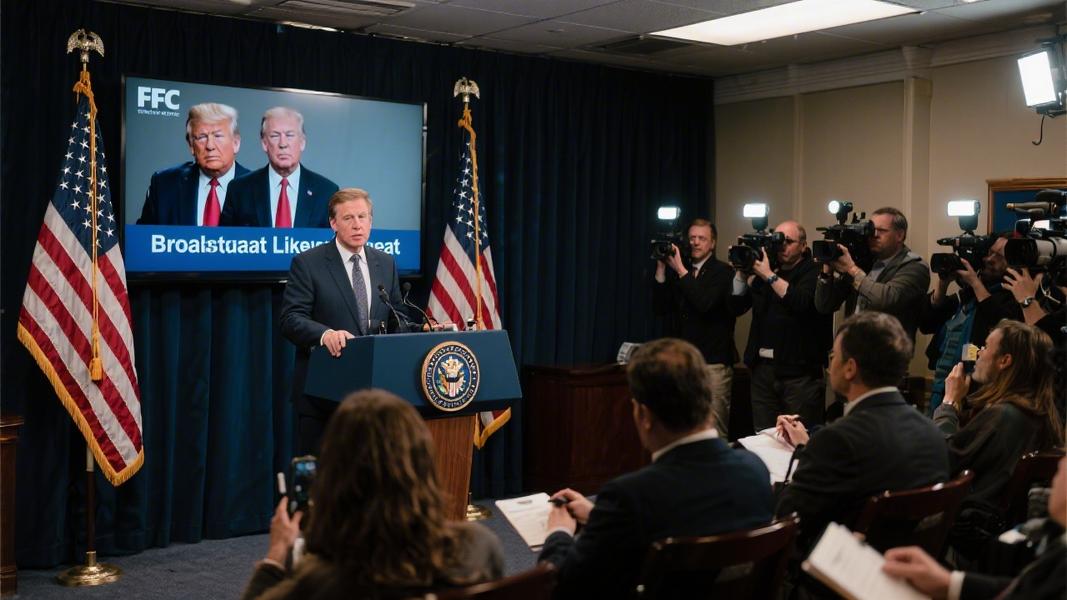
The Trump administration has invoked wartime emergency powers to force the restart of oil drilling operations off the California coast — a move that immediately set off a legal and political firestorm stretching from Santa Barbara to Sacramento.
Energy Secretary Chris Wright issued a directive this week ordering Sable Offshore Corp. to restore operations at the Santa Ynez Unit, a sprawling offshore oil complex off Santa Barbara County that has sat largely idle since a significant pipeline spill in 2015. The order, issued under the Defense Production Act — a Cold War-era statute typically reserved for national emergencies — marks one of the most aggressive federal interventions into California’s energy landscape in recent memory. It’s not a subtle move.
What’s at Stake
The Santa Ynez Unit is no small operation. It includes three offshore rigs in federal waters, a network of onshore and offshore pipelines, and the Las Flores Canyon Processing Facility, which is capable of producing roughly 50,000 barrels of oil per day. At full capacity, the Department of Energy estimates that output could replace nearly 1.5 million barrels of foreign crude each month — a figure the administration has leaned on heavily to justify the action.
Wright framed the directive in unambiguous terms. “Today’s order will strengthen America’s oil supply and restore a pipeline system vital to our national security and defense,” he said, “ensuring that West Coast military installations have the reliable energy critical to military readiness.” The administration has argued the facility’s proximity to key military bases on the West Coast makes its restoration a matter of national security, not just energy policy.
A Cold War Tool for a Very Modern Fight
The Defense Production Act has been invoked before — for ventilators during COVID, for semiconductor supply chains, for military hardware. Using it to restart a specific oil pipeline off the California coast? That’s a different animal entirely. Critics say the administration is stretching the statute well past its intended limits, and they aren’t being quiet about it.
“This is an attempt to illegally restart a pipeline whose operators are facing criminal charges and prohibited by multiple court orders from restarting,” one opponent charged in response to the announcement. That’s a significant detail. Sable Offshore has faced legal scrutiny related to the 2015 spill, and state and federal courts have issued orders complicating — or outright blocking — a straightforward restart of operations. The administration’s directive doesn’t make those court orders disappear, which could make enforcement of this directive legally messy from the start.
Sacramento Is Not Amused
California Governor Gavin Newsom didn’t hold back. He condemned the federal directive and threatened legal action, pointing to the state’s ongoing lawsuits challenging federal approval of Sable’s pipeline restart plans. The governor’s office described the move as a direct assault on California’s regulatory authority — and given the specifics, it’s hard to argue that characterization is entirely wrong.
The directive effectively overrides California’s oversight of the pipeline system connecting the offshore platforms to the mainland, escalating what has already been a prolonged and bitter federal-state conflict over offshore drilling expansion. Newsom’s allies were even more pointed. “Donald Trump started a war, admitted it would spike gas prices nationwide, told Americans it was a small price to pay, and now he’s using this crisis of his own making to attempt what he’s wanted to do for years: open California’s coast for his oil industry friends so they can poison our beaches,” one official argued.
That’s the kind of language that signals this won’t be resolved quietly in a regulatory hearing room.
The Administration’s Counterargument
Still, the White House isn’t backing down. The administration has tied the directive to a broader energy security narrative, insisting the restart is about American self-sufficiency and military preparedness — not politics. “The Trump Administration remains committed to putting all Americans and their energy security first,” Wright’s office stated, framing opposition to the move as prioritizing ideology over national interest.
But it’s not that simple. The 2015 Plains All American Pipeline spill — which released more than 100,000 gallons of crude oil onto the Santa Barbara coastline and into the Pacific — remains a raw wound for the region. Environmental groups, coastal communities, and state regulators have spent years fighting to keep those platforms offline. The idea that a federal order can simply sweep that history aside is, to put it gently, contested.
What Happens Next
Legal challenges are almost certain. California has both the motivation and the legal infrastructure to mount a serious fight, and the existence of prior court orders restricting Sable’s operations gives state attorneys a ready-made argument. Whether the Defense Production Act actually confers the authority Wright is claiming — broad enough to override state regulatory decisions and existing judicial orders — is a question that federal courts will likely have to answer.
In the meantime, the directive stands, Sable Offshore has its marching orders, and a coastline that’s been through this before is watching closely.
The last time oil washed up on Santa Barbara’s beaches, it changed American environmental law forever. Whether history repeats itself — or whether this particular standoff reshapes the boundaries of federal emergency power — may depend on what a judge decides next.
